Home » Reviews » The Witcher Season 2 review: A visually stunning medieval fantasy with an inconsistent narrative
The Witcher Season 2 review: A visually stunning medieval fantasy with an inconsistent narrative
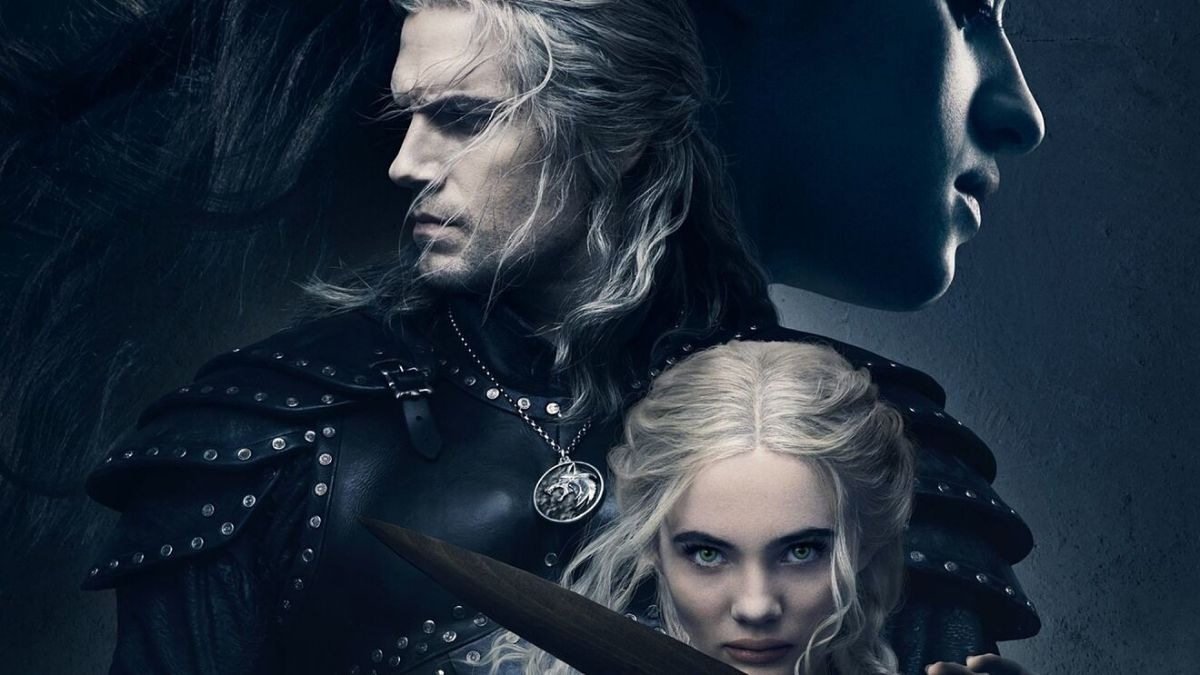
Henry Cavill returns as Geralt of Rivia, killing monsters whilst taking on the new responsibilities as an adoptive father
3.0/5
Dec 18, 2021
The Witcher Season 3 Part 2
Story:
The story picks up from where the first season ended with Geralt finally uniting with his ‘Child Surprise’, Ciri, the young Princess of the fallen kingdom Cintra. Geralt takes her to Kaer Morhen for her safety, and to help guide her. Whereas Yennefer attempts to find her way back to Aretuza after she loses her control over ‘Chaos’, her magical powers, in the aftermath of the Battle of Sodden. Elsewhere the Elves of the continent under the leadership of the Elven Mage, Francesca, are desperately fighting for the survival of their kind.
Review:
Every major studio is desperately trying to recreate the success of Game of Thrones. Amazon Prime threw the dice with A Wheel of Time, based on Robert Jordan’s novels, Apple TV+ with Isaac Asimov’s Foundation and Netflix with Andrzej Sapkowski’s The Witcher. However, it has become quite evident that none of these adaptations has been able to live up to the expectations of these studios and come close to knocking Game of Thrones off its perch. The exception is that The Witcher has amassed a cult following and is currently one of Netflix’s more popular shows despite lacking overwhelming critical acclaim.
Season 1 chronicled the tales of the monster hunter, Geralt of Rivia, played by Henry Cavill, and the adventures and misadventures of his associates. Season 2 focuses primarily on Geralt and Princess Cirilla or Ciri (Freya Allan). Even though there are other characters and plotlines in Season 2, they have inadvertently been made less significant to the overall narrative. This can be considered as a minor flaw to the narrative structure as the imbalance in character development and story development has significantly affected the pacing. For instance, the plotline involving the elves and Fringilla, despite its immense potential, feels underutilised as this story alone has enough substance to warrant a season of its own. Whereas, Triss Merigold’s arc seems undefined and could have easily been replaced by any other character in the narrative.
The series’ weakest link continues to be the decision to cast Anya Chalotra as Yennefer of Vengerberg. While her performance cannot be faulted, there’s a noticeable lack of chemistry between Henry Cavill’s Geralt and Chalotra’s Yennefer. Moreover, her demeanour lacks the commanding presence which fans of the game, The Witcher 3: Wild Hunt is accustomed to. Even though showrunner, Lauren Schmidt Hissrich, had confirmed that the series is based on the books and not the games, the influence the games have had on the franchise cannot be understated as the monumental success of the games is what propelled the franchise to greater heights. The fact that The Witcher 3: Wild Hunt alone sold more than 30 million copies across platforms is a testament to the games’ immense popularity and hence, the obvious comparison between the series and the games cannot be ignored. In fact, Henry Cavill himself has clocked in over 100 hours on two walkthroughs of the game.
Regardless of its minor flaws, the series excels in its brutal, yet captivating action sequences, stunning cinematography, excellent sound design, and scarier monsters. Henry Cavill’s performance as Geralt is arguably a level higher than Doug Cockle’s performance in the video games. The series has also paid homage to the animated series, The Witcher: Nightmare of the Wolf released earlier this year, which focused on Vesemir (Kim Bodnia in the live-action series and Theo James in the animated series). In fact, there are a few well-placed easter eggs that reference the animated series. Joey Batey continues to delight as Jaskier the Bard, with great humour and melodies.
The costume design and the setting continue to impress, and the chronology is more streamlined in season 2. The first episode and the season finale are the strongest episodes of season 2, while the shocking reveal at the end sets the stage for the next season. The overall series could have been taken to a higher standard if the characters and the lore were given ample time to breathe. Nevertheless, it is not detrimental to the series’ being a binge-worthy entertainer.
Verdict:
The series is unnecessarily convoluted with an unevenly paced narrative, but the stunning visuals, enthralling action sequences, and fascinating exploration into the lore of The Witcher franchise makes for an engrossing watch.
Share
Where To Watch