


A Bend In The River: Life On The Brahmaputra's Banks Is Shaped By Currents Of Change
Morisika tells the stories of the people living by the Brahmaputra, of the cultures and traditions formed and lost to time on the river’s banks, and the reality of what it means to live here.
Last Updated: 01.02 AM, Dec 31, 2023
This feature is part of a series on four Indian films that have turned a though-provoking gaze on the environment and the indigenous people who strive to safeguard it. Read the detailed editor's note explaining what this series is about, and how it ties in with the recently concluded COP 28.
***
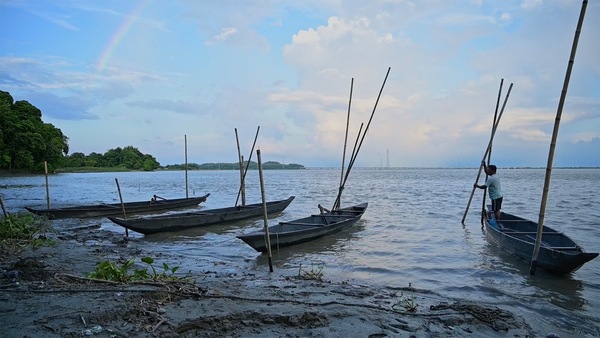
MORISIKA: The Story of the Boatman, directed by Vandana Menon and Debashish Nandi, tells the stories of the people living near the Brahmaputra river, of the cultures and traditions formed and lost to time on the river’s banks, the myths and legends surrounding it and the realities of what it means to live alongside its swiftly moving length. Through making the river a character and giving it a voice, the film is presented in the form of a conversation between the Brahmaputra and a boatman, who discuss not just the lives that played out for and around the river, but also the politics and choices it influenced. The film also records the myriad ways in which the river and the surrounding cultures live on in people’s memories. Ultimately, life around this river, which equally provides and destroys, is always a capsule of culture and tradition, its stories ever poised to be lost to the ultimate wave — time.
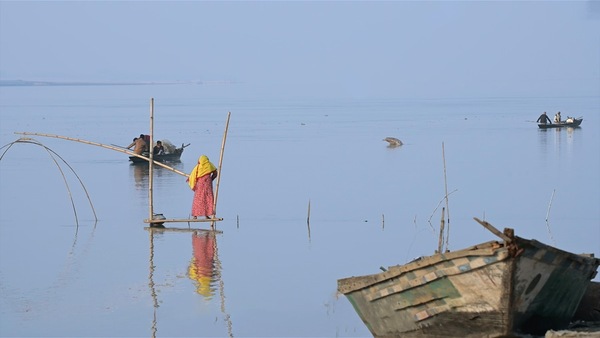
For instance, one of the fast-disappearing ways of life the film captures is khutis, which is essentially the water buffalo herders whose only source of income is the milk the animals give. Climate change and deforestation, which lead to rising water levels, are threatening this culture, as are developmental activities like oil drilling. With the lands being better connected to the mainland now, there’s a transportation of milk and other goods into these towns, also threatening livelihoods. “Added to that is the aspirations of different communities who want to catch up with the rest of the country,” says Menon. All these factors have been building up over time and as a result, the culture is slowly disappearing.
This also includes the fast disappearing collective memory which has thus far been carried on in an oral culture. One of those stories, narrated in the movie, is of a tailor named Kinthup from Sikkim, hired in 1880 by the Englishman Henry Harman. The British were on a quest to find a waterway from Tibet into Bengal and hired Kinthup and a Lama for the mission, which was expected to be completed in a year. A short way into the journey, the monk tricked Kinthup, selling him into slavery. For 18 months, Kinthup slaved away, until one day he escaped. He reached the Marpung monastery where his master’s men were waiting for him. The merciful abbot bought Kinthup from them. He would be free once he’d worked and paid off his debt. Kinthup wrote Harman a letter, describing his situation. He also decided to throw five hundred specially marked wooden sticks into the Tsangpo. If even one stick reached Assam, it would be proof that the Tsangpo was also the Bramhaputra.
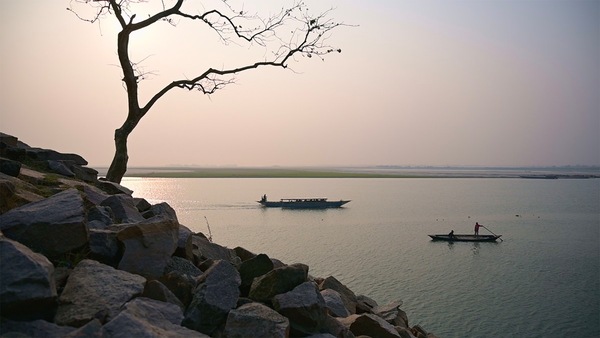
Kinthup paid off his debt and took off to throw the logs into the river. In 1884, he reached India. He found that his letter never reached Harman, who had returned to England and passed away there. No one believed his incredible story and he eventually went back to tailoring. But he kept popping up in British writings. Tibet was now autonomous and the British wanted to demarcate the border between India and Tibet. In 1913, Kinthup was an old man, and called to Shimla to narrate his story. Based on his account, a line was drawn between the Tibet and India, one which has deeply impacted the two countries. Kinthup was given a medal and a cash prize for his service. He passed away a few months later.
It’s these stories that Nandi felt an urgency to record. Being from Assam himself and already working on a photo series called ‘The Story of the Boatman’, documenting the lives of boatmen in Tezpur, he was surrounded by accounts of the local people and recalled memories of the stories he grew up with as well. Realising that with development and climate change making themselves felt, these ways of life are also changing, he wanted to record these narratives before they disappeared forever. “For instance, because of climate change, there’s less fish in the river now. So if you want to continue living the life of a fisherman, it’s going to be tougher,” says Nandi, explaining that these cultures are disappearing.
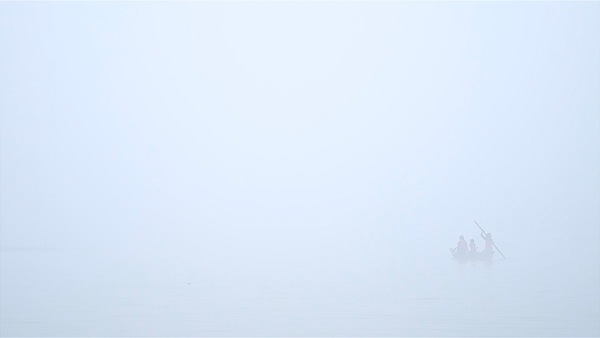
Once the filmmakers had figured out what the film would be about, finding the story of the film was a deeply organic process, which consisted mainly of going into these lands and talking to people. The duo has ensured that their project is a collaborative effort between themselves and the local communities. The latter decide what they want to talk about and the Brahmaputra is voiced by Dimbeswar Das, a Kolibari fishing village elder, also a theatre practitioner.
Another aspect the filmmakers were interested in is the relationship between the people and the river. “For us, it [Bramhaputra] is a lifeline, for the landscape and the people,” says Nandi, about the relationship locals share with the river. While it’s known for flooding and displacing people, they found a more complex relationship between the people and the river. “It’s not just all devastation and destruction. The river is also not romanticised. It is accepted for what it is; there is a healthy respect for it and people have learned to live with it,” says Menon.
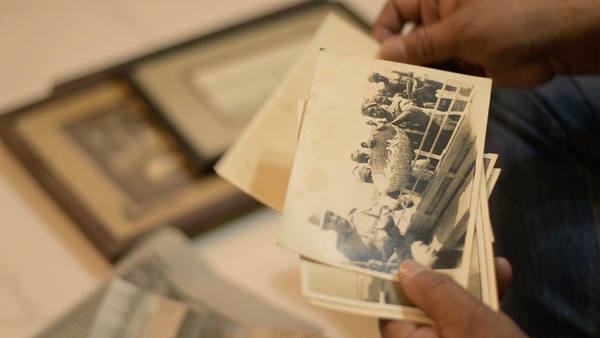
The way the locals respond to the river is also a source of inspiration and hope for the filmmakers. “In certain ways, they’re [community members] all Kinthup. They’re fighting every day, quietly, and still continuing to do what they’re doing. That is incredibly hopeful. You don’t need massive acts to be hopeful. Hope exists in the everyday acts and the extraordinary is in the ordinary,” says Menon. “That’s what kept us going.”
Inspired by the people, they’ve also launched The River Project, which records more local lives and stories.
Images courtesy Vandana Menon and Debashish Nandi.