


Assi: Rage Overwhelms Anubhav Sinha’s Urgent Film
Assi is simmering with rage. While the morality is beyond scrutiny, the tactile consequence of the fury interrupts the filmmaking.

Promo poster for Assi
Last Updated: 11.26 AM, Feb 21, 2026
THERE IS A SCENE in Anubhav Sinha’s Assi, a social drama in the shape of legal deliberation, where a female lawyer gets into a heated argument with a male police officer. There is a context here: rape. In Delhi, a woman was gangraped and the accused, four till then, systematically erased and misled evidence. Frustrated, the cop gets hold of an accomplice and threatens to get a confession. Seeing this, the lawyer, representing the survivor, erupts. “You think only you are angry?” she charges at him. “We are so angry that we can burn the world. We just don’t want to.” In many ways, the speaker, Raavi (Taapsee Pannu), is the film’s chosen voice, yet Sinha’s work, too, is dipping with rage.
Assi earns it fairly early. A woman, Parima (Kani Kusruti), was returning home at night when a group of men forced her into a car. Stuck for hours, the vehicle’s windows get smeared with her blood. Her clothes lie on the road like a lifeless body. But this is just the start. Investigations begin, four boys are arrested, but things get derailed fairly quickly. Discrepancies abound: DNA samples don’t match, the accused claim their car was stolen, cops back up this version, the survivor, also a teacher, learns that her students were making fun of the night. Meanwhile, her son keeps coming to the court.

As a filmmaker, Sinha is many things. His work is timely, urgent, and template-driven. And they almost always unfold in the broadest of strokes. The emotion-over-everything aesthetic has its moments (Mulk, Bheed), but it undermines the intent here, not least because one of his principal characters sermonises against it. But also because, in many ways, the filmmaker falls into the very trap it cautions against when a subplot of vigilante justice is rejected by Raavi with good reason: it takes the attention away from the issue at hand.
The film does something similar. Assi is simmering with rage. While the morality is beyond scrutiny, the tactile consequence of the fury interrupts the filmmaking. Take, for instance, how the screen cuts to red every 20 minutes to remind us that a rape is happening somewhere at the moment. Or, that the legal drama ultimately tapers off to a hopelessness with the system that feels at once too large and separate from the case at the centre. Assi considers everything interconnected, and while that is the case in theory, in execution, the scope is so broad that Sinha’s outing feels like several small films put together.
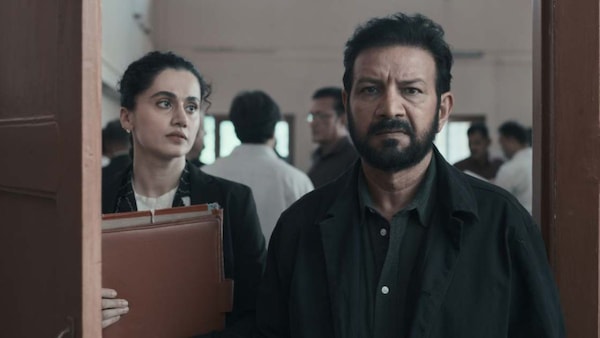
There is the main premise of the legal procedure where two lawyers (Pannu and Satyajit Sharma) argue about the horrific case before a reasonable judge (Revathy), there is a subplot of a tortured man, Kartik (Kumud Mishra) coming to Delhi after the passing of his wife (the character is not known but the voice is lent by Divya Dutta) and struggling to forgive himself for not being there with her at the last moments, pre-interval, Assi pivots to vigilante justice, and then there is the most crucial bit: Parima’s life.
The film opens with Vinay (Mohammed Zeeshan Ayyub), her husband, who works at a supermarket. He is a conscientious man, a migrant who built his life and himself. His elder brother lives next door, and both men are polar opposites. Vinay treats his young son as a friend, gently chides him for not making way for his female classmate, fondly looks at his wife dancing and tells her to come later. It is a fascinating character for the potential it holds. Assi refuses to provide his backdrop — how he became the way he is — but the possibility of what becomes of a man like him when his ideologies are confronted with the reality of life hangs in the shadows till he gets increasingly sidelined. The film offers the couple one scene post the accident, leaving both shortchanged.
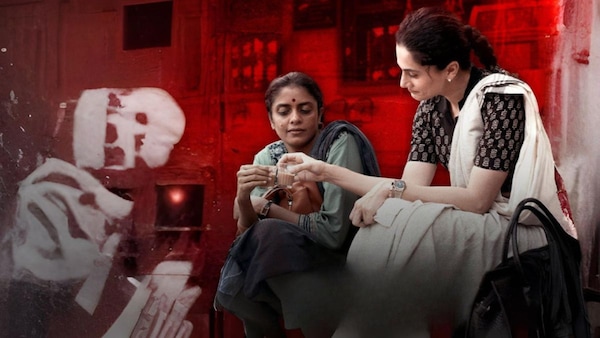
Having said that, the most crucial offshoot of Assi’s outrage is the way the rape scene is shot. Sinha falls back on the oft-used grammar. The camera enters the car. Men pounding on a woman, counting every thrust as another records it. The depiction is sordid and also gratuitous, designed specifically to evoke rage. On paper, it makes sense. By showing what he does, the filmmaker punctures holes in the pathetic cover of indifference most scuttle in when it comes to instances of rape. But the reiteration of the visual language also overlooks the other ways the violence could be portrayed (Eva Viktor’s Sorry, Baby is a towering example), which assumes more potency by refusing to show.
These don’t make Assi a bad film, only curb its potential. At its heart, Sinha’s new work is urgent and critical (all the while being too aware of being urgent and critical) that harnesses its dry tone to call for action. It refuses to look away and, by doing so, forfeits the privilege of the rest to do so. After all, being a witness to injustice might not make one take action, but it is also the first step.