


Baramulla Is An Effectively Misleading Supernatural Film
Leaning on the supernatural, Baramulla is propagandist in intent but structured in gripping filmmaking. This distils the seductive craft and the dangers of an Aditya Dhar film.
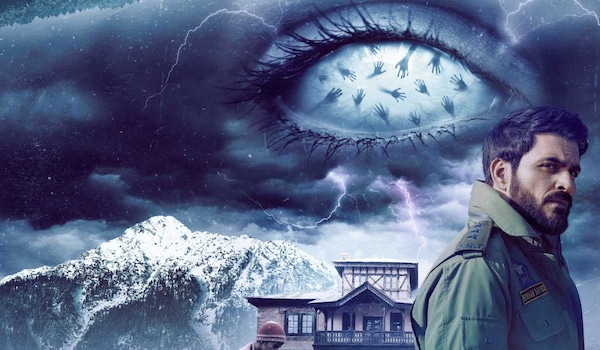
Promo poster for Baramulla
Last Updated: 08.32 AM, Nov 11, 2025
THERE IS SOMETHING called an Aditya Dhar film. The emphasis might feel odd, given that he has directed only one feature till now, and the second is waiting in the wings. But the projects he has been involved in the capacity of a writer and producer, most notably Article 370 (2024), bear the distinct stamp of his filmmaking. Tenets of this include compelling set pieces, imposing artistry, and bigoted politics. In Baramulla, the latest film he has bankrolled, all these are heightened to greater, more dangerous heights.
Named after a city in Kashmir, Baramulla is an extension of Vivek Agnihotri’s The Kashmir Files (2022) in terms of its selective reading of history and identification of victims. If the latter was a cruder depiction of the plight of the Kashmiri Hindu Pandits during the rising militancy in the valley in the 90s, then Dhar’s film — directed by Aditya Suhas Jambhale (Article 370) — is a more muted work. Leaning on the supernatural, Baramulla is no less propagandist in intent but structured in gripping filmmaking; the bias is insidiously woven into the narrative. This distils the seductive craft and the dangers of an Aditya Dhar film.
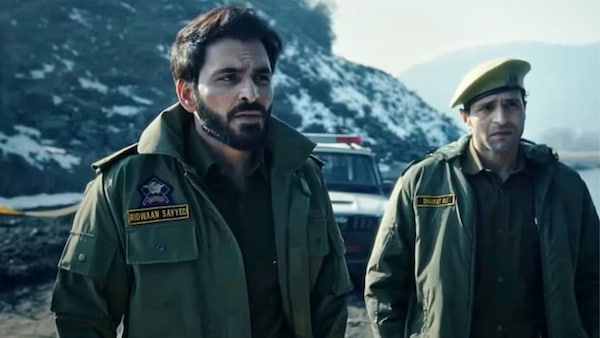
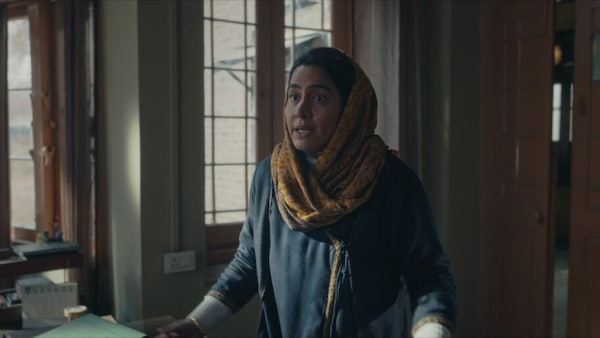
Written by Dhar and Jambhale, Baramulla is set in 2016 (three years before the Centre abrogated Article 370, which granted a special status to Jammu and Kashmir) and premised on a single event: children are mysteriously disappearing in the city. A missing son of a former MLA brings a contentious cop to headline the case. Deputy Superintendent of Police, Ridwaan Shafi Sayyed (Manav Kaul), arrives in the city with wife Gulnaar (Bhasha Sumbli), young son, Ayaan (Rohaan Singh) and adolescent daughter Noorie (Arista Mehta). A past case has already strained the relationship between Ridwaan and Noorie, and the kids struggle to adjust to the new place.
A cop with a dysfunctional family, posited against a demanding case, is a familiar set-up. Jambhale’s film does not disrupt it but brings in the intrigue of the supernatural to bring things to a head. The house they live in is inhabited with strange shadows, the smell of dogs and an outhouse that remains closed but awaits food. In the midst, Ridwaan tackles suspicion from the locals and has the word “kaafir” painted outside his house.
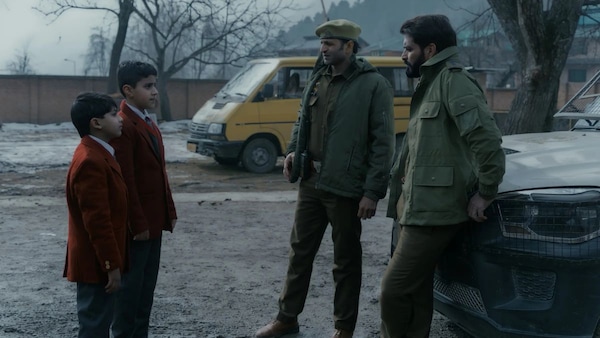
Disappearance, being a metaphor for converting children to militants, is an easy reading — one that the film encourages. During the investigation, there is a covert extremist Muslim group working towards “azaadi” and plotting the kidnapping of kids. But the perverse merit of Baramulla is that this is used as a subterfuge. The intent here is not to outrightly demonise a community but to also push them to erasure by designing them as vessels for the magnanimity of the Kashmiri Hindu Pandits. It is impressive the commitment with which Dhar and Jambhale take a go at it, using a sly artfulness in filmmaking, reminiscent of their past collaboration.
Although stagnant in parts, aiming to be a slow burn, Baramulla culminates as a vilely effective supernatural film that straddles propaganda with cunning skill. The depravity filters in, however, when a Muslim child is shown as an accomplice or burden of betrayal and servitude is placed entirely on the Muslim characters, drawing out both an incomplete and misleading portrait of a turbulent time in history.
In Baramulla, the sophistication on display is scary and sets a precedent for the departure of rudimentary films espousing disinformation. If anything, it marks the arrival of refined outings which cushion compliance to power with effective storytelling. Released in the same week, Suparn Verma’s Haq is another instance. How they fare is anybody’s guess, but the responsibility of viewers has never been greater.
Baramulla is currently streaming on Netflix.
(Disclaimer: The views expressed in this column are those of the author and do not necessarily reflect the official policy or position of OTTplay. The author is solely responsible for any claims arising out of the content of this column.)