


OTTplay At Berlinale 2026: The Arundhati Roy Film India Could Barely Make Today
Meenakshi Shedde reviews Pradip Krishen’s restored In Which Annie Gives It Those Ones, written by Arundhati Roy — a funny, rebellious cult film that feels near-impossible to make today.
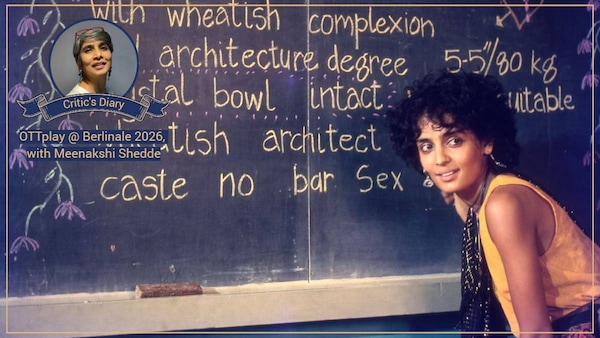
Last Updated: 02.19 PM, May 08, 2026
This review is part of award-winning film critic, journalist and curator Meenakshi Shedde's dispatches from the 2026 Berlin Film Festival for OTTplay.
***
PRADIP KRISHEN’s wonderful film In Which Annie Gives It Those Ones (‘Annie’) got a long, standing ovation from a full house where it was screened in the Berlin Film Festival’s Classics section this February. It had lost none of its appeal 37 years later, when they held the world premiere of the superb, 4K restored version of the 1989 film. Film Heritage Foundation, led by Shivendra Singh Dungarpur, which restored Annie, said it was also released in theatres in 14 Indian cities. At a time when audiences avoid watching films in theatres, preferring to wait till it is streamed, both are remarkable achievements of ‘reverse logic’ for a cult film that’s been on YouTube for a decade.
You know you’re in for an outrageous film, when a key idea, proposed by the titular architecture student Anand ‘Annie’ Grover, is to toss seeds all along the Indian Railway tracks, that will grow into fruit trees, fertilised by human excreta from the loos of passing trains. Ewww! Annie’s proposal is about as grossly idealistic as you can get. Scatological humour is not something with which you immediately associate Arundhati Roy, the screenwriter here, but it also comments on railway hygiene. You see the early sparks of her brilliant writing: the film was made eight years before her debut novel The God of Small Things won the Booker Prize in 1997.
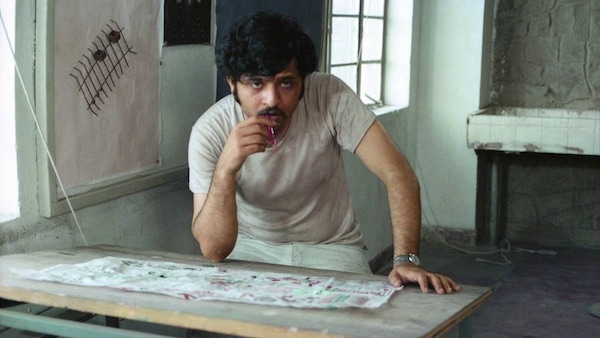
Annie is set in 1974, in the grungy student hostel of a government-run architecture institute in Delhi, with all kinds of namunas (types) you recognise — students bumbling their way through life — but the screenplay, often funny, portrays them affectionately. Annie has failed the same class four times, partly because he once joked about the dean, and is still paying the price. A bunch of students rally round to help him finally pass, by distracting the vindictive dean, whom they call Yamdoot (Messenger of Death), played by the suave Roshan Seth.
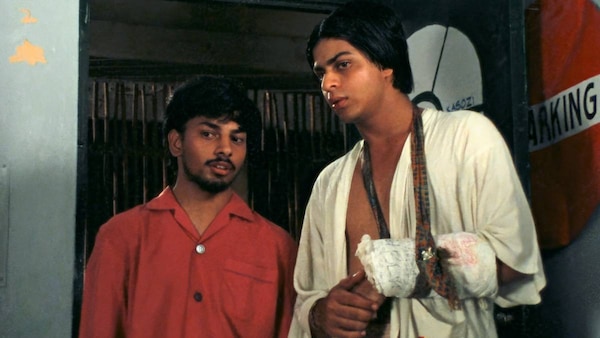
Director-producer Pradip Krishen — he and Roy were once married, and remain friends — marvellously captures the student hostel microcosm: its unkempt rooms and Afro haircuts; a world of adda and romance. A liberal world in which young men and women freely mixed, enjoyed drink and drugs; but there’s also academic pressure and attempted suicide. Arundhati Roy has contributed substantially to the film: she wrote the screenplay, did the production design, and played the key role of Radha, with intelligence, wit, and a luminous, lanky, sexy presence. She declined to attend the Berlinale screening because she rejected jury president Wim Wenders’ statement that filmmakers should avoid political engagement; however, Pradip Krishen and others did attend.
Several Indian films set in college campuses over the decades have dealt with very diverse themes, including campus ragging, student suicides, idealism, campus politics and caste issues. The Bollywood films include 3 Idiots, Rang de Basanti, Kuch Kuch Hota Hai, Anurag Kashyap’s Gulaal and Shazia Iqbal’s Dhadak 2. Regional language films include Kalloori (Tamil), Premam and my favourite, Aavesham (both in Malayalam), an uproarious action-comedy starring Fahadh Faasil.
In contrast with these, Annie reveals its class in quiet ways. First, it is in English, with scattered Hinglish. But it is also an English and slang that many middle-class people all over India understand, and has characters in whom we recognise ourselves (‘giving it those ones’is slang for doing the usual). Second, Krishen and Roy’s world building suggests an intellectual interest in world politics — and music — via a Che Guevara poster, books by Lenin, references to Karl Marx and Le Corbusier, the architect who designed Chandigarh, and Beatles songs. Thirdly, even its humour is intellectual. Roy’s character Radha critiques the entire architect-builder system: “In the human being, the urine and scent gland is replaced by the architect. And he establishes territory by manipulating the built environment.” Uff! You sense some autobiographical elements in Radha’s character — but she sends up Radha as well. The film refuses to take itself too seriously.
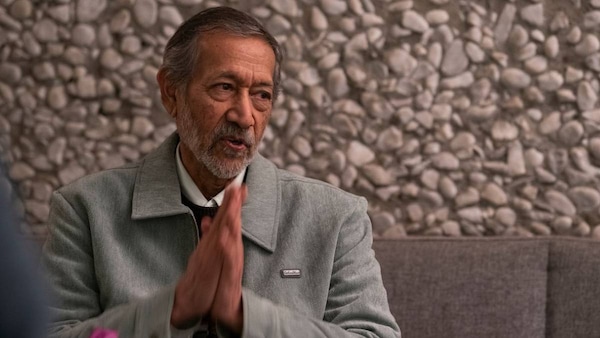
Indeed, Roy did study architecture, and her superb screenplay has a Leftist tone, an empathy for the underdog, and the underclass that has been practically erased from mainstream Indian cinema. Krishen and Roy portray not only fools and underdogs, but even the wicked dean, with tenderness. They are not so much after three act structure and character arcs, as capturing the zeitgeist of the time in granular detail.
The acting by the ensemble cast is convincing — a mix of actors and mainly non-actors. Arjun Raina plays Annie, and we recognise many actors early in their careers, including Shah Rukh Khan, in a minor role, ignominiously listed as ‘Senior’; Manoj Bajpayee, Raghuvir Yadav and Divya Seth. Rajesh Joshi’s cinematography evokes the grubby hostel rooms with authenticity, while A Thyagaraju’s editing skilfully weaves multiple storylines. The women crew includes screenwriter and production designer Arundhati Roy, and costume designer Viveka Kumari.
Krishen, meanwhile, even had a mini-retrospective of three of his films at the Red Lorry Film Festival in Mumbai, featuring In Which Annie Gives It Those Ones, Electric Moon and Massey Sahib, all powerful films. He has long veered off into a distinguished career as a naturalist and environmentalist.
Above all, the government’s response to the film is very revealing: here, rebellious students revel in their freedom; they openly criticise the authorities in a government institution; and argue for a more equitable society. Yet, the film was screened on Doordarshan, the government broadcaster. On top of that, it won two National Awards, for Best Screenplay for Arundhati Roy and Best Feature Film in English in 1989. (Both Roy and Krishen returned their National Awards in 2015 to protest the government’s intolerance.) The 1980s were a more liberal time, when characters in a film could criticise the state, and enjoy liberal freedoms. These are practically unthinkable in a film made in today’s climate of surveillance, censorship and worse.
All the more, I was delighted to be present at the standing ovation at its Berlin world premiere, which confirmed that this absolutely delightful gem remains completely universal — and hasn’t dated one bit.
***
Meenakshi Shedde (Facebook | Instagram) is a National Award-winning film critic, journalist, curator and global influencer, shaping opinions on South Asian cinema worldwide since 40 years, based in Mumbai. She has been curator/programmer to TIFF Toronto, Berlin and film festivals worldwide. She has been jury member of 25 film festivals, such as Cannes, Berlin and Venice, including the jury of Cannes’ Semaine de la Critique (Critics’ Week) 2023, and was also Golden Globes international voter.