


Bhumi Pednekar's Daldal Is Dreadfully Dull
Daldal straddles between a procedural drama and a psychological spectacle without committing to either. It assumes a similar unidirectionality even when convinced there is more than meets the eye.

Promo poster for Daldal.
Last Updated: 03.07 PM, Jan 31, 2026
ON PAPER, Amrit Raj Gupta’s Daldal is a foolproof show. A female police officer, troubled by her past, is pitted against a serial killer who is no less tormented. In an equal world, they would be friends, perhaps even allies. But being born to different circumstances results in choosing different paths, even though the journey looks the same. Gupta’s work puts them on opposite ends of the morality spectrum only to unmask the sweeping immorality surrounding them.
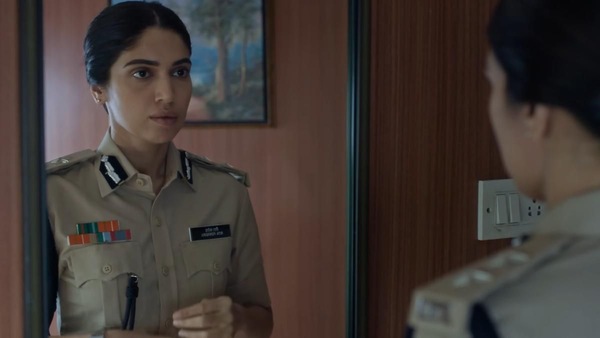
This is not the most ingenious premise (season 2 of Delhi Crime hinted at something similar), but there is still a lot going on for Daldal. Suresh Triveni, director of Tumhari Sulu (2017) and Jalsa (2022) — disparate but compelling films — is the showrunner. Bhumi Pednekar plays the police officer — the role written with a kind of emotional wringer that is a remarkable shift from her previous excessive portrayals. There is an informed choice of revealing the killer at the start and sustaining the intrigue through the ‘why’ of the killing, expanding thus the scope of the series, and finally, there is a moving love story between a girl and a boy, and even though the latter is an addict, it is she who is obsessed.
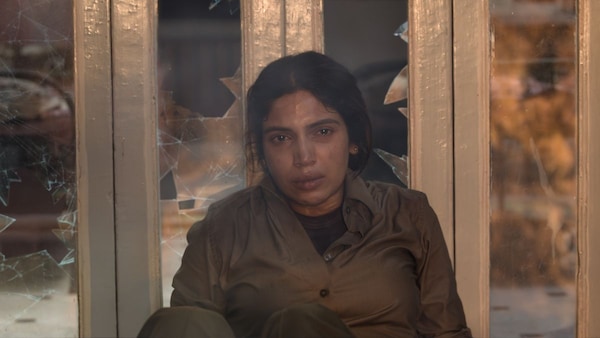
But in Gupta’s hands (he directed TVF’s Gullak before this), these remain solid points in theory that witlessly translate in execution. Across the seven episodes, each decidedly short, Daldal goes on with little emotional heft. The groundwork is well done. Rita Ferreira (Pednekar) is the newest DCP in the Mumbai police force. Most people in the office, including her boss and excluding her close aide (an excellent Geeta Agrawal Sharma), assume her gender has played a part in this. They freely gossip about it. Therefore, when a senior citizen is murdered at the beach — the killing done through a distinct method — Rita heads the case, but the men lurk with misgivings. There is also her partner, a doctor and caring person to a fault, who takes a while to take “no” for an answer.
The death at the start sets off a series of similar murders as Rita faces mounting pressure from within the department and the media. A journalist, Ankita Acharya (Samara Tijori), keeps trying to puncture Rita’s accolades, and the suspicion falls on Sajid (Aditya Rawal), an addict who did his time with a gang and a shelter home.
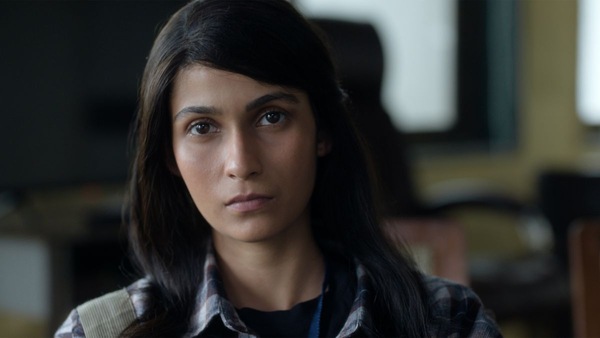
It is a neat triumvirate where each person resembles the other till they don’t. Rita has a weed dealer (the number saved as “doctor” hinting at the dependence) who she meets at midnight if need be. Her father abandoned her in childhood, and her mother, also a cop, spent her life admonishing her for not being enough. While Sajid is an orphan, Rita’s parents have been cruel through their presence. All three are also stuck in a past that appears to have overwhelmed their present. But in Daldal, the subtext is the context and the text. The characters are rendered afflicted and defined by their trauma.
The offshoot of this is a dreadfully dull show that straddles between a procedural drama and a psychological spectacle without committing to either. The series also assumes a similar unidirectionality even when it is convinced that there is more than what meets the eye.
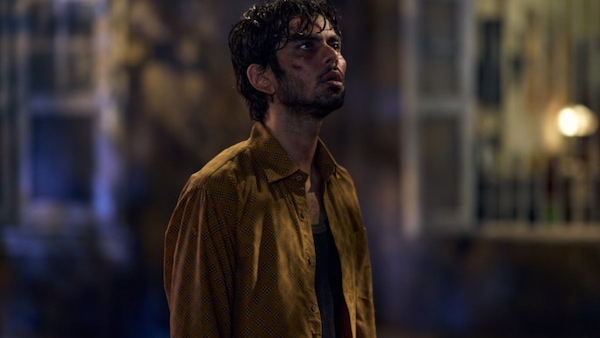
Much of this comes down to the performances that remain uniformly uninteresting. A single highlight is Rawal, who, despite being saddled with little to do, leaps off the limited writing material. There is a scene at the end of the show where he breaks down. His body follows suit and crumbles with every passing word. His posture distilled the intent of the show with more clarity than its runtime, underlining, however briefly, what Daldal could have been.