

Catherine O'Hara: The Mother Of Memories
I’ve been scrolling through all the social media tributes to O’Hara every night. Processing celebrity deaths is tricky in the digital age, but what of the rare stars that made us feel like the sky?
Last Updated: 01.50 AM, Feb 04, 2026
MOST INDIAN PARENTS traumatised their kids by comparing them to other kids. I used to be one of the kids used as a point of reference: the playful but studious son with good manners and an annoyingly adult work ethic. My parents were proud of this; they liked hearing their friends pepper their lectures to their own sons and daughters with a “be like Rahul”. My mother, in particular, enjoyed the parent-teacher meetings where the teachers would have no complaints. Not even an abusive marriage could wipe the smile off her face on those evenings. Since my parents never compared me to anyone, I subconsciously started to compare them to other parents. I’d see other dads as fitness freaks, doctors and prosperous family-business heirs — and wonder why mine sounded so cocky, never exercised and refused to eat healthy. I’d see other moms organising households and managing careers — and wonder why mine didn’t work, threw parties and looked like a fish out of water.
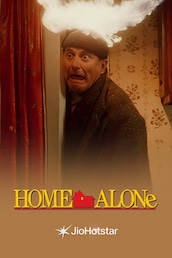
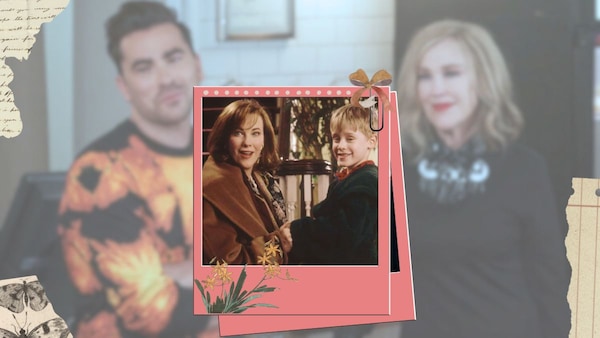
The only time my mom became a different person — assertive, urgent, sharp, protective — was when her only son fell into trouble. Nothing could stop her if I were sick, upset, vulnerable, or in a crisis. Nobody (not even a husband with main character energy) could mess with her then. I loved this side of her, craved it even. So while children across the world went nuts for Kevin McCallister and his Christmas exploits in the Home Alone movies, my favourite moments featured his mother’s frantic cross-country journey to reach him after ‘accidentally’ leaving him behind. Seeing a guilt-riddled Kate McCallister move mountains and drop those chaotic vacations in a heartbeat made me feel all warm and fuzzy inside. In all the reruns, I’d always pause to tear up at the sight of her face when she’d reunite with Kevin at the end. I remember wanting to experience that feeling in real life.
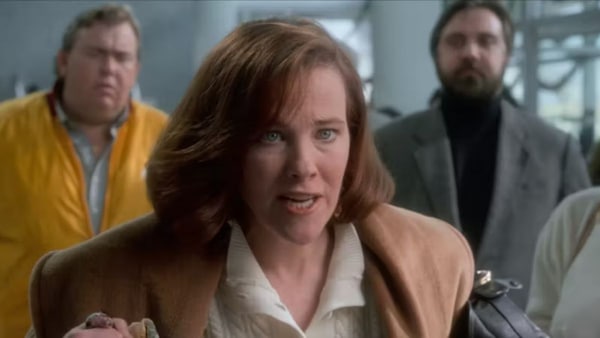
I didn’t know the actress’s name back then. And just like that, I saw the best version of my mother in Catherine O’Hara: a flawed parent, not entirely ready, but an empathetic force of nature for the boy she strived to rear. She bridged the gap between unconditional love and conditional care. Not once did I question how irresponsible the lady is for making the same mistake, not once, but twice. Kate’s volume was derived from a home packed with loud and entitled males, but O’Hara framed her as a superhero who discovered her cape. Through her performance, I learned how to miss my mother. I realised that no matter how smart and spirited and adventurous I felt on those picnics and school trips, the separation anxiety eventually kicked in. As much as I crafted the language of survival in her absence, it’s the certainty of her presence that empowered me. She left so that I could return. So that I could get a glimpse of her beaming face when the bus rolled in. She would hug me tight, and I would often imagine a glowy Christmas tree in the background.
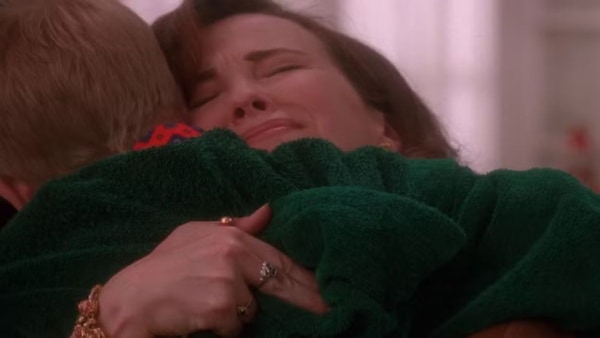
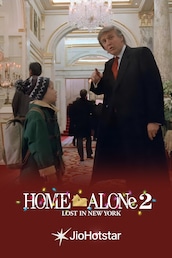
The thing about encountering Catherine O’Hara on screen in my formative years is that she became a core memory — inextricable from my idea of family and womanhood and agency and winter. I’d never met her in person; we were total strangers. But she was the closest I came to in terms of perceiving the power of authenticity and expecting it from my elders. She made me, for once, think of my mother as the point of comparison rather than the other way around. There were times when I actively put myself in danger — or well, pretended like it at least — to see my mom don her cape. Like the day I convinced four classmates to walk all the way home because the school vans were late. In my head, we were embarking on this Home Alone-coded odyssey. At the end of it all, I anticipated the thrill of reuniting with my mother. I was hoping she’d flex those muscles and turn the city upside down in search of me. It didn’t play out like that, of course. My parents were on the way to the police station when they ran — in both relief and rage — towards my tired body strolling through the gates. I got the scolding of my short life; they sensed it was my plan. I was later told that she drove to my school and back 5 times. It made me happy. When I was 11 or so, I even faked (expertly) a stomach infection while spending a weekend with relatives. She flew to me in hours; I liked to imagine she soared through the clouds faster than the planes she passed. As we rewatched Home Alone: Lost In New York one night, I noticed her scoffing at O’Hara’s character. She was unimpressed by a mother and her follies. She reacted like an athlete talking about her lesser contemporaries. “I would never forget you,” she insisted.
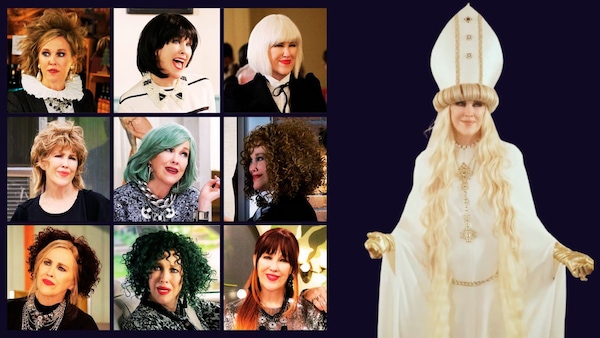
A few decades on, I watched Schitt’s Creek in the lockdown. It was a bit like getting reacquainted with Kate McCallister, except older but no wiser. Catherine O’Hara’s over-the-top character, Moira Rose, kept defying narrative odds. She should be the campy antagonist, but she’s not (imagine Cruella de Vil in a feel-good universe). She should be the last straw for her elite family thrust into the tragicomedies of middle-class living, but she resists. As a whimsical TV performer who is suddenly confronted with the role of belated motherhood, she had no business being so real. As someone humbled by a serious fall from wealth and grace, she had no business being so oblivious, self-absorbed, kooky and theatrical. And as someone so oblivious, self-absorbed, kooky and theatrical, she had no business being the cantankerous heart of a riches-to-rags household. As a heart steeped in imperfection, she had no business being so perfect. As someone with no business, she was the star of everyone’s business.
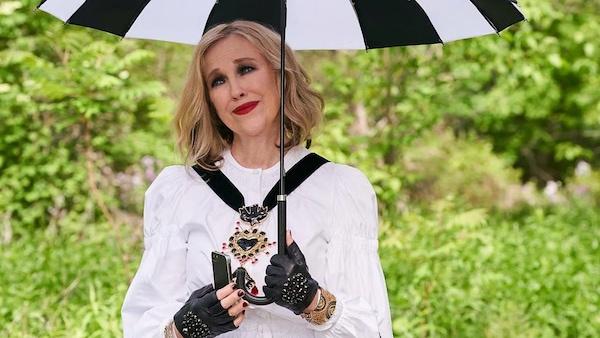
In other words, O’Hara’s rendition of Moira was so plural — so awash with eccentric contradictions and clashing personalities — that she reclaimed the flexibility of compassion. She didn’t choose to be nice to be good; she just chose to be herself. Moira had no qualms about behaving as if she were rehearsing for an invisible camera, but the show’s most memorable moments often featured her slipping in poignant nuggets of truth to her people when they least expected it. She never compromised on the depth of her cracks despite being so loudly broken. Discovering Moira became a way of rediscovering my mother. The similarities were uncanny, until they weren’t. Over the years, I saw my mom go from princess to pauper more times than I can count. My father kept showing her dreams of a more comfortable and stable life, but those dreams were cruelly cut short by his fragile masculinity. For no fault of her own, she kept getting relegated to metaphorical motels in obscure towns. Her fate was never in her own hands. She briefly tasted life at the summit — Gurgaon penthouses, Juhu apartments, Panchsheel bungalows, Lagos villas. But nothing lasted; the yo-yoing between expectations and reality started to take a toll on her. She didn’t make the most of the ‘Schitt’s Creek’ stopovers either, because my father convinced her that they were temporary: short detours from a shared destiny that never came. Unlike Moira, she found it hard to massage the ego of a husband who saw himself as more of a victim than an underdog.
I also sensed that she found it more socially acceptable to be cynical and morose. It’s as if she felt the need to legitimise the gravity of our circumstances by acting the part. She couldn’t afford to behave normally; she shrank in sync with our fluctuating fortunes. Being herself was no longer an option; she just became what others needed her to be. In the process, the light in her eyes kept dimming. The personality kept fading, piece by piece, as a homemaker whose identity remained at the mercy of sputtering breadwinners. I was supposed to be her magic potion, but even my scars stopped provoking the agency out of her. She remained available but oddly passive through my bumpy transition from adolescence to adulthood. So O’Hara’s unhinged turn became my catharsis. In a year of social distancing, it helped me imagine an alternate-reality version of my mother: unapologetic, unyielding, dramatic, observant, casually nutty even. Ironically, it also helped me accept that mom wasn’t obligated to be the one with the head on her shoulders. She didn’t have to be the one responsible for keeping a dysfunctional family together. She should have been allowed to act selfish and sullen and resentful — unabashedly human — without having to sacrifice her core identity.
After all the years, then, it was still Catherine O’Hara convincing me that my mother was incomparable. She gave me a glimpse of the best, most unfiltered version of my mom. I’d like to believe that, in a not-so-parallel universe, that’s how fiercely individualistic my mothership was. When O’Hara passed away last week, I came across a viral clip of the show, where Moira wryly tells her flummoxed son David to stop sounding like a “disgruntled pelican”. The first thing that came to my mind was my mom’s chuckle when she would deliberately fart within earshot to see my reaction. She entertained herself by teasing me about how uptight I am (she was right); she loved messing with me to feel better about herself. She’s always been the nonplussed one, and at some level, perhaps my prudeness stemmed from a desire to sustain her excesses. I chose to be the ‘proper’ and pensive one so that she didn’t have to. It’s like Kevin growing up to be a sober green flag so that Mrs McAllister could continue to be a little extra after they lost the mansion.
I’ve been scrolling through all the social media tributes to Catherine O’Hara every night. Processing celebrity deaths is tricky in the digital age, but what of the rare stars that made us feel like the sky? What of the famous woman who kept the anonymous son in me alive? Of all the shared clips and scenes from her restfully influential career, I kept stopping at a recurring image: the second Kate McCallister's eyes shoot open after realising that Kevin is missing. It’s a look of impulsive dread and panic; she has committed the worst parental crime possible. I used to always burst out laughing at this jump-scare face of hers. (My future point of reference: the sixth-sense love from Kabhi Khushi Kabhie Gham, where a devoted Indian millionaire intuitively detects her son’s presence).
In the last few years, though, the humour I saw in Kate’s horror has mellowed. It’s a matter of perspective now. It’s the precise moment a mother’s mind is decluttered enough to remember the boy who will miss her. Once the noise in her head subsides, her muscle memory takes over. It’s been over a year since my mom was diagnosed with Alzheimer’s. She cries a lot these days. Especially when it hits her that she’s misplacing things and failing to recall names or details. The anxiety of losing her bearings affects her more than the melancholy of having lost them. She often goes for walks without her phone and housekeys. The other morning, after another incident, I tried to lighten the mood. I joked with her about how she might pull off a Home Alone with me soon. After all, she didn’t do it on all those family holidays, despite my best efforts (I once hid in the bathroom before the cab arrived; she was not impressed). It took a beat for my joke to register on her blank face. But then, out of nowhere, her gaze hardened. The mask slipped, and a familiar cape emerged. She looked me in the eye and scoffed: “I would never forget you”.