

GOAT: A Lukewarm Biryani Of Animated-Underdog Tropes
Unlike animated classics that live large, GOAT simply isn’t designed to stay beyond its welcome. It clocks into the office of content-era entertainment and clocks out: nothing more, nothing less.
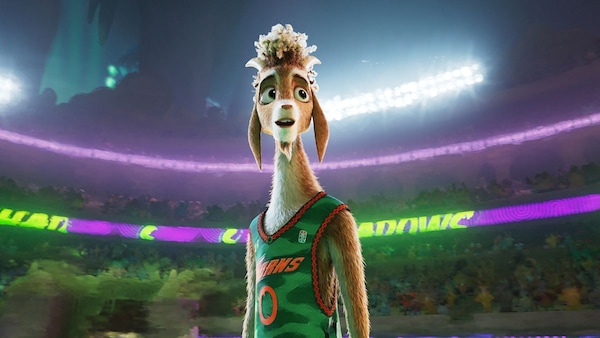
Still from GOAT | Sony Pictures Animation
Last Updated: 10.26 PM, Feb 20, 2026
IN TERMS OF animated sports comedies featuring anthropomorphic animals, the bar is high. Surf’s Up (2007) set it nearly two decades ago; the mockumentary sports comedy about a young northern rockhopper penguin (voiced by a still-sane Shia LaBeouf) who dreams of becoming a professional surfer is unsurpassed in ingenuity, wit and underdog cinema (it’s one thing to make an animated film, it’s another to ‘shoot’ it like a live documentary). I’ll never forget the truth of the moment the protege discovers that his idol (Jeff Bridges) has been alive all along. The medium melts away, the cutesy humour pauses and out comes a classic genre trope. The heart doesn’t care if it’s not a live-action scene; emotions do not discriminate. Manufacturing them from scratch is arguably harder.
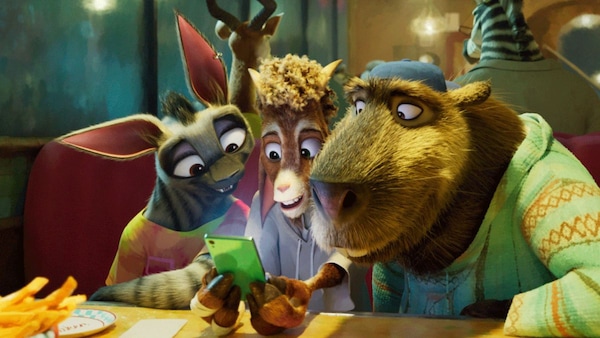
GOAT has a couple of moments that come close. Like when the protagonist, a spirited goat named Will Harris who dreams of being a roarball (a ‘primal’ version of basketball) legend, reminisces about his late mother on the eve of a big game. Or when he speaks of the eccentric characters of the local diner that raised him. GOAT is expectedly playful, of course, but there’s always a sense that the animation is merely a tool to sell an age-old sports-underdog template. It’s another way to tell the same story (for all ages) again, not a way to create something with a limitless medium. Most modern animation leans on the colour, the staging and the fable-coded adventures. It’s almost as if the makers have taken enough of a risk with the format itself, so they choose to play it safe with the padded-up storytelling. I’ll admit I feared this day would come the second the term 'G.O.A.T' (“Greatest of all Time”) entered our sports vocabulary — I expected a Hollywood movie about an actual goat trying to be the…goat. That’s just how predictable the gimmick business is.
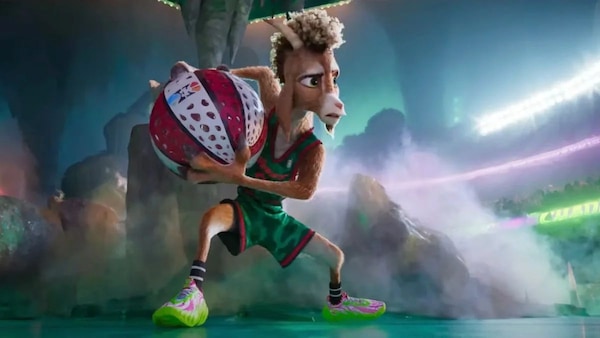
To be fair, you get what you pay for with GOAT (which may or may not have timed its release with Ramadan). There’s the spunky and broke orphan. There are his slacker besties. There’s a sports-crazy town that’s never won the big 'world-famous-in-America' trophy for years. There’s a team of underachievers. There’s the almost-washed-out superstar (a slick black panther) who needs that trophy to seal her legacy. There’s a greedy team owner. There’s a viral video that propels said orphan into the limelight as a publicity gimmick. And there’s a rival horse named ‘Mane’ who drops a cool diss track about our favourite goat in the run-up to the final. You know how it goes — each character is a different beast with their own silly quirks; I particularly enjoyed the slimy Komodo dragon player named Modo with an exotic accent. I like the touch of normalising the unisex nature of the sport: the superstar panther is a female, and nobody bats an eyelid (including the commentator bat) about gender throughout the film. The goat and the panther and the giraffe (voiced by basketball icon Steph Curry himself) and the ostrich and the Komodo make for a merry band of misfits, but the movie isn’t interested in treading new grass.

For all their tiny charms, I suspect movies like GOAT will be but a blip in the genre landscape. It does the job when you’re watching it, the kids (and kids-coded adults like myself) can have a chuckle or two, and you could just like the absurdity of getting emotional when the ball goes through that rim. But the effect disappears the second you leave the hall — the day continues, and memories of watching animals behave like people who like animals meld into the anxiety of a long and busy weekend. Unlike animated classics that live large and amplify the madness of being human, GOAT simply isn’t designed to stay beyond its welcome. It clocks into the office of content-era entertainment and clocks out: nothing more, nothing less. Given the effort it takes to bring such a world to life on the screen, you’d imagine it would be in service of a go-for-broke concept or larger-than-life spectacle. But tell that to those like James Cameron, who reinvent mediums until it’s hard to tell one from the other. Nobody wins, I suppose, until everybody does. I could, however, get on board with the small-town community message of movies like these — only so that I can recommend one of the G.O.A.T sports-documentary shows, Sunderland ‘Til I Die, in the same space.