


Good Fortune: An Angelic John Wick Rescues A Flailing Master Of None
Good Fortune is fun when Keanu Reeves turns earnestness and bad writing into an art form. But as a Barbie-styled comment on modern American society, it comes across as performative and dishonest.
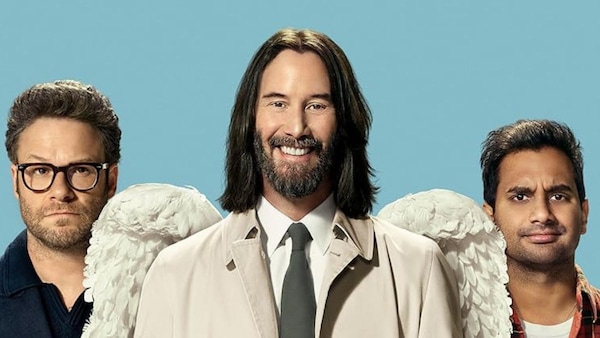
Promo poster for Good Fortune.
Last Updated: 09.30 AM, Oct 18, 2025
GOOD FORTUNE plays out a bit like a smart-alecky Aziz Ansari comedy sketch. A skit-like one-liner — what if a well-meaning but incompetent “budget angel” body-swaps a wealthy white guy and a miserable brown guy? — is pan-fried with a series of thematic keywords: gig economy, American dream, immigrant struggle, racial biases, capitalist greed. It’s a deadpan spoof that counts on looking like a deadpan spoof; even the sincerity is supposed to sound designed and clunky. It has the narrative scale of a gag, too. As a film, it doesn’t know where to go after the social gimmick wears off; it just fizzles into the sort of artificial resolution that, if I didn’t know any better, passes off as image-renovating and self-righteous tripe. The film is fun when Keanu Reeves turns earnestness and bad writing into an art form. But as a Barbie-styled comment on modern American society, it comes across as performative and dishonest. Look Ma, (no) Wings!
I like Ansari as much as the next brown apologist who accepts an ambivalent male celebrity after they turn sexual misconduct allegations into personality fodder and subconscious racial profiling, but Good Fortune might have been infinitely more enjoyable if it didn’t unfold like a boys’ club date where everyone has important thoughts to share. The filmmaking hides behind the modest sitcom-coded staging, while the plot tries to be clever about all the heavy things in the world. Sometimes it succeeds, but for at least half of its 98 minutes, the humanity of its messaging feels curated. The idea is too busy patting itself on the back to offer any deeper curiosity about the Trump-era America it’s set in.
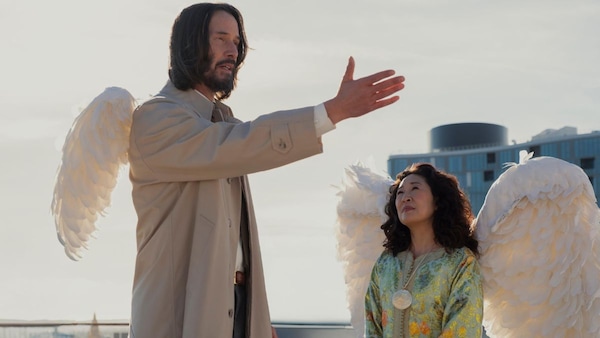
Gabriel (Keanu Reeves) is a lower-tier angel (it’s funny that a celestial being, too, is a gig-economy striver of sorts) whose job is to prevent Los Angelites from texting-and-driving accidents. Gabriel wants bigger wings; he wants to do more, like the veteran angel who aces the guiding-lost-souls gig. Once he notices how broken and down-and-out the life of Indian-American homeless guy Arj (Ansari) is, he decides to ‘earn’ his promotion by showing Arj the light. After Arj hits rock bottom, his car is towed away, and he has no money to get through the night, Gabriel swaps his life with that of Arj’s former employer and mansion-owning venture capitalist, Jeff (Seth Rogen). Not because he wants Arj to be happy, but because he wants to show him that money isn’t everything. Naturally, his plan fails because Arj hijacks Jeff’s life, refuses to swap back and loves the money, while angel Gabriel himself ends up broke, suspended, a chain-smoking and taco-loving struggler working multiple jobs and sharing a bed with the newly poor Jeff. The two men obviously spell out the Freaky-Friday-esque lessons: how can people live like this? How are they not always angry and violent? How did Arj survive so long in this state?
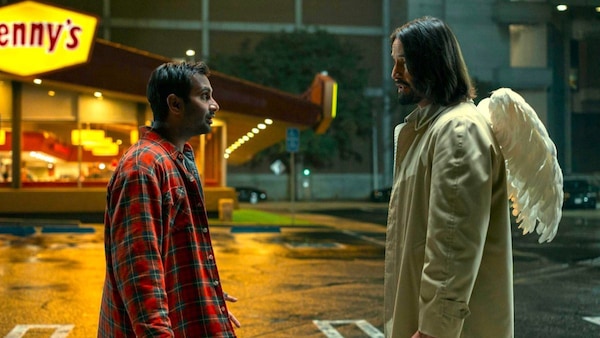
The angel being ‘reduced’ to a dark and cynical human is amusing, sure, but it’s a passing punchline in a film that’s too uneven to see its self-awareness home. It’s as if the black comedy is content to toy with three cross-sections of society by setting the stakes as low as possible; the enlightenment in the end is so stilted that if you call it out, it’ll claim that it’s deliberately stilted and distracted (a bit like Ted Lasso’s last season). I like that Rogen plays a goofier version of his The Studio character, though the criminal waste of Keke Palmer in a token union-worker-girlfriend role speaks more to the writer’s gaze than the actor’s performance. Ansari acts like he’s still on stage, reframing vulnerability and confessions as a device of humour. The smugness is difficult to process in a story that stars Reeves, a Hollywood action star who is also a one-man kindness cottage industry known for his authenticity and low-profile philanthropy. Casting him is smart; a supremely uncomplicated Reeves is in on the joke because he gets the so-bad-it’s-good tone of the character.
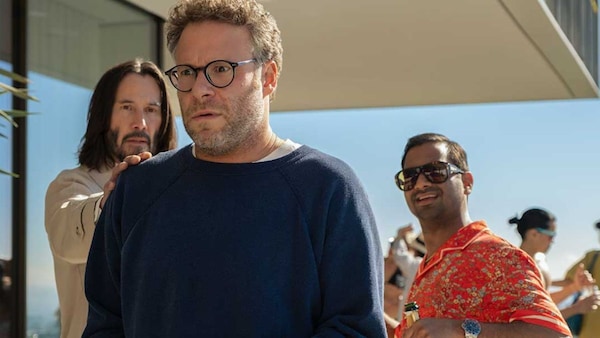
At some point, Good Fortune forks into three separate arcs that refuse to intersect. Jeff is annoyed and scraping by, Gabriel is suffering but also enjoying the fruits of working-class life, while Arj is attempting to realise that his place is lower on the food chain. The movie merely meanders along here, almost like the maker’s attention span is over and he’s just letting everyone do as they please. Los Angeles is a neat setting for this ‘fairytale’; the film’s city of stars ranges from late-night taco trucks, seedy motels and Colombian dance bars to garish disco floors in Parasite-styled upper mansions. But LA is the natural protagonist because the characters in it are written like they’re anticipating laughter and applause tracks in every other scene. It’s the film’s good fortune that it has opinions coming from a space of experience and diversity. But it is hampered by its ability to talk down to the viewers, be the jack of all trades — and the master of none. The irony is that Reeves, a white actor, becomes the divine saviour of a movie made by a non-religious, second-generation Indian immigrant.