


Jafar Panahi’s It Was Just An Accident Is An Effective Study Of Compassion
OTTplay's critic Ishita Sengupta reports from the Toronto International Film Festival (TIFF) 2025. Here: A review of Jafar Panahi's It Was Just an Accident.
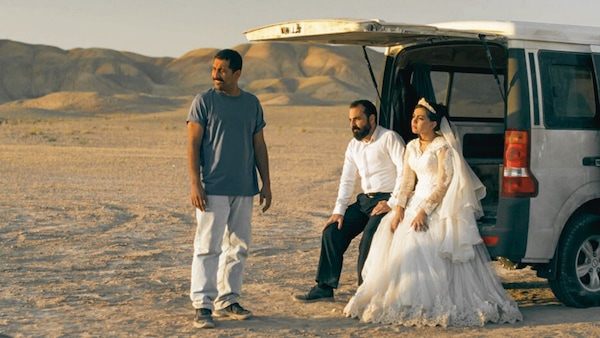
Still from It Was Just an Accident.
Last Updated: 03.19 PM, Sep 14, 2025
AT THIS POINT, it is impossible to extricate the myth of Jafar Panahi from the mythology of his films. His work is rooted in the historicity of Iran and, punctuated by his appearances, blurs the lines between fact and fiction. Panahi’s repeated inclusion of self in his films (The Mirror, Taxi, No Bears) tethers them to his reality — a filmmaker striving to make films in politically hostile circumstances — and to the reality of the land. In It Was Just an Accident, the connection is further strengthened, even though he remains absent.
The film, which won the Palme d'Or at the Cannes Film Festival in 2025, starts with an unbroken shot inside a car. It is night, and a family is returning home. Crucial details arise: the woman is pregnant, the man is silent, and their young daughter is sitting in the back of the car. She is jumpy and wants to hear the music loud. The man resists, and in the confusion, their car hits a dog. Restive silence fills the frame till the car breaks down. Help is far, but someone decides to help. Afar, another man watches the scene unfold.
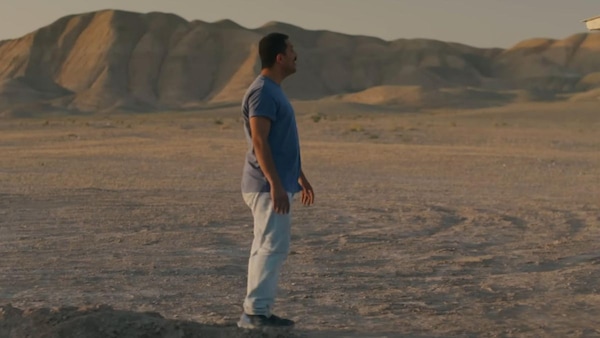
On paper, It Was Just an Accident bears the blueprint of Panahi’s work where complexity arises from an innocuous incident. A regular pitstop proves to be pivotal. It turns out that the onlooker, Vahid (a wonderful Vahid Mobasseri), has a traumatic history of knowing the man looking for help. In fact, not only does he know him, but so do a lot of people — a wedding photographer, a woman about to get married, a man still traumatised with his past. Turns out, the man in question is an officer of the state who had tortured them when they were in jail. But here’s the catch: no one is really sure. They were blindfolded when they were imprisoned, and although the man (called Eghbal, played by Ebrahim Azizi) sounds and smells like him, and even has a limp, there is uncertainty.
It is easy to trace the roots of It Was Just an Accident to Panahi’s own experience. In February 2023, the filmmaker walked out of jail after spending seven months behind bars (he was sentenced for spreading propaganda against the state). The trauma and the injury in the characters are presumably reflective of the bruise he has been carrying. But unlike what the premise might suggest, there is little vengeance in the film. Panahi steeps his current work in the perils of humanity, where hatred can be institutionalised but forgiveness is instinctive.
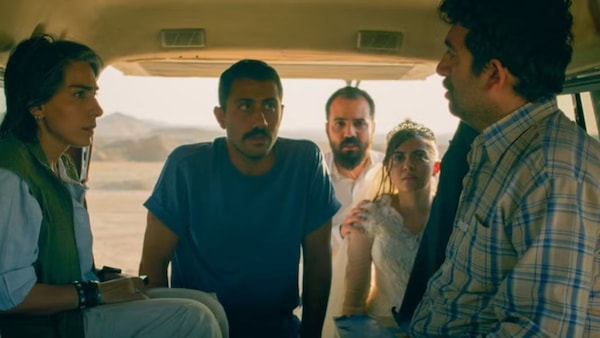
On hearing Eghbal’s limp, Vahid follows him to his house and the next day kidnaps him. Resistance follows (Eghbal maintains there has been a mistake; he isn’t the man who mistreated them), and this clouds Vahid’s judgement. From here, It Was Just an Accident unfolds as an unlikely road movie. Afflicted with doubt, Vahid struggles with killing Eghbal even though he had dug a grave. Instead, he carries him around behind his car and meets others like him, for confirmation. The absurdity of the situation makes it funny, but the humour is also rooted in tragedy: unlike his tormentor, Vahid fails to be as ruthless in operating on doubt.
In many ways, It Was Just an Accident is a homage to the political prisoners of the state and a persuasive study of their humanity. Through the characters (there are two women and none wear a hijab; in one scene, one of them asks for a cigarette), Panahi echoes the ill-treatment they went through, the damage it caused and the perverse intimacy they forged with the persecutors (one of them attempts to identify the man by smelling him). The focus is always on them, of what happened to them through the ordeal (Vahid shares that his wife left him; all their lives were altered) and the crux of compassion that remained undented despite the hardships.
Children play a crucial role in this regard. They have often headlined Panahi’s films, and although they are tucked away from the frontline here, they serve a similar purpose of being instruments of empathy. They also lend It Was Just an Accident a softness that, if anything, adds to the effectiveness of the subject matter. In his own way, the filmmaker is still critiquing the government, but doing so by upholding the generosity that refused to be tainted despite the looming threat of the present repeating itself.