

Kamini Kaushal: The Quiet Radiance Of A Long, Unhurried Career
Kamini Kaushal never chased mythmaking, yet her life reveals the deeper patterns of stardom, survival, and selfhood. Vikram Phukan writes.

From Neecha Nagar to Kabir Singh, Kamini Kaushal’s seven-decade span reveals the quiet architecture of an industry.
Last Updated: 06.01 PM, Nov 17, 2025
AS A THREE-YEAR-OLD being ferried around a market in Colaba circa 1978, I apparently had my cheeks pulled affectionately by none other than Kamini Kaushal. That’s a tiny, throwaway anecdote my mother carried more faithfully than I ever could. It was an odd entry point into the work of an actress whose career began in the mid-1940s, but it captures her longevity. At that time, Kaushal was still a familiar pillar of the silver screen, recognisable and current in a way that later decades would quietly forget, even though she would sporadically return to our screens in films as recent as Kabir Singh (2019) and Laal Singh Chaddha (2022), more than seven decades after her debut.

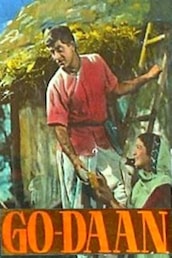
For someone who held her own alongside the top actors of her time, and carried films like Biraj Bahu (1954) and Godaan (1963), she was absolutely an A-lister of her moment. What’s striking is how little of that standing travelled into posterity, especially when set beside counterparts like Nargis, Meena Kumari, or Madhubala. She belonged to that quieter cohort of leading ladies respected within the industry, trusted with substantial roles, and widely visible in their time, but later eased out of the canon by the culture’s fixation on a handful of icons. That erasure surfaced, almost accidentally, when a younger critic like Uday Bhatia watched Kabir Singh and found himself struck by the performance of Kabir’s grandmother, unaware that he was watching the star of Neecha Nagar (1946). His description of rediscovering Kaushal in his Mint Lounge piece wasn’t ignorance; it was evidence of how easily someone once central to the industry could slip out of collective memory.
Your pop culture fix awaits on OTTplay, for only Rs 149 per month. Grab this limited-time offer now!

In the late 1940s and early ’50s Kaushal had a poise that sat somewhere between the older theatrical mode and the emerging naturalism of the post-independence era. She played desire, sorrow, and moral conflict without surrendering to full melodramatic excess, yet her style still carried the formal edges of her time. She was, in effect, a transitional performer. When you scan through her filmography, there’s a striking range of subject matter and literary influences, but most of it sits inside films that have been completely forgotten, even though it was the so-called Golden Era with its profusion of classics. Even so, she enjoyed a seventeen-year run as a leading lady before shifting to character parts.

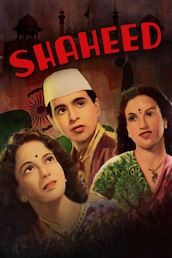
What gives her trajectory a quiet symmetry is the way she returned to a title she had once fronted. In 1948 she was the romantic lead in Shaheed, the year’s biggest hit; and years later she appeared in the far better-known (but otherwise unrelated) Shaheed of 1965, in a maternal role that echoed the moral centre Leela Chitnis had embodied in the earlier film. Kaushal had inherited a Chitnis role once before, in Sohrab Modi’s 1958 remake of his own film Jailor. Chitnis, Durga Khote, and Kaushal were all placed in that bracket of ‘women from respectable families’ who lent the film profession a degree of social acceptance. Kaushal also spent much of her stardom as a married woman, which shaped how the industry saw her and the roles it steered her toward. It was a convenient, even reductive label, one that ignored the many lineages of women that had actually given the industry its flavour. And in 2014, when Jaya Bachchan presented Kaushal with the Filmfare Lifetime Achievement Award and said, simply, that because “educated girls” like Kaushal had entered the industry “we followed,” it showed how deeply that notion had settled.

What’s remarkable is how lucidly and tellingly Kaushal herself understood the contours of that life. In her acceptance speech, she didn’t indulge in lofty nostalgia; she spoke plainly about being the last surviving member of her “gang,” about friends disappearing “one by one,” and about feeling lonely in a room full of applause. She joked about the new generation’s physical ease, but contrasted it with her own era’s restraint, noting that “maybe our eyes spoke a little more than our bodies.” And then she said the thing that reframes her entire arc: her most cherished period wasn’t the stardom of the 1950s but the early 1980s, when she created a children’s programme for Doordarshan. She built every puppet with her hands, painted their faces, dressed them, imagined their personalities, and voiced ten different characters if a story demanded it. For someone once rumoured, though never confirmed, to have inspired the silhouette of the Filmfare trophy from the time it was called the Clares, the pivot from glamour to puppets wasn’t a fall from grace; it simply revealed where her creative joy truly lay.


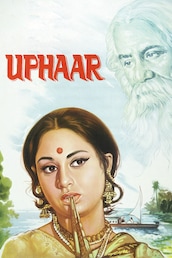
Two of her later roles particularly stand out. In Uphaar (1972), her slightly formal, old-school style became the perfect instrument for portraying an aristocratic woman who has a fondness for her prospective daughter-in-law, Minoo, but can’t decipher her unconventional impulses. That mannered poise, often dismissed as dated, became a precise class marker of status-quo femininity, especially against Minoo’s restless, gender-nonconforming streak. Jaya Bachchan had played Minoo, which gave their later appearance together at the Filmfare stage an added layer of continuity. And in Kabir Singh, for which Kaushal won a Screen Award for her performance, she reversed the dynamic completely. This time, seemingly unaffected by the film’s profoundly patriarchal setup, she was the only person who intuitively understood the volatility of the eponymous character (played by Shahid Kapur), and the lone figure he deferred to without force or persuasion. Those two performances, one built on gentle incomprehension and the other on instinctive recognition, seem to perfectly exemplify a career sustained by steadiness rather than legend.