


OTTplay At Berlinale 2026: Notes On Watching R Gowtham's Members Of The Problematic Family
Meenakshi Shedde reviews R Gowtham's Members Of The Problematic Family, from the 2026 Berlin International Film Festival.
Last Updated: 10.00 PM, Feb 22, 2026
This review is part of award-winning film critic, journalist and curator Meenakshi Shedde's dispatches from the 2026 Berlin Film Festival for OTTplay.
***
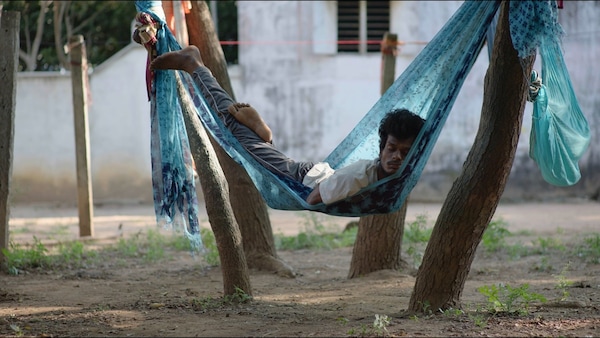
R GOWTHAM’s Tamil debut feature Members of the Problematic Family created a stir at the Berlin Film Festival, where it was shown in the Forum section, meant for the more experimental films. The film is about a troubled young man, Prabha, who is mentally disturbed following alcoholism, and behaves erratically, stealing something here, or grabbing a sleeping baby from home and placing it on a busy road, putting its life at risk. He dies early on in the film. Following his funeral, Gowtham opens the lens of the story wider to examine his apparently normal family and community more closely. He reveals how the ‘normal’ family is far more deliberately violent and dangerous, than Prabha — marked as a sometimes dangerous moron, who is not fully in control of his senses.
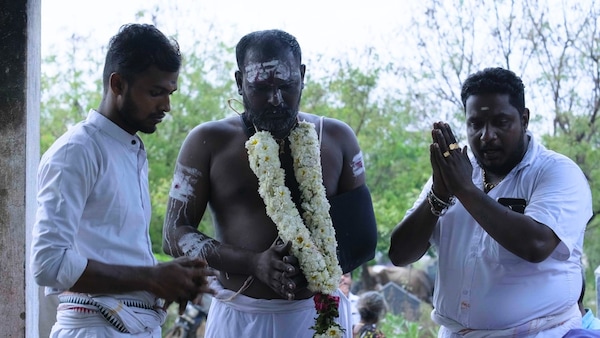
It is also a comment on how our society normalises or glosses over violence of various kinds — extreme violence like death, physical abuse, emotional and psychological abuse. A family member, a police officer, even coolly arranges for someone to “disappear” — then threatens to commit suicide if there’s a post-mortem — and effortlessly gets away with it, commenting on the butter-like pliability of Indian laws. At the funeral of the young man, which seems more like a ritual to be completed, few seem to genuinely mourn him, most see him as a nuisance. But there’s a poignant moment when the mother, who constantly cursed him when he was alive, wails that she feels “abandoned” with his passing away: exhausted from picking up after him and rescuing him and others from distressing situations he created all the time, she remembers her love for him only after he is gone.
In fact, the film explores the close connection between love and abuse, and even crime. And how alcoholic or psychologically disturbed family members in India are mostly not taken for diagnosis and treatment, causing the entire family to be disturbed or distressed in turn, and so the family pathology spreads quickly. In its exploration of the close relationship between love and abuse or crime, it reminded me of Ameer Sulthan’s Paruthiveeran, also in Tamil, that we had in in the Berlinale’s Forum way back in 2008. Starring Karthi and Priyamani — it was Karthi’s first film, this very violent but masterly film, had even won the NETPAC Award Special Mention for Best Asian Film in the Berlinale Forum.
There have been many other Tamil films at the Berlinale, including Mani Ratnam’s Alaipayuthey (2001); Vinothraj PS’s Kottukkaali (The Adamant Girl, 2024); Amma & Appa by Franziska Schönenberger and Jayakrishnan Subramanian, Perspektive Deutsches Kino, 2014; Pradeepan Raveendran’s A Mango Tree in the Front Yard, France, short, 2009; and Enakkum Oru Per (I Too Have a Name), by Suba Sivakumaran, USA/Sri Lanka, short, 2012. This reflects a small surge in contemporary Tamil films selected at Berlin, including in the generation younger to Mani Ratnam, Vetri Maaran and others, as well as from Tamil diaspora, and Tamil films are at other festivals too, of course.
Vinothraj PS’s Kottukkaali followed his win of the Tiger Award at the International Film Festival Rotterdam for his Koozhangal (Pebbles), a minimalist, very raw and powerful film that commented on the brutality of patriarchy in everyday lives in Tamil Nadu. Heightened violence is a feature common to a number of Tamil films, especially those set in and around Madurai and rural Tamil Nadu, apart from Chennai.
Members of the Problematic Family has a raw and authentic feel, and is shot mainly in a modest neighbourhood in Chennai, that feels familiar to the filmmaker, with a mixed cast of actors and non-actors. Prabha, the adult protagonist (A Ra Ajith Kumar), is a traditional theatre artist, whom the director said he cast because he did a great audition playing a corpse. Despite his petty and dangerous deeds, and quicksilver temperament, his face and eyes convey an innocence and mischief that stays with you. For instance, he persuades the local barber to shave off his grandpa’s moustache: the latter feels so bereft of his masculinity, as to consider suicide. Karuththadayan, who was earlier in Vinothraj PS’s Pebbles, is also in this film.
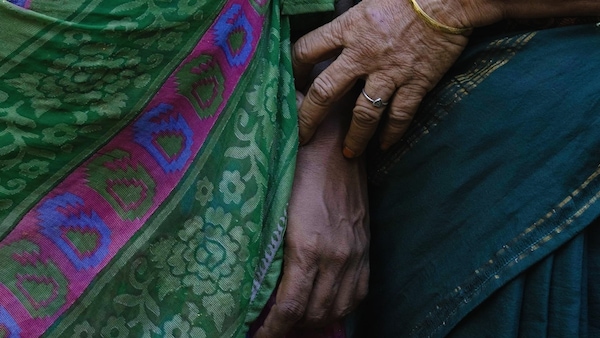
The screenplay, by Gowtham himself, seems to draw from social observation, which is reflected in the film’s observational tone, rather than a tight narrative structure. Siddharth Kathir’s cinematography and Ganesh Nandhakumar P’s editing both reflect this approach: they are more interested in characters, incidents and creating the microcosm of this small world. The film’s producer is Tamilarasan Kalidass, with filmmaker Mukesh Subramaniam as co-producer.
The film’s Berlinale screenings were at the beautiful cinemas Cinema Paris and Delphi Filmpalast, as well as Cinema Betonhalle in the ‘Silent Green Kulturquartier’: the last is quite appropriate, in this case: it is a cinema hall converted from a crematorium, built over a decommissioned former cemetery — yes, they watch movies over graves. Very Berlin.
***
Meenakshi Shedde (Facebook | Instagram) is a National Award-winning film critic, journalist, curator and global influencer, shaping opinions on South Asian cinema worldwide since 40 years, based in Mumbai. She has been curator/programmer to TIFF Toronto, Berlin and film festivals worldwide. She has been jury member of 25 film festivals, such as Cannes, Berlin and Venice, including the jury of Cannes’ Semaine de la Critique (Critics’ Week) 2023, and was also Golden Globes international voter.