


Oh Butterfly: Three's A Reckoning In Vijay Ranganathan's Assured Debut
The thriller turns a cottage, a couple and a third wheel into a pressure cooker of pride, shame and buried truths. Aditya Shrikrishna reviews.
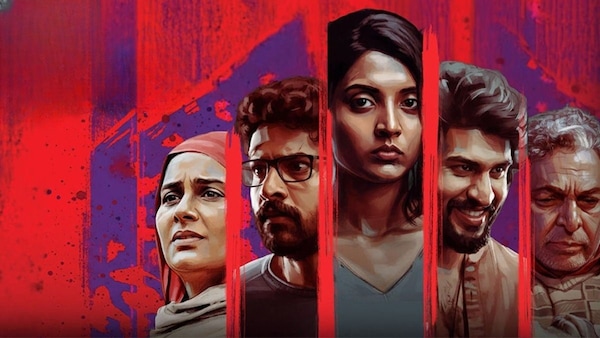
Last Updated: 08.23 PM, Mar 07, 2026
THERE IS AN evolutionary completeness in Vijay Ranganathan’s debut feature Oh Butterfly. We see larvae, chrysalis and the whole butterfly lifecycle. We also see other insects and ants and as if to attract them, and us, there are breadcrumbs. They take the form of a book, a golf ball, a club, a glass and other objects. Ranganathan lays them out in the beginning like multiple Chekhov’s guns, objects that will eventually come into play. Not all of them wait till the third act to fulfil their destiny, some aid in dialing up the stakes midway amidst casual as well as torrid conversation, and some in fatalistic action. There is considerable therapising and some psychobabble, not all of it interesting but the drama remains compelling, not necessarily due to the writing (by Ranganathan and Harish Rajagopal) but mostly down to the direction.

We meet Gowri (Nivedhithaa Sathish) at the height of her PTSD. She has nightmares in her sleep even as she endures one every waking minute. Her husband Arjun (Attul) died in freaky circumstances and these manifest as Gowri’s guilty conscience making her stay physically and mentally away from people and objects. The objects play a big role in Oh Butterfly; anything could lead to an accident and Ranganathan’s play on the butterfly effect complements this idea (the caretaker played by Nasser even hums the closer home parallel — kodi asainthathum kaatru vandhadha). If a flutter can cause a storm, a harmless party game can cause death. The film begins on a sombre note, the proceedings too dull to induce interest but just as the screenplay kicks into gear, the ideas in the film too fester and assume meaning. It peels back time, we travel back to a couple of days before the death, as a depressive Arjun and a forlorn Gowri take a trip to their holiday home in Kurinji, him to find his feet in life again, and her to confess some truths and rekindle their relationship.
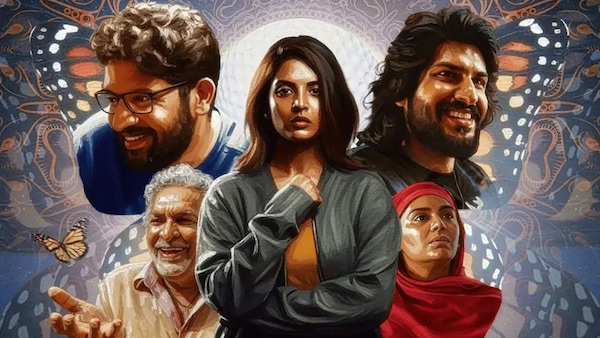
The meat of the film is in the chamber drama that begins when we get Gowri and Arjun, the wife and the husband, and the third wheel of Surya (Ciby Bhuvana Chandran) in the same cottage, as past equations come to roost with the present. The emasculated Arjun who has lost his job, his confidence and his voice in the marriage with Gowri, goes up against biker dude Surya, master of his life, brave enough to attract undeserved fortune to his midst. Ranganathan goes for the delectable ménage à trois, soaked in alcohol and melancholic nostalgia, to distill a dynamic where both masculine energy and sexual tension give rise to ugly one-upmanship. It’s not easy to film people talking in rooms — as simple as they look — but Oh Butterfly’s second act where secrets crash and burn, and pride and shame compete for expression as adults play silly games, holds our attention while also indulging in theatrics (a wall kissing ritual strangely leads to banging the head against the same wall).
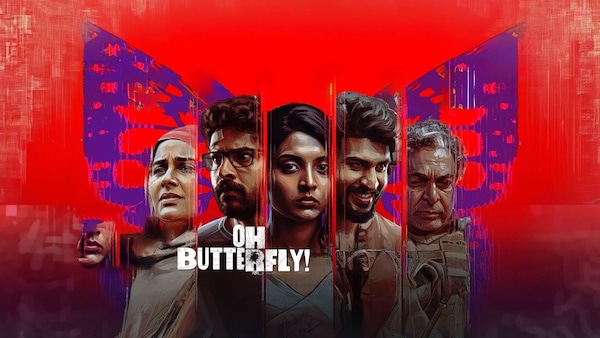
It’s a series of closeups and medium interior shots and rationed cuts and camera movement (cinematography by Vedaraman Sankaran and editing by Bhuvanesh Manivannan) complemented by a thrilling minimalist score (Vaisakh Somanath). The drama in these portions is arresting enough for us to wonder what more experienced actors could have brought to the table, for a lot here rests on the burgeoning chemistry between the three leads and their varying moods over the night. The film also does something rare for Tamil mainstream film—it never bothers to make its leads likable. They betray more than their flaws and often pay for it, making them living breathing characters rather than archetypes.
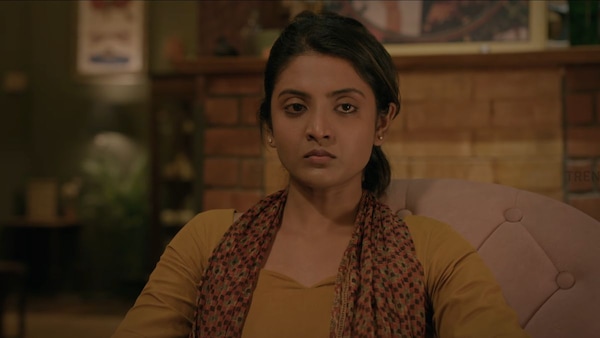
Just as he introduced other objects, I wondered if the presence of a Gabriel Garcia Marquez book (and some chatter about a mystical palmist christened Sodabuddi Kezhavi played by the underused Geetha Kailasam) automatically meant a hint of plot level magic realism. It’s not the case but Ranganathan gives interesting lines to unsuspecting characters. A saintly, spiritual woman talks science and a Carl Sagan quote about the fleeting nature of life is realised in the outlandish nature of destiny itself. There is an overkill of this karma boomerang philosophy and the effect of the breadcrumbs, the film even goes for an unnecessary attempt at “completing” a cycle not realising that the beauty is in a little bit of the inexplicable. Nonetheless, Oh Butterfly is an effective debut feature, its invisible staging and filmmaking helping it rise above its modest Rube Goldberg machine ambitions.