


One Battle After Another Is A Mic-Drop Moment By Paul Thomas Anderson
Paul Thomas Anderson, at his most accessible, turns the politicisation of everything into a hilarious, chaotic war where radicals, zealots, and their own desires clash in absurd ways.
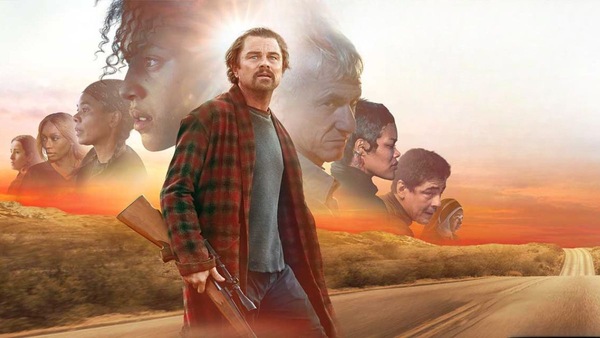
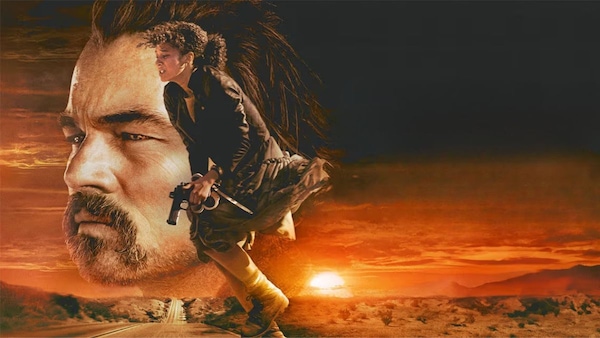
Promo poster for One Battle After Another.
Last Updated: 03.50 PM, Sep 26, 2025
IN MODERN AMERICA, and perhaps most littered democracies around the world, radicalism and rebellion have become two sides of the same coin. In terms of ethno-cultural imposition, it’s hard to tell the difference: fascism is a reaction to evolution, and resistance is a reaction to fascism. It’s as if one cannot exist without the other. Each is now an aesthetic: an image posing as a performative ideology, and spokes in the wheel of a cycle stuck in motion. Amidst this politicisation of every choice and emotion, the fundamental war between right and wrong has mutated into a petty battle between the right and the left. There is a label for everything — insiders and outsiders, natives and immigrants, legitimate and illegal, communism and socialism, settlers and invaders — except compassion itself. None of this is easy to explain, understand, see or engage with. It isn’t supposed to be.
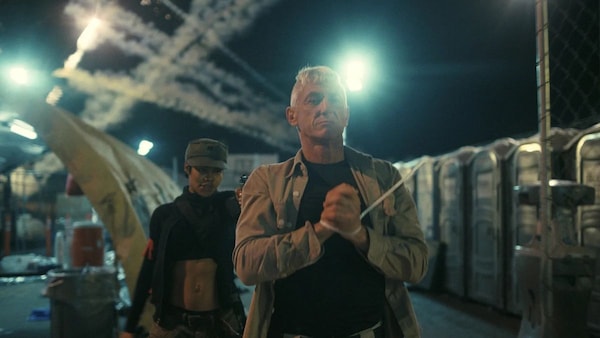
But Paul Thomas Anderson goes one step further. He makes it all ridiculously entertaining, funny and farcical in One Battle After Another, a film that skewers every side with precision and guile. PTA at his most accessible is Tarantino without the posturing, Spielberg without the sentimentality, Scorsese without the machismo and Nolan without the dispassion. Nobody is spared here. There’s a Black revolutionary outfit called the French 75, who identify as guerrilla agents of chaos: attacking deportation camps and migrant detention centres, blowing up electric towers and freeing the downtrodden from an oppressive regime. But their dissent looks more like a kink than a moral choice. De facto leader Perfidia Beverly Hills (Teyana Taylor) gets sexually involved (to put it mildly) with her reptilian nemesis, Colonel Lockjaw (an Oscar-bound Sean Penn). She demands he “get it up” in their charged first encounter; they’re both turned on by the power (im)balance, and it helps that he’s the kind of pervy Trumpian zealot with a fetish for dominant Black women. Perfidia crumbles the moment real life (postpartum depression) hits her, and the survivors of the outfit are reduced to weed-growing nuns who aren’t even slick enough to protect their own.
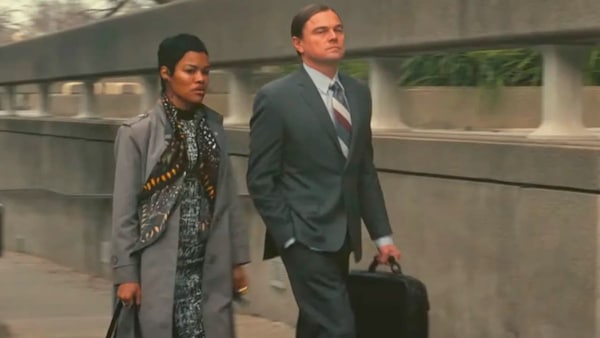
There’s the comically white supremacist organisation called the ‘Christmas Adventurers Club,’ whose membership Col. Lockjaw covets 16 years into the future. Except his record is not spotless: he has a Perfidia-sized secret. So he sets out to hunt down his teen daughter, Willa, under the pretext of raiding a border town full of undocumented Mexican immigrants. Lockjaw, like most self-respecting fascists, hides his personal agenda behind public displays of nationalism and faith; his walk, too, is a cross between too-much-leg-day stiffness, GI-Joe-coded-military swag and shove-the-flag-up-my-butt pride. He suspects that Willa is his spawn: a “mixed-breed” that might tarnish his chances of becoming a Christmas Adventurer with a street-facing office. The chase to erase traces of his tryst plays out much like the name of the actress behind Willa (Chase Infiniti), where Duel fuses with Mad Max: Fury Road and Terminator 2 to reveal an infinitely anticlimactic pursuit of rhythm and recklessness.
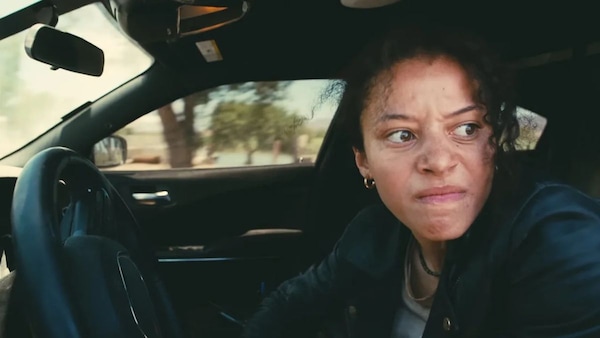
And of course, there’s Bob “Ghetto Dan” Ferguson (Leonardo DiCaprio), a washed-up former French 75 member who spends his days smoking pot, drinking and watching reruns of The Battle of Algiers. Bob is such a bobber; he surfaces only when he has a dog in the fight. He is the ultimate American parable: a mildly conservative liberal who once played a rebel to impress the Black woman he loved, the oblivious single dad of a teenager who may not be his, the disillusioned stoner who’s yet to process the grief of having no identity, and a hopelessly ill-prepared ex-revolutionary who must stumble back into the game to rescue this abducted daughter. Some of the most hysterical scenes feature Bob embarking on an anti-manifesto of sorts — sporting a Dude-coded bathrobe, boomer impatience and oversized shades — with no clue of how to be the hero he pretended to be.
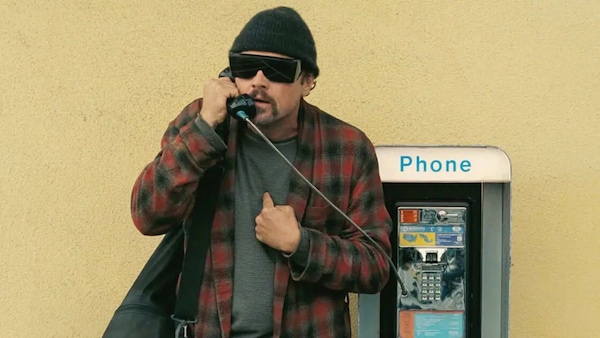
When push comes to shove, Bob frantically looks for a phone charger so that he can call the rebel underground hotline, beg for help, forget the pretentious codewords and cuss at the operator. When the going gets tough, Bob falls 50 feet to the ground, gets flung off a speeding car, and screams “Viva La Revolucion!” to an accomplice because his language of intent knows no moderation. Like any self-respecting crusader, he hides his personal agenda behind public displays of solidarity. When nothing goes right, even Bob’s misfit-ness is incompetent; he keeps trying to be discreet and urgent, but not a soul notices him because he’s built to blend in. He’s like that old-school rockstar who can’t stand new genres, except he was faking his music to begin with.
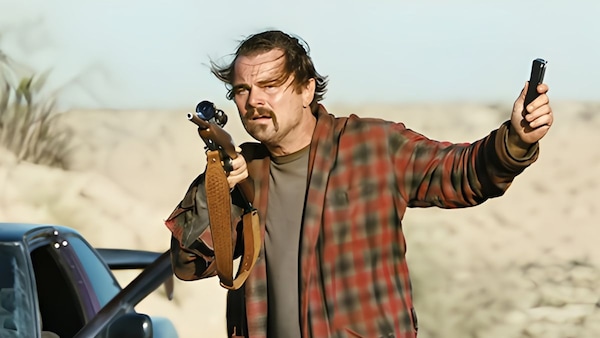
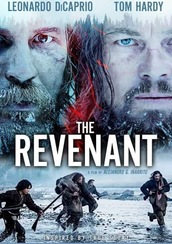
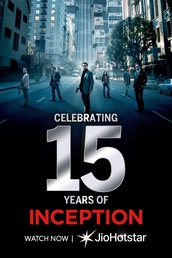
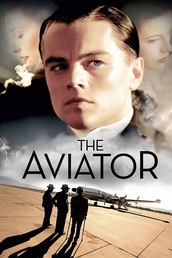
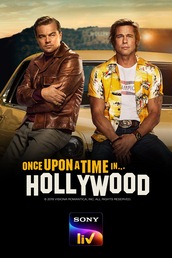
It’s a great dismantling of the white-saviour template — a drifter perpetually at sea with a world that is rigged to aid him. This ties into DiCaprio’s late-career quest to shed his superstar vanity by playing the sloppiest, strangest slobs at odds with their genetic advantages. He’s the opposite of Tom Cruise and Brad Pitt, almost like his art stems from his ability to make us unsee the dashing playboy we think he is. Every second character is an exercise in deconstructing stardom until it feels like a triumph of anonymity. In terms of his own filmography, it’s like watching his tragic character from Inception — a widower aching to be reunited with his kids — channelling the satirical narcissism of his Once Upon A Time in... Hollywood persona.
Thinly inspired by Thomas Pynchon’s 1990 novel Vineland, Anderson’s 176-minute epic conflates visual volume with narrative scale — the 70mm faces and eyes and desperation of the characters are shot like sprawling set pieces and expressive landscapes. The landscapes themselves are shot, edited and scored in a way that echoes the dissonance of identity: a concrete highway looks like waves in an ocean, a montage of protestors raising hell across America looks like a series of romantic meet-cute vignettes, an isolated cabin in a jungle looks like an exotic neighbourhood of dysfunctionality, a shootout in the middle of nowhere looks like an afternoon nap gone awry. What this does is allow the viewer to realise that Anderson stages humanity as the forgotten protagonist. Bob is virtually incapable of finding Willa, the French 75 members are incapable of sheltering her, Col. Lockjaw is incapable of hunting her down, a hitman is incapable of killing his target, and a bounty hunter is incapable of finishing a job. The people who actually make a difference — the ones who help a lost father stay alive to look for his daughter — are those bereft of labels, loyalties and political purpose.
For instance, Willa’s karate teacher (Benicio del Toro), a man whom Bob knows simply as ‘Sensei,’ swings into action the second a hapless Bob crawls into his shop and asks for armour. Bob is so self-involved that he thinks Sensei is some mythical being with all the power and know-how to plan his escape, but the man, Sergio, is a benevolent Mexican-American messiah who gets busy transporting all the immigrants he’s been sheltering in his house. Bob might be the target, but the authorities — on Lockjaw’s instructions — use official crackdowns and deportations as a ruse to find him. Sergio and his people are destined to be collateral damage in every veiled manhunt, so he’s the one who quietly makes an impact and hustles while Bob is looking for a charger and forgetting a password.
Bob speaks in revolutionary rhetoric, but Sergio is more concerned with being human: helping his own before helping Bob — through his network of nurses and covert workers — secure a car to find Willa. He shows up in times of strife, never once using compassion as a means to an end; after he clears his own town of any threats, he turns his attention to clearing the path for the rescue of his favourite student. He gets that Bob can’t look beyond himself, so he even plays along, doing his own Sensei ritual to assure the headless-chicken citizen that they are in control. Those like him then become the unsung and invisible heroes in a country caught in the crossfire between doctrines, factions and main characters. They’re the serious elements in an unserious journey through the crests and troughs of modern civilisation. While others advertise their faith and weaponise their intent, all Sergio can do is empower the white man to bring back his mixed-race daughter. There’s something poignant about the way the film trusts us to cut through its skin and detect this. So much of Anderson’s filmmaking is both medium and front; it’s composed of sensory layers that trick us into exposing our own complicity in the spectacle of conflict. By enjoying the film and its craft, it’s almost like we are confessing that we are nothing without the stances that segregate us.




It also says something that Willa does more to stave off her captors and preserve herself than Bob or any of the French 75 members. Given that she is possibly the ‘product’ of a militant and a bigot, her fate is what makes the film more political — and direct — than an oversmart futuristic or dystopian thriller. Willa blindly believes in her mother’s legacy and father’s goodness, but her coming-of-rage arc evokes more of a superhero origin tale in which she discovers that survival and defiance are two sides of the same coin. She’s the supporting character in her own story, because the focus will always remain on the players who co-opt the grammar of conflict, dissent, xenophobia and peace: the ones responsible for selling life as one battle after another. Some of them are stoned dads and military-level sickos, others are camera-seeking leaders and suspended talk-show hosts.