


Poacher: Richie Mehta’s Near-Perfect Investigative Thriller Is Here
In Mehta's hands, a police procedural drama sheds its sleekness and becomes a tale of a few tired people fighting the good fight within an unaccommodating setup.
Last Updated: 12.04 AM, Feb 24, 2024
RICHIE MEHTA has a knack of seeing things. This does not imply an inherent visual ability but an acquired one. The filmmaker has a perceptive instinct that allows him to look at familiar structures — a person in uniform, a law-enforcing force — in a light that fosters nuanced reading. In his hands, a police procedural drama sheds its sleekness and becomes a tale of a few tired people fighting the good fight within an unaccommodating setup. In his treatment, bravery is distilled to efficiency, and the triumph of officials co-exists with the failure of the system.
His debut series Delhi Crime (2019), based on the Nirbhaya case, underscored his distinct voice. In 2012, a young girl was gangraped by six men in a moving vehicle in Delhi. Revisitation of such a ghastly incident is generally tied to probing the social fabric of the country. Mehta, however, chose to shift his glance to the cops who caught hold of the perpetrators. The police-procedural drama leaned on the law enforcers without culminating into an alliance for it was attuned to the broken system they had inherited. The series outlined the five-day manhunt conducted by the Delhi police without imploding into a celebration of power for it recognised that the call of duty is often a personal pursuit, not shared by all.
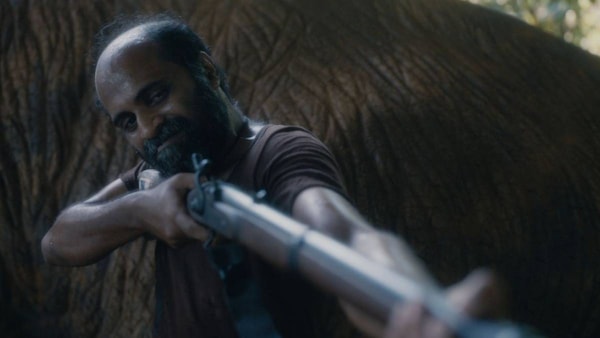
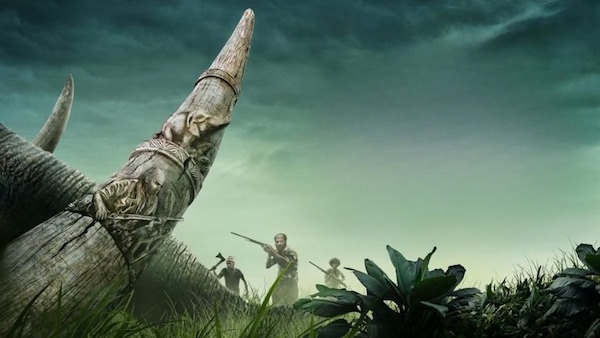
Poacher, his near-perfect work after five years and a most compelling follow-up to his previous venture, unravels as a fuller indication of his intent. The eight-episode series is based on a 2015 real-life incident in Kerala where India’s biggest elephant poaching case was recorded. The investigation was triggered by the confession of a forest watcher who was consumed with guilt for his involvement. Mehta recreates with care and tracks the bureaucratic intricacies with diligence. He maps the dense inter-country network of demand and supply of ivory, and designs the narrative as a breathless investigative drama without a false beat.
When an old forest guard in Kerala confesses to his crime of aiding the poachers, and the detail is carried by international publications, the Forest Minister demands a probe. A small group of wildlife crime fighters from the Kerala Forest Service assemble. Leading them from the front is Forest department officer, Neel Banerjee (Dibyendu Bhattacharya). Other people in the core team include range officer Mala Jogi (Nimisha Sajayan) who was stationed at a bird sanctuary when the news broke, and Allan (Roshan Mathew), a computer programmer who helps the forest department on the side. All three of them undertake the task of solving the case and crack open an intense chain of buyer and seller that goes right at the top. In Delhi lives someone called Poonam Verma, owner of an exhibition, who sources ivory artifacts and sells them to affluent customers. The ivory trade is so vast and profitable that it is believed to be funding international terrorism.

Much like Delhi Crime, Mehta’s gaze stays firmly on the officers as he analyses an instance of legal transgression from the point of view of the upholders. He follows them around as they go about doing their jobs. These are people tasked with protecting wildlife but possess little social currency. When they arrest someone, the person argues, “can forest officers arrest?” When they arrive in Delhi, a police officer, attuned to dealing with unruly people, expresses surprise at their investment in elephants. In more ways than one, Mehta’s Poacher stems from the ignorance of such a question as it unfolds as a fascinating exposition of a profession that is considered obscure.
But the filmmaker’s observation is not softened by it. This is no sweeping portrait of honesty where all the people are unquestionably efficient. They were not and hence the poaching carried on for as long as it did. Poacher acknowledges departmental negligence and administrative flaws. A local politician is found guilty of poaching and, at one point, higher-up personnels pressurize the investigation to be veered a certain way. In the team there is a someone called Babu whose lapse of judgment lets a poacher flee. He gets suspended. It disheartens but does not kill him. For Babu, this is just a dry-cut job that sustains him. The inclusion of someone like him is telling of Mehta’s intent, revealing that he might stand by the side of power without siding with it.
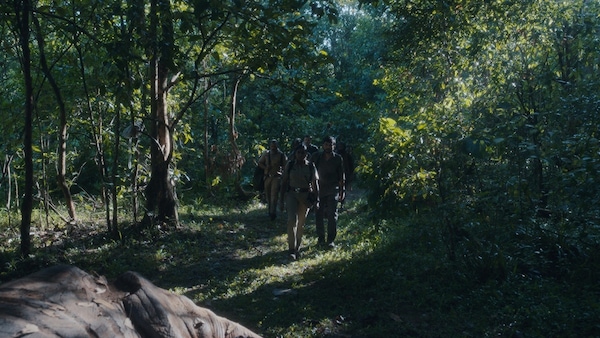
It also reveals the core of Poacher, which seeks to understand what makes a familiar structure of power function despite decades of corruption and sloppiness. It strives to comprehend why some people persist in spite — and not because — of the system. The answer lies in the faces Mehta chooses to showcase. Much like he did in Delhi Crime, he looks at officers as part of the system and also as wholly independent of it. If there is someone like Babu, who is sincere if not impassioned, there are others like Allan, Mala and Neel whose drive to protect the forest is a professional demand and a personal need. Their love for animals is embedded so deep in their hearts that it defines their very being.
It is the little things. Like Neel’s amusing obsession with turtles that comes forth even in urgent meetings; like the fact that the ringtones for both Mala and Allan’s phones sound similar: birds chirping. Like Mala, who lives with her mother, deciding to adopt more stray dogs even as a couple of them play near her foot. Like Allan moonlighting as a snake doctor and using that authority to dispense information about the reptile: “They are just like us. When they get scared, they bite to defend themselves.” Or that all three of them halt their car mid-chase for a flock of birds to pass.
In popular culture, passion is often conveyed in the language of aggression. Poacher course-corrects that, underlining that the grammar of care is empathy. These officers do what they do because they do not know anything else. It’s an itch they have to scratch. It’s not that they know better than anybody else but that they remember what others have forgotten — we need the forest more than the forest needs us and elephants are required to maintain the ecosystem (there is a lovely scene featuring Nimisha stressing on this; it is a little on the nose but the actor looks entranced as if her concern for the forest is a disease). There is a linguistic barrier among the three officers — Mala and Allen speak Malayalam while Neel speaks Bengali — and though they settle for English, it is their shared attachment that becomes the middle-ground. Mehta introduces a certain helplessness to their empathy, so potent that even the prospect of death pales before that.
This is what makes them profoundly human and their heroism intrinsic. It could be as small as an officer scanning the details of people flying on a certain date while braving a bad bout of allergy, or another slinking away from a family wedding to catch a poacher and then coming back like nothing happened. It could also be as big as someone risking his life to find the culprits. Even the way they negotiate through other ranks of power is a result of quick thinking and not dull preaching. For instance, an airline official chips in at short notice because he likes Ganesha, the elephant-headed Hindu god, while a young group of computer geeks agree to help because they find poaching wrong.
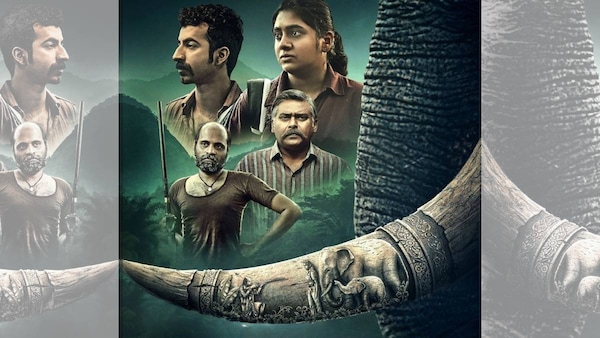
Poacher’s perception of social reality (like religion appealing to the older generation and ecological reality to the younger lot) makes it a gripping drama. The details are never stressed but they are impossible to overlook. Take for instance its awareness of the differing economic backgrounds that the poachers and the sellers come from. When the Forest officers come knocking, it is the poachers who flee without a sign. One of them kills themself and another attempts to. On the contrary, someone like Poonam Verma, who has contacts till the highest rung, can afford to stay. There are CCTV cameras outside, her house is fortified — a fact that tells us that the real villainy will keep existing in the shadows, protected by privilege.
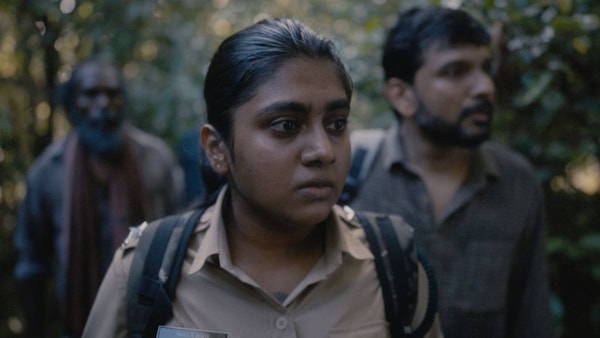
For an outing of such calibre, it is also stacked to the brim with terrific actors. It is a joy to see Dibyendu being afforded a role that does justice to his gift. As Neel Banerjee, he is superb, intimidating without being overbearing. Roshan is equally good as Allen. There is a charm he brings to the role that is always good-natured. Then there is Nimisha who gives a standout performance. Her turn is memorable (not least because Johan Heurlin Aidt shoots her in the most evocative close-ups) for how sparse it is and how effective. Much like Shefali Shah, Nimisha carries the exhaustion in her eyes. It is a visceral portrayal, so fragile that one fears she will break into pieces if pushed.
Close to them reside the animals. Poacher does more than just make statements of the need of preservation. It adopts an encompassing visual language that reiterates the central message of the series. The first episode of the show opens with the shot of an elephant being shot in the head. The next couple of them are prefaced with the same moment, each revealing a little more each time. Even when the narrative jumps to real life, it remains attuned to those who occupy a space except human beings. Most outdoor scenes begin with an owl looking at the officers from a distance or a fox lurking away. Monkeys walk on electric cables and vultures eat away at dead bodies. They are unobtrusive, never once coming in the way.
But the way Mehta chooses to stage these moments (the craft is invisible; the VFX is compelling and the editing, attributed to Beverly Mills, Susan Shipton and Justin Li, seamless) is telling. It is the birds and the animals who are in the foreground. They appear before the humans as if the filmmaker is insisting that we are occupying their world and not the other way around.
Reckoning with this reading enlivens Poacher. Suddenly Allan’s single-minded focus makes sense and more crucially, Mala’s urgency opens up. They knew this along and their resolve to carry on as days melted into weeks was purposeful: it was to seek atonement The forest watcher was eaten up by guilt and the officers tirelessly sought those who are responsible, to atone for their own — and our — complicity. Poacher maintains that all our hands are dirty, if not covered in blood.