


Sisu: Road To Revenge — When Violence Becomes A Glorious Punchline
There is some kind of perverse pleasure in watching deranged Nazis and cowardly Soviets get butchered by an old man soldier bereft of patriotism. It’s justice imagined, but not denied.

Promo poster for Sisu: Road to Revenge
Last Updated: 11.45 AM, Nov 22, 2025
SISU, we are told at the beginning of this film, is an untranslatable Finnish word. It means a very specific nothing-left-to-lose kind of courage — an impenetrable madness almost, one that stems from fear no longer being a dealbreaker. It’s why the hero of this franchise, Aatami, is known as “the immortal”. The one who refuses to die. A former Finnish commando whose entire family was slaughtered during the 1939 Winter War, Aatami became a one-man killing machine of Nazis during the Lapland War in the first film (2022). It wasn’t some grand moral stand; they simply messed with the wrong guy. His survival instincts were delightfully and deliriously detached, but the film thrived on dismembered Nazi corpses and outrageous kills.
This sequel, Sisu: Road to Revenge, begins after the end of the Second World War. This time, it's the Soviets. Aatami, already a ‘legend’ for those who failed to finish him, has reached a stage of his life where looking back is the only way to move forward. He returns to Soviet-occupied Karelia (Finland) to dismantle his old family house and load it onto his truck so that he can rebuild it somewhere safe in their memory. But the Red Army takes note of his brief arrival and dispatches war prisoner Igor Draganov to finish off Aatami. In return, he is promised freedom and wealth. Aatami doesn’t know that the man chasing him is the one who murdered his family — until he does. Suddenly, ‘sisu’ isn't just numb courage: Aatami risks the chance of losing a shot at fully honouring his family. There are stakes. In hearts and driven into chests.

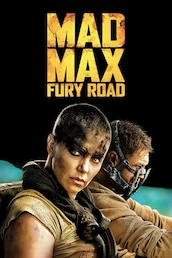
The emotional core of the film is leaner and deeper than the first one. It’s a simple road actioner in that sense — a grieving hero minding his own business until the baddies decide to bug him again and turn it into one long face-off. The action unfolds in fields, on roads, at sea, in the skies, and finally, on a speeding train full of Soviet soldiers waiting to become his buffet. All the geographical bases are covered. It’s a bit of Mad Max: Fury Road, a bit of John Wick, a bit of Final Destination (for the ingenuity of the kills, if nothing else). But the audacity of Sisu: Road to Revenge is what makes it unique. It’s not just the fact that the protagonist is in his 60s, just like the antagonist (who would look perfectly at home as a retired librarian). It’s not just that Jorma Tommila’s Aatami manages to look both invincible and fragile at once; there are times when he’s half-animal (the USP of these films is that Aatami does not speak — at all — and silence is a pantomime weapon), but there are times when he’s a devastated old man in the twilight of his life. You can see him getting weaker, running out of steam and purpose. That is, until revenge grips his mind.




It’s also that the action in this movie unfolds like a joke, where violence becomes the ultimate punchline. So much of the choreography adopts the language and kooky physics of cartoon-coded gags. You'd think the bloodshed itself is spoofy, like a parody of evil and a satirical act of revenge on history itself. Bodies are squeezed by giant tires like toothpaste tubes propelled into cars; a Soviet fighter jet barrelling towards Aatami and his truck is sprung off the front like a yo-yo with wooden planks; a severed head bounces off the windshield like an errant football; Aatami rides a missile along the railway tracks like a looney tunes character; when the truck dives into the ocean with all the planks, we soon see Aatami on a raft that he presumably made in the water; a tank somersaults into the air over a gate and lands on its chains; Aatami finds a hole in his cheek after winning a gory motor battle only to spit out a bullet. There are no rules, even within filmmaking; transitions cheat, time is compressed, science is optional, and shots are stitched together without worrying about “how”.

It’s all so ridiculous that it’s hard to question these things. It’s almost as if the movie wants us to notice the silliness and cringe at it; it’s part of the design to disarm us from how seriously the actual story takes itself. The setting is no joke, after all. It’s the kind of pulpy historical revisionism that Tarantino usually thrives on, and one that’s easy to enjoy because it’s like watching fiction puncture a hole in the time-space continuum and take revenge for the sheer plausibility of life. Men like Aatami and their bloodlust should have existed back then — to defeat fascism, inspire hope and avenge genocides — but they didn’t. There is some kind of perverse pleasure in watching deranged Nazis and cowardly Soviets get butchered by an old man soldier bereft of patriotism. It’s justice imagined, but not denied. Compare this to the way most Bollywood war historicals stage their agendas, where India (or the majority) is always the victim and the sufferer, while the violence executed by the kohl-eyed enemy is designed to provoke the audience into rage and cries for a past they’ve never lived. The opportunistic Hindi actioners make it a point not to offer catharsis, lest modern viewers come away satisfied with a feeling of justice served. That’s the art of incitement, which is different from the nutty violence of history-retaliating movies like Sisu: Road to Revenge. Maybe there is some relief in watching fascists being torn to shreds; maybe the era and context are almost incidental. How else do we find fairness in storytelling today? How else do we enjoy broken bones in an age of bent spines?