


Superman: The American Burden Of Being Human
This is #CineFile, where our critic Rahul Desai goes beyond the obvious takes, to dissect movies and shows that are in the news.
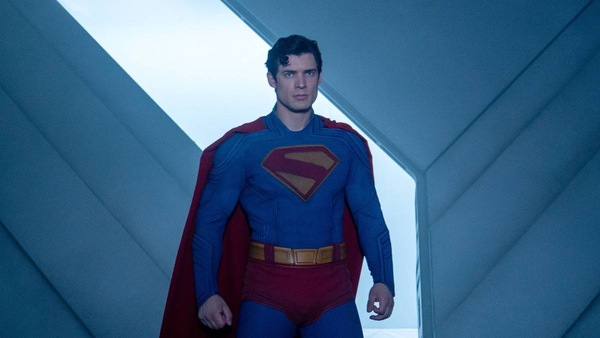
Last Updated: 07.05 PM, Jul 10, 2025
This column was originally published as part of our newsletter The Daily Show on July 10, 2025. Subscribe here. (We're awesome about not spamming your inbox!)
***
SUPERHEROES HAVE ONE JOB: they save people. This job profile is fairly uncomplicated. It does not discriminate between the people being saved, as long as they don’t deserve to die. As long as they’re innocent, in one way or the other. American superheroes have forever used this macro profile — of focusing on all of humanity, the universe, the past, the future — as a front for their micro aversions and distinctly apolitical identities. It’s easier to put the ‘petty disputes’ within a planet in perspective when all-time baddies like Thanos and co. threaten mass extinction. At best, our dark friend Batman mined the more systemic problems; politicians have been his adversaries more than once, but he has no time for politics itself. Creators and screenwriters have often shied away from contemporary cracks in favour of big pictures and bigger fish to fry.
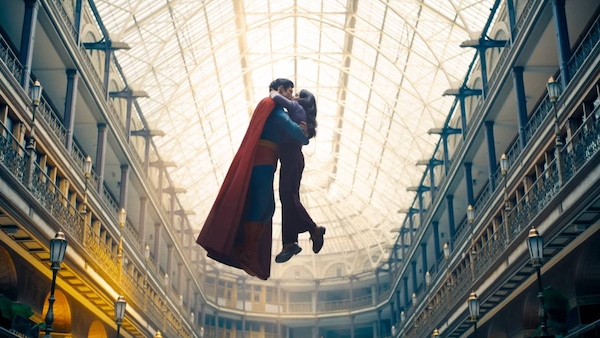
So it says something that James Gunn’s first DC outing — which features the most famous of those noble-minded aliens — is perhaps a rare modern comic-book movie to ask one simple question: What does it mean to be a superhero in this world? There’s no point pretending that the crises we face now — in the moment, across countries and cultures — are lesser than the ones imagined in comics. What was once an escape is a reckoning. The future is here. Something as generic as preventing civilian deaths requires specific interventions. It requires the stoppage of state-sponsored wars, communal riots and genocides.

In Superman, Metropolis is no longer a narrative surrogate for America or the planet. The mythical city doesn’t exist in isolation, it belongs to a country that in turn belongs to a planet full of power grabs and cultural fractures. Superman himself is no longer the story, he’s a story — a remarkable character in a broader history of a world divided by borders and deals. It’s why the film hits the ground running, making the viewer feel like they’re jumping onto a train. The lore is well in motion. Clark Kent is already a scrappy journalist for The Daily Planet, dating fellow reporter Lois Lane (Rachel Brosnahan), who is aware of his alter-ego; she’s already at a stage where she’s wondering if their relationship will work at all. Superman, too, is already Superman: an intergalactic immigrant who, over the years, has started to piss off the US government with his heroism-without-prejudice ways. His latest stunt: he halts an invasion by an Israel-coded nation named Boravia of their smaller Palestine-coded neighbours Jarhanpur. You could draw the Russia-Ukraine parallel as well, but the giveaway is that Boravia is a “United States ally”; they’re the big bullies who need half an excuse to ethnically cleanse and ‘reclaim’ a land.

Even Lex Luthor, the evil-genius billionaire, is already his arch-nemesis. The film doesn’t bother introducing these familiar arcs or starting from the beginning. This is an age that has accepted fantasy as a heightened version of survival. Luthor has devised a whole ecosystem of dark science — artificial pocket universes and black holes, a masked “Hammer of Boravia” called Ultraman, a surreal prison for dissenters (including ex-girlfriends), an army of literal monkeys to control social media discourse and troll the immigrant (#SuperShit) — in his quest to convince the government that Superman is the bad guy. Needless to say, Luthor has a lucrative weapons deal with Boravia and direct access to its obnoxious leader. Superman is being questioned for helping a non-ally (he ‘grants’ Lane an interview), when all he’s really interested in is saving lives. All he’s really doing is reacting, not acting. He’s being perceived as an American citizen because he lives there, but he’s struggling to explain that superheroism has no nationality. The man of steel is the man of feels. Everyone wants a metahuman saviour, but they also want one that stays in his lane.
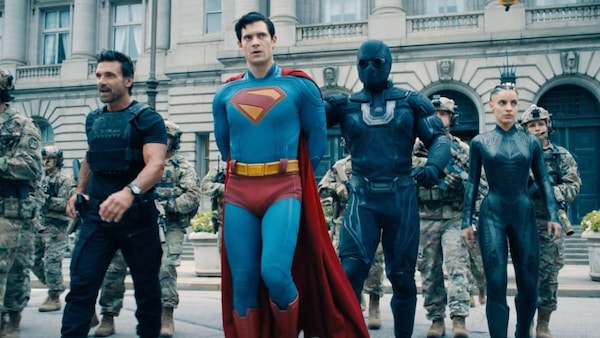
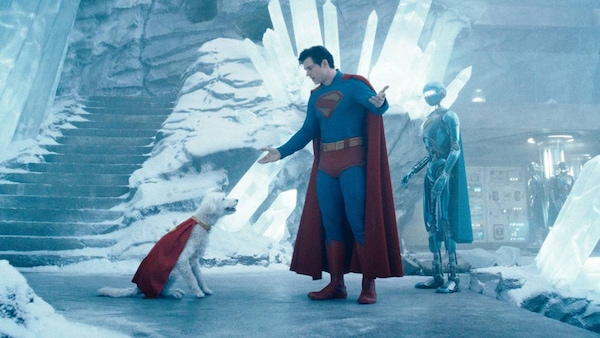
Guardians of the Galaxy maker James Gunn brings his light-footed approach and buddy-movie humour to DC. At times, this overcompensates for the moody-but-empty Zack Snyder movies. I’m not quite a fan of undermining the inherent gravity (no pun intended) of Superman as a concept — what with the presence of the cute and unruly Krypto, the super-doggo who keeps rescuing his ‘master’ as if it’s a game of fetch. It’s a very Marvel-banter thing, where everyone seems to be playing down their stature without being willing to compromise on their self-seriousness. The inclusion of the Justice Gang — Mister Terrific, Green Lantern and Hawkgirl — furthers this tone. The stakes of a city or place being smashed to pulp or people dying is never felt; citizens casually accept it as part of the everyday package.
It’s also a very Marvel thing to pack the film with all sorts of chaotic set-pieces involving alternate dimensions, tech-heavy disasters and aerial combat. A lot of it is too convenient, especially the role of father Jor-El’s recorded message in the transformation and disenchantment of his existential son. That lazy 2020s trend continues, too, where the digital spread of information and broadcasting are dumbed down to enable a fast-paced plot. When the popular tide turns against Superman, it’s almost instant, as if journalism spreads like a Los Angeles wildfire in real time. (I’m also pretty sure there’s a continuity error when Krypto is abducted by Luthor only to magically appear during Superman’s simultaneous resistance against a dinosaur-wannabe’s attack on Metropolis.)
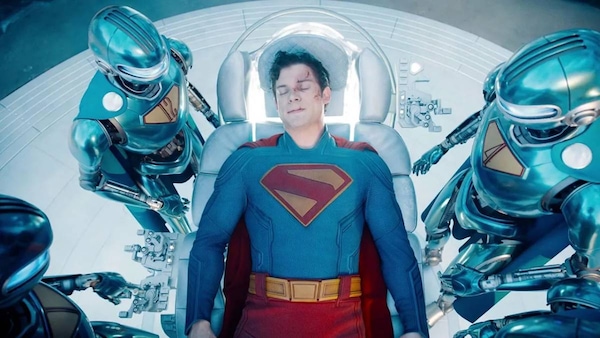
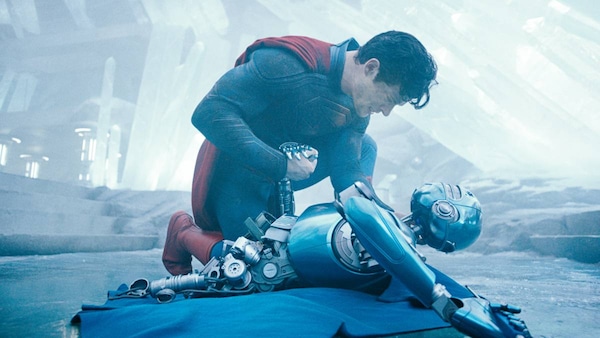
But Gunn also manages to show off his affection for the Christopher Reeve Superman movies and Smallville, particularly when a clone appears (Superman III, anyone?) and wreaks havoc around the original one. Some of the noisy set pieces do well to internalise the electric-guitar-fuelled score. Clark’s phases of recovery in the Fortress of Solitude and in Kansas with his adoptive parents best capture the spirit of this nostalgia. David Corenswet is neat as the 20-something superhero who’s frustrated with how the simplicity of doing the right thing is constantly misinterpreted as something sinister and agenda-driven. Corenswet somehow expresses the pressure of having to carry the ‘burden’ of being sensible in this increasingly intolerant and bigoted world. It’s a disarmingly ordinary and lonely emotion: he could be a film critic panning a big movie only to be accused of having an agenda or personal grudge against the producers. I also enjoyed Nicholas Hault’s unhinged-but-sharp performance as Luthor, an obsessive and ‘musky’ narcissist who can’t stand the fact that a gifted immigrant is getting all the limelight. He’s spent his life decoding and studying Superman’s weaknesses and persona, and the film actually opens with the endgame of his journey.
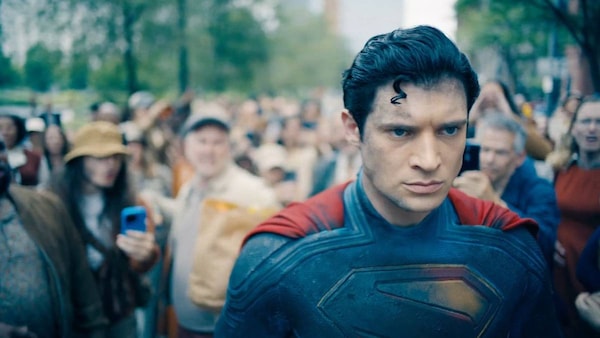
Which brings us to the selling point of Gunn’s Superman. On X (formerly Twitter), I came across the viral headline of film critic Alison Willmore’s Vulture piece — “Superman isn’t trying to be political, we just have real-life supervillains now” — and it’s hard to imagine a line that better distills the essence of this film. It’s not that fiction is alluding to reality anymore; it’s that reality has hijacked the language of fiction. The crossover is backward. Superheroes might feel more human and relatable today, but it’s the converse that holds true: humans have never been less relatable and more capable of supervillain-esque missions. It’s a version of everyone in the White House and West Wing now resembling characters from Veep, the biting television satire that may unfold like a tragic drama to viewers in 2025. Veep was trying to be funny then (and boy, did it succeed), but it wouldn’t have to try anymore.
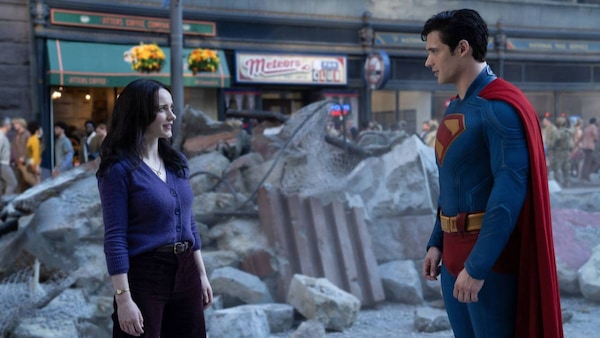
Similarly, Superman isn’t trying to be politically loaded or meaningful either — it merely reflects the times we live in, it doesn’t appropriate them. This is an age where everything is political, even the movies that choose to be safe and put their head in the sand. That’s the conflict of being a modern superhero story that reads the news and has a conscience. Its own authenticity is diluted by the very world it occupies; its own creativity has been co-opted by war criminals and dastardly flesh-and-blood antagonists. There’s no scope of being as thrilling, fanciful and suspension-of-disbelief-shattering anymore. As a result, the film-making attempts to offset this condition by being overly inventive, visually crowded and earnest.
There’s also the not-so-small elephant in the room. The staging of Boravia’s invasion of Jarhanpur feels a bit uncomfortable. History might rightly remember Superman as one of the only Hollywood summer blockbusters to address (and call out) Israel’s ongoing genocide in Palestine. But the grammar of this address ironically mirrors the US’ own main-character energy. It’s assumed that Luthor wants to stop Superman from stopping Boravia for his own selfish business-and-power interests; it’s soon revealed that Luthor may have orchestrated the entire war to turn his own ‘democracy’ against Superman. Everything is planned. That’s how bad he wants to win.
While it’s smart of the film to make a billionaire manipulate the court of public opinion and international diplomacy to puncture his indestructible rival, it reduces an age-old Middle Eastern dispute to a supporting plot device. That the Justice Gang shields Jarhanpur while Superman is busy fending off Luthor’s madness only reiterates this patronising pitch. In other words, it erases the complexity of geopolitical order to service an all-American ego tussle. Those countries are rarely more than names, military clothes, weapons and faces at a border. There is some truth to the role of the West in foreign invasions and proxy bloodshed, but the film replicates the gaze instead of correcting it. Perhaps the intention is right, but that’s exactly what Superman thinks of himself when he is accused of ‘meddling’ in battles that are apparently not his to fight. Eventually, he sends someone else to do it. Because he is, for better or worse, a white man wearing blue and red. Is that a bird? Is that a plane? No, it’s a flag flying away from the responsibility of being human.