


John Abraham's Tehran Is An Impressive Espionage Thriller With Muddy Politics
Arun Gopalan’s film keeps refusing to hang by the scaffolding, and although it doesn’t always land, it gives us plenty to hold on to.
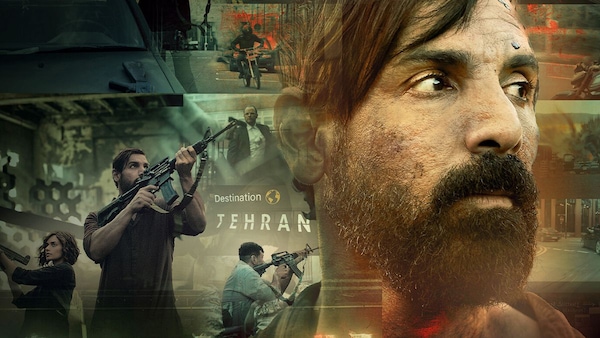
Promo poster for Tehran.
Last Updated: 05.57 PM, Aug 18, 2025
TEHRAN is the latest John Abraham film, where the actor is out to avenge. For a while, it was the country (Parmanu, Satyameva Jayate); then it became more pointed (in both Vedaa and The Diplomat, he saves a girl). A less obvious, but more definite, shift has been his heroism, which has shapeshifted from a combative force to inner resilience. It has become less showy and more nuanced, more cerebral and less extraneous, much like the nationalism in his filmography.

In that sense, Tehran is an able extension of this humanity that props up the ideas of protection without losing sight of the cost. In Delhi, 2012, an Israeli diplomat’s car was bombed. Similar blasts occurred in Georgia and Thailand. But the one which we see in the capital (designed in a sleek shot; Evgeniy Gubrenko and Andre Menezes are the cinematographers) results in an unwitting casualty. A young girl on the street, not much older than the daughter of ACP Rajeev Kumar (Abraham), suffers injury. This pulls him into the case even when he was hesitant initially.
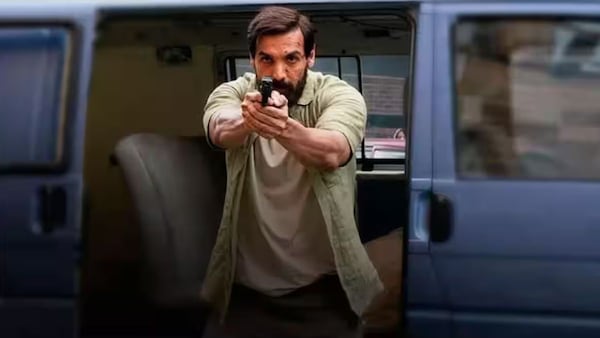
This low-intensity attack and its rippling consequences act as a foreboding for Arun Gopalan’s film that takes time to build. At first, the suspect is, as usual, Pakistan, till Iran comes into the picture. The broader the contours look, the more India slinks away. Geopolitically, it is dependent on both Iran and Israel, and cannot afford to make an enemy of either. Kumar, however, refuses to relent. His country, he says, will not be the battleground for someone else’s war.
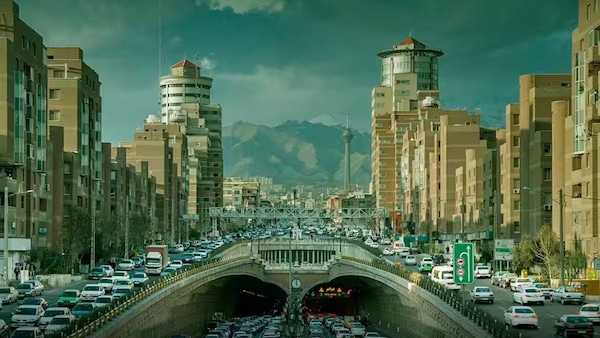
Written by Ritesh Shah, Ashish P Verma and Bindni Karia, Tehran unfolds with the complexity of world politics that most Hindi films forsake in the name of thrill. It also reflects Abraham’s own interest in the matter. The actor exudes an even quieter presence than he did in The Diplomat (in a sobering scene, he is depicted sleeping with his mouth open after his subordinate stops another officer from visiting him — in a previous Abraham film, this would have been a build-up for something explosive). His aides, Vijay (Dinkar Sharma) and Divya Rana (Manushi Chhillar), are equally methodical. Sharma is terrific in the film, evoking his eyes to do most of the talking.

As the narrative shifts from India to Dubai and then later to Tehran, the filmmaker remains attuned to the collateral damage that any geopolitical crisis can cause. In one scene, when Kumar is egged on for revenge, he plainly states that both sides (in this case, Israel and Iran) kill and both suffer. It is a thought that the world right now can do with, as the simmering animosity between the nations in 2012, as depicted by Tehran, has devolved into full-blown hostility in 2025.
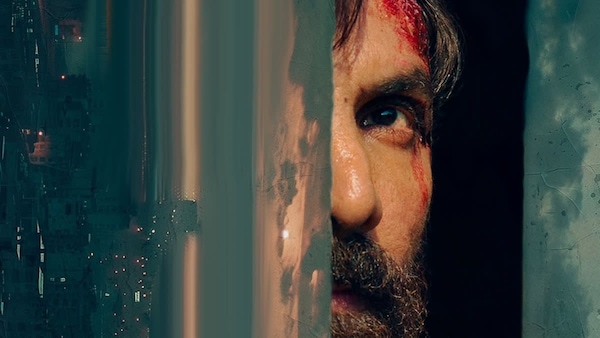
Inadvertently, this makes for a strange time for a film like this to exist. No less strange is a scene involving Palestine where the commentary feels as myopic as stilted. One could say that, unlike other Hindi films, Tehran refuses to be a passive onlooker, and although this requires courage, I don’t think it is always a good thing. Less ambiguous is the slackening pace of the film that keeps alienating one as the politics get denser. Gopalan’s feature keeps refusing to hang by the scaffolding, and although it doesn’t always land, it gives us plenty to hold on to.