


Tere Ishq Mein: Terrible Is An Understatement
Aanand L Rai uses two films as thematic bookends: Sandeep Reddy Vanga’s Animal and Raanjhanaa. None of them is great, but at least they had conviction. And, honesty. Tere Ishq Mein, however, has none.

Promo poster for Tere Ishq Mein.
Last Updated: 12.46 PM, Nov 29, 2025
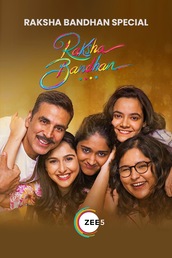
IN AANAND L RAI’s Tere Ishq Mein, a girl tries to save a boy. He is rowdy and raging; she is focused and attentive. He is a goon; she is a scholar. They are a match made in Hindi cinema heaven, but in the filmmaker’s world, which habitually upends convention only to settle for more perverse versions of it — his last two films, Raksha Bandhan (2022) and Atrangi Re (2021), were hollowed-out bad takes on love and filial ties — this is a recipe for doom no matter which way things spills. Even with these assumptions, Tere Ishq Mein manages to set new lows, unfolding an affront to all senses and living beings, harming, I believe, even the empty chairs in theatres in the process.
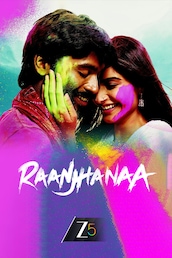
On a broader level, the film is a spiritual sequel to Raanjhanaa (2013), one of Rai’s early works that gained notoriety in retrospect. Set in Benaras, it centred on Kundan (Dhanush), a man who gave up life in pursuit of love. Over the years, Raanjhanaa has accrued a polarising legacy, with the love story both elevated in pop culture and dissected for glorifying stalking. In comparison, Tere Ishq Mein is more straightforward. It is so bluntly revolting that the possibilities of any future discourse are abated by the brain-dead numbness it induces.

Where does one begin? It is as much a philosophical query as it is a helpless one. Written by Neeraj Yadav and Himanshu Sharma (Rai’s long-time collaborator), Tere Ishq Mein is a galling instance of what happens when the two most annoying people one knows end up together but also don’t. It is also what happens when the rough draft of a film is made with the confidence of a third draft, and emotions are plastered on the narrative rather than woven into it. And everyone else loiters around like it is winter in Delhi.
Delhi, the city where Raanjhanaa ended, is where Tere Ishq Mein begins. Kundan is now Shankar (also played by Dhanush), who falls for Mukti (an ineffective Kriti Sanon) after she takes him up as a project. Most Hindi films would use this as a metaphor, but Sharma, with his strange fixation with human psychology (think Atrangi Re), only to arrive at ridiculous resolutions, is pointedly literal here. Mukti is doing a PhD and proposes in her thesis that violence can be eliminated from the mind (she compares it to the organ appendix). Right then, Shankar enters, beating a fellow student. Her professors come up with the most professional solution: cure him, and then we will see.

From here, Tere Ishq Mein borrows from films in the past only to culminate as a film that ideally should not have existed in the present. It leans on Imtiaz Ali’s Rockstar (2011) in the initial stretches of frivolity where the boy falls for the girl and the latter remains unaware till much later; it dips its feet in Dharmesh Darshan’s Dhadkan (2000) where a rich girl-dad (Tota Roy Chowdhury) gives an ultimatum to the poor beau as the woman stands as a mute spectator; there is a random parent death that is reminiscent of Aruna Irani’s character falling off from a running auto in KS Adhiyaman’s Hum Tumhare Hain Sanam (2002; I understand it is random but the image troubled me immensely as a child), and then there are two films that are used as thematic bookends: Sandeep Reddy Vanga’s Animal (2023) and Raanjhanaa. None of them is great, but at least they had conviction. And, honesty. Tere Ishq Mein, however, has none.
On the surface, it seeks to critique toxic masculinity. Shankar, unlike Kundan, takes the pining of unrequited love to reform himself into a more disciplined man, but there has hardly been a bigger endorsement for it. Sharma has hardly ever been a great writer of female characters, often using misdirected pugnacity as a shorthand for agency, but here it feels vengeful. Mukti is terribly written, possessing the intellectual capacity of an ant and the fortitude of a pea. She is the kind of woman that one never meets but hears about from insufferable men. One is told that she led them on till there was no way to go and hurt them so that they never recovered; she is the excuse men keep giving for their terrible behaviour.

It is not so much the lack of depth as the absence of everything. At the beginning of her “project”, she tells Shankar that she will not fall for him, and if he does, it is on him. And then she keeps ‘dropping hints’ which Shankar keeps lapping up. Her reasons are up in the air. Either scenes depicting her inner turmoil, despair and conflicts were edited out, or the smog in Delhi made it difficult to see because there has to be some reasoning for such a character to exist in today’s day and age who isn’t a prop but a proposition.
Shankar, on the other hand, inherits integrity and charm even when he is portrayed as an anti-hero. There is deliberation in the way his misdeeds and misdemeanours, all of which stand to be altered, are painted with the brush of aspiration. He is always the hero, even when depicted as a cautionary tale. Rai is aping Animal, even wanting to critique it. The only thing hindering the potency of Shankar’s toxicity is Dhanush. It is alarming how non-committal the actor is in this role, which, obviously, is tailor-made for him. He hardly tries, and gaslights us into thinking that his straight face is bottled-up intensity.

Much like Tere Ishq Mein, which also, by the way, shapes up as a parallel war film (don’t ask). Both the design and the intent are so superfluous that if one watched the scenes out of context, they would assume that some grown men were play-acting. Sample this scene: a suspended officer carries an injured pregnant lady, who happens to be the counsellor who needs to permit him to resume work, in his arms, and another uniformed man screams from a distance, “Get her to sign your papers”. It is all kinds of mind-boggling, and grudgingly impressive, the way the filmmaker integrates all the buzzing keywords in Hindi films today: intense love story, patriotism and religion.



The result is something that hardly qualifies as a film. Once the attention fades from the bigger picture, smaller issues crop up. Like how ever so often any two characters take every opportunity to dump information, like how logic is not pushed to the background but evicted from the film itself, like how Shankar saunters in not once but thrice at an IAS officer’s house to attack, like how a nine-month pregnant woman not just boards a plane but also knows the sex of the child, like even after all the atrocity, Rai and Sharma gather enough gumption to tease a spiritual sequel.