


Athiyan Athirai's Thandakaaranyam Is A Forest Of Missed Opportunities
Despite a powerful premise and timely themes, the film is over-scored and underwritten. Moments never have room to breathe, resulting in a highlight reel that struggles to leave a lasting impact.
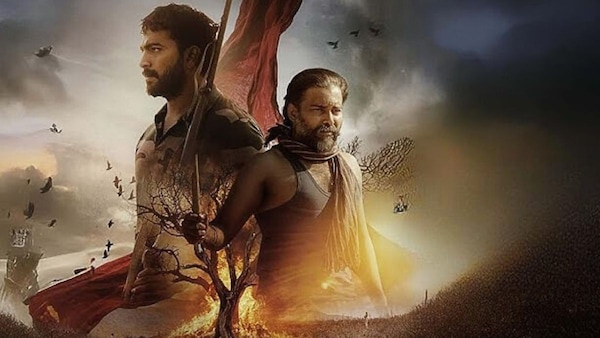
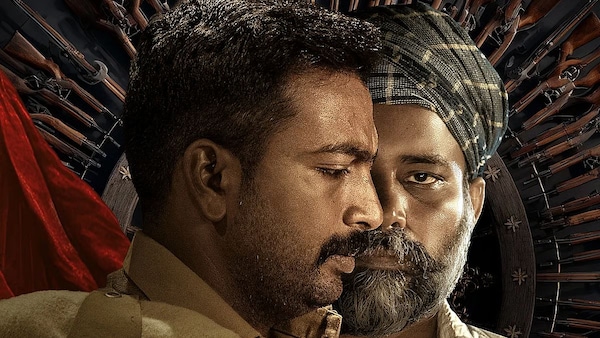
Promo poster for Thandakaaranyam.
Last Updated: 07.15 PM, Sep 19, 2025
IN ATHIYAN ATHIRAI'S sophomore film, Thandakaaranyam, the eponymous forests become a MacGuffin that is forever out of reach of the protagonists. It’s a story that’s ostensibly about the fault lines and simmering tensions between the state, comprising a nexus of the police, paramilitary forces that collude with politicians and conglomerates, and the tribal population that is given the unqualified title of Naxalites. The forests remain in the margins in Athirai’s film (his Irandam Ulagaporin Kadaisi Gundu remains one of the best debuts in Tamil cinema of the last decade); they are not landscapes for conspiracy, separatist forces or ambushes — it comes across as a conscious decision. The forest is more life and livelihood, one that is as one with the self as skin. But the forest security offices and the training camps, the locations where injustices truly roost, are the places of interest.
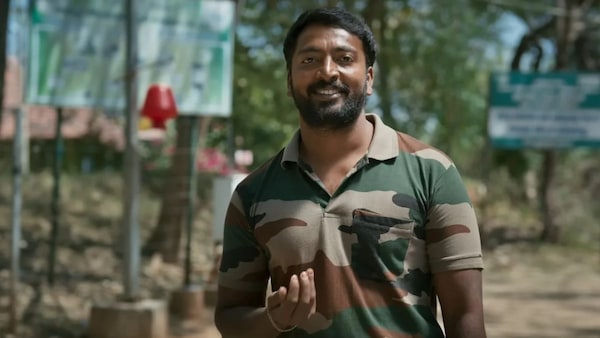
We begin at the ISGS training camp, a paramilitary force expressly founded to tackle the threat of Naxalites in the Dandakaranya forest states — Madhya Pradesh, Odisha, Chhattisgarh, Jharkhand and Maharashtra. Somewhere near Ranchi, Murugan (Kalaiyarasan) and Rupesh (Bala Saravanan), two young men from Tamil Nadu, begin their training in an area that creates geographical and linguistic barriers for them. But that’s only the tip of the iceberg. While the training regimen is strict and brutal, they are bullied and assaulted in various ways by their Hindi-speaking peers, headed by Amitabh (Shabeer Kallarakkal). Athirai’s script gradually peels back the layers in this story. Murugan’s immediate past in his village in northwest Tamil Nadu, his soft and naïve nature contrasted with the fiery ways of his elder brother Sadaiyan (VR Dinesh), tells us why he is at the camp, far away from his loved ones.
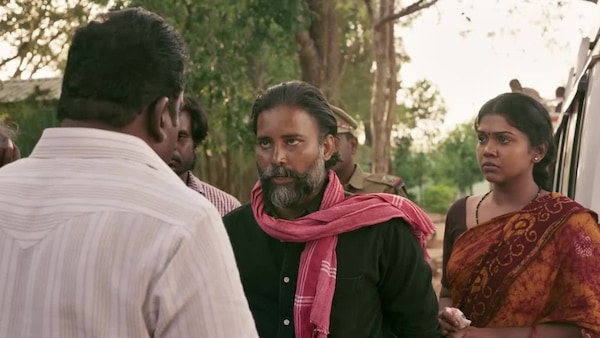
While Sadaiyan makes it a habit of questioning the authorities who inflict every form of oppression on his tribal brethren, Murugan turns a blind eye owing to the probation period of his job. He donned the uniform to gain a modicum of respect. Sadaiyan too shares this thought, but in the name of patience, his superiors make him clean restrooms or send him on patrols to the thickest and dangerous parts of the forest. The ISGS training comes as a last-ditch effort at a respectable job and fully cognisant of the monetary cost (Sadaiyan gives up whatever is left of their land), Murugan leaves one forest for another.

Athiyan Athirai sets the film in 2008, possibly to not antagonise the current ruling central government, but it doesn’t stop him from naming one of the police chiefs in the training camp Ram Sena, a pointer at the growing power of the right wing over the last couple of decades. Thandakaaranyam begins well, its focus remains on Murugan’s hardships with peers and later his superiors, with some detour to sketch his love story with Priya (Vinsu Sam) back home. It is more of a melodrama that illustrates the systemic oppression faced by the tribals and how the state will do anything to hold its power, and the story is no different across state borders.
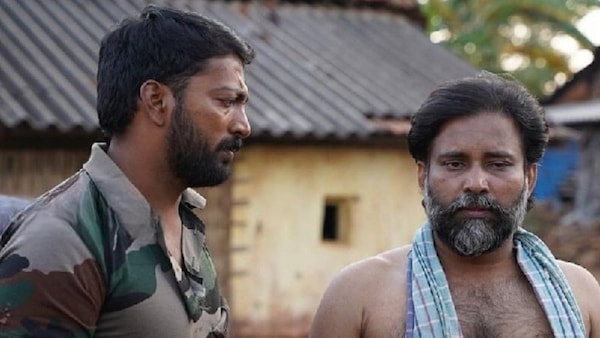
While the first half sets things up, the second half meanders to a double narrative of Murugan uncovering the ISGS scam, and, parallelly, Sadaiyan exacting revenge on the non-state oppressive forces in their village, the intermediate caste landowners who call the shots in the forest. As soon as people like Murugan and Rupesh arrive, they are made to surrender as Naxals to appease the higher forces, the people and the media, which is followed by their custodial torture and eventual erasure. The film wants us to buy into the burgeoning friendship and shared anxieties of Amitabh and Murugan, but the writing doesn’t have the meat to make it convincing. This shows up in several places, like Sadaiyan’s action-focused narrative. There is a disconnect in the film between a thriller-like procedural narrative that competes for attention with set pieces of heavy action, which ultimately renders both blunt. The set pieces don’t have enough foreplay for them to be the thumping finishes Athirai wants them to be. Orchestrating them to the score of Manidha Manidha from Kann Sivanthaal Mann Sivakkum is hardly enough.
The awry focus in the second half is further marred by the film’s music by Justin Prabhakaran. The film is overscored; every single moment, big or small, gets a leitmotif, a wail of pathos or the rush of adrenaline. There isn’t a single moment of silence. A rare quiet scene plays out late in the second half, and it comes as a novelty and, in an instant, makes the scene more effective. The music tries to drive home the point of the scene, and this is mainly because the scenes feel incomplete most of the time. Thandakaaranyam doesn’t let moments linger; it doesn’t stay with an emotion long enough for it to register before moving on to the next. As a result, it looks like a series of montages with no gravitas. If only it could stay with a moment, hold a scene long enough for things to sink in. It wants to be more of a highlight package from Murugan’s short stint at this tragic training, but ends up without a single memorable episode.