


The Conjuring: Last Rites — The Rise And Rise Of Christian Superheroism
The Conjuring: Last Rites is another cog in the post-truth wheel, weaponising a culture of faith and fear in the form of ghost propaganda.

Promo poster for The Conjuring: Last Rites
Last Updated: 12.18 PM, Sep 06, 2025
THE CONJURING UNIVERSE (TCU) is to mainstream horror cinema what the Marvel Cinematic Universe (MCU) is to the modern superhero film. Essentially, these are populist genre franchises that insist they will see us again and again (‘CU’) at the theatres — and boy, do they manage. Now that the mandatory dad joke is out of the way, I have to admit that The Conjuring: Last Rites, the ninth and final film in the ‘first phase’ of this universe (see what I mean?), features some very effective supernatural storytelling. In terms of its primary characters and world expansion, it does a neat job of being a sequel. The linearity of time is evident. The one-case-per-film format continues, but there’s a sense of accumulated life about paranormal investigators and protagonists Ed and Lorraine Warren (played by Patrick Wilson and Vera Farmiga). You can tell that they’ve been through the stress of fame and notoriety for two decades together till the mid-1980s — the toll shows, the desire to move on is palpable.
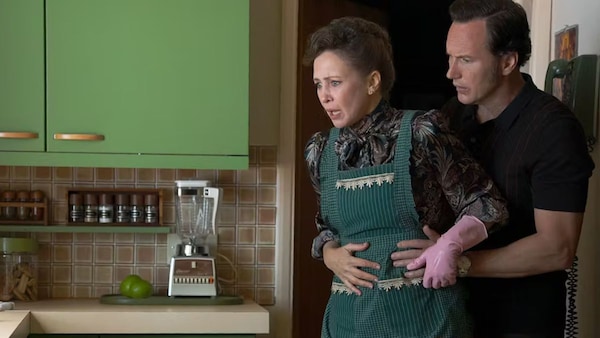
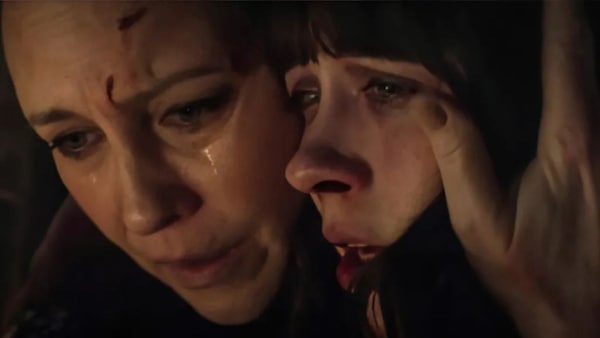
After the Annabelle and Nun spin-offs deployed the youngness of their daughter Judy, Last Rites is centred on her as an adult (a Zooey Deschanel-coded Mia Tomlinson) haunted by her past. The film opens with baby Judy’s stillbirth in 1964 when the Warrens get infected by an antique mirror; Judy lives, but the trauma — the curse — remains. She was not supposed to have lived, so a darkness follows her. (That sound you hear is the Final Destination franchise licking its lips). The Warrens are soon semi-retired in 1986, Judy brings her serious boyfriend, Tony, to meet her parents, and the Warrens’ allies from previous movies have settled into a pensioner rhythm. Meanwhile, in a coal-mining town of Pennsylvania, the middle-class Smurl family of 8 starts to experience paranormal incidents in their new house after the arrival of a familiar mirror. The Smurls cannot afford to leave, so they enlist the help of the local church. Inevitably, the news reaches Ed and Lorraine, who are reluctant to take up the case but find themselves driving to Pennsylvania with Tony once Judy gets involved.
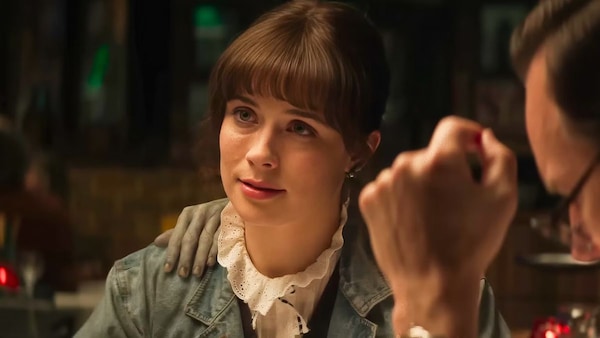
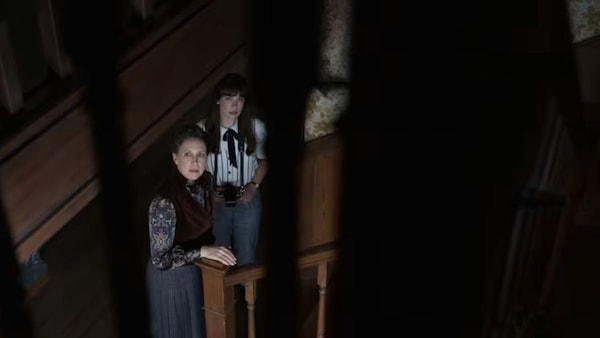
The filmmaking of The Conjuring: Last Rites follows the same nonfiction-yet-fiction pattern. The period details are immersive, the atmosphere is not cosmetic, and even the jump scares are subdued. It may seem slow, but the movie lets the tension simmer, purposely taking a while to mark the comeback of the Warrens. When they do reach the Smurls, it becomes a whirlwind last act of sorts — a voluminous spectacle similar to a loud Marvel climax. But it’s grounded by the emotional core of Judy’s struggle, Ed’s heart problem, some mother-daughter conflict, and the nimble touch of Judy finding a partner who quit the police force after a near-death experience. Tony and she are connected by the shared act of existing despite not being supposed to. A closing montage unfolds somewhat like Arrival: a poignant and musical time-lapse sequence that further humanises the Warrens after they’ve spent a lifetime battling anti-human forces. In short, this film is extremely watchable.
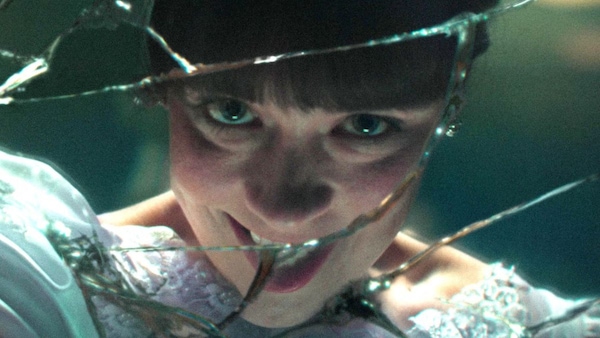
And perhaps that’s the biggest problem. It’s worryingly persuasive. For years now, the success of this franchise has been symptomatic of a post-truth storytelling era — where the most toxic kind of art is one that peddles religious conservatism and old-fashioned faith under the guise of well-made entertainment. It’s hard not to be uncomfortable and ideologically squeamish about The Conjuring movies, owing to their seamless debunking of science, their loose reframing of history and their legitimisation of occult legends. The Warrens were real and controversial figures (some might say delusional frauds) in 1970s America, whose investigations of ‘haunted houses’ and supernatural occurrences remain saucy first-person accounts, unverified and laced with folklore. The family has been instrumental in shaping these movies — merging elastic gospel with firm fiction — and turning it into a billion-dollar franchise “inspired by true events”.
The whitewashing and historical revision of the Warrens aside, this claim of truth and authenticity is an issue. It has manipulated countless adults and youngsters alike to watch and process the Conjuring universe — and its series of alleged demonic possessions — as something real, rampant and interlinked with the morality of lower texts of Christianity. Conspiracy theorists might point out that the Church could well be directly behind these hit films to drive generations of moviegoers (back) into the throes of catholicism and divinity. The fact of the matter is that the Warrens base their entire career on unwavering faith, higher conscience and the biblical triumph of good over (d)evil.
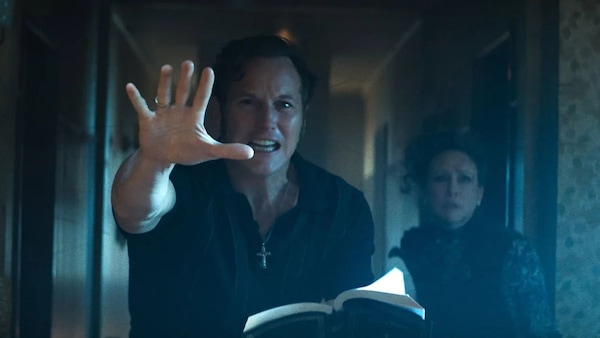
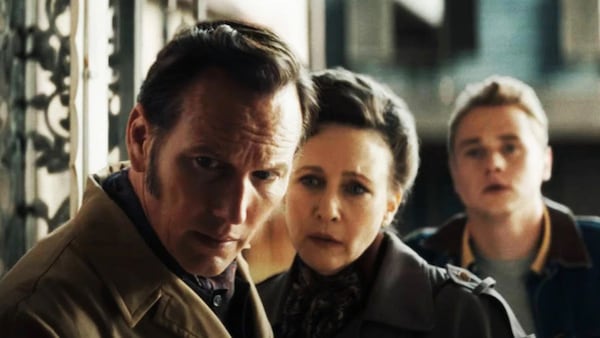
This is in line with some of the most famous horror franchises of the time — like the Omen, the Exorcist and others. The Warrens are, in a way, Christian superheroes who go around rescuing god-fearing families from what lies beneath. The Conjuring deifies them to such an extent — no faults, no doubts, harmless naysayers — that it’s simply taken for granted that paranormal forces lurk in the America they inhabit. Their reality is what defines the rooted look of the film series: a selling point that has distinguished them from other blockbusters. But even their fantasy is woven into this reality and staged as an extension, with the film virtually imploring us to trust our own sanity and believe in the lord if we hear the sinister creak of a door. Most of us are too consumed by the atmospherics and tropes to question the ‘inspired by true events’ disclaimers. I could hear the teenage influencers next to me in the hall confirming to each other that “of course it all happened, the Warrens were real people”.
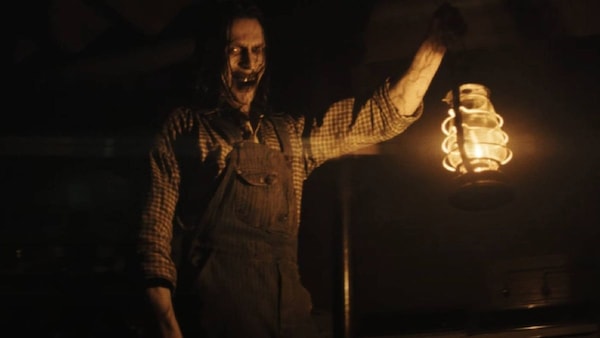
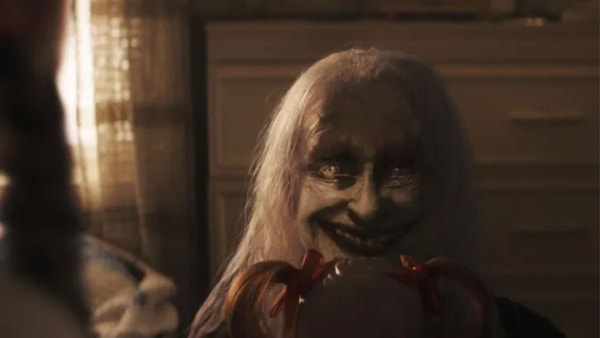
As I walked out after the end credits, I wondered what the haunting of a film critic would look like. Almost on cue, I noticed the shadowy figure of a film producer — someone whose life’s mission has revolved around bullying journalists and then sucking at his own job — strolling to the men’s room. No eye contact, of course, as is the case with ‘outspoken’ social media users in person. For a second, I thought I was hallucinating. After all, it’d be fitting to feel his malevolent presence during the screening of a movie that glorifies the business of delusion. But I was relieved to see someone react to him — he was actually there, even if he looked like a ghoul. Phew. As I walked into the night (not dramatically, I just live close by), I was more convinced than ever that The Conjuring: Last Rites is another cog in the post-truth wheel, weaponising a culture of faith and fear in the form of ghost propaganda.


We do live in an age where history is treated as mythology and mythology is packaged as history; the blurred lines are milked until it’s hard to tell black from white. It’s why a skillfully crafted franchise like The Conjuring will always be more dangerous than a dumb red-state action spectacle starring The Rock or Gal Gadot. It’s why a slick Bollywood thriller directed by an Aditya Dhar or Laxman Utekar will always be more dangerous and insidious than anything positioned by a Vivek Agnihotri. At the end of the day, the paranormal is the new normal because the language of this normal — fascist leaders, genocides posing as wars, lying politicians, silly producers — is horrific enough. They live among us. It’s not the Warrens that have to prove they were right. It’s we who have to prove that they were wrong.