

The Paper Cracks The Lede, But Not Quite The Entire Draft
The Paper offers welcome insights into the absurdity of journalism, but it can’t match its predecessor, The Office, for its raw, ungainly quotient of humour.
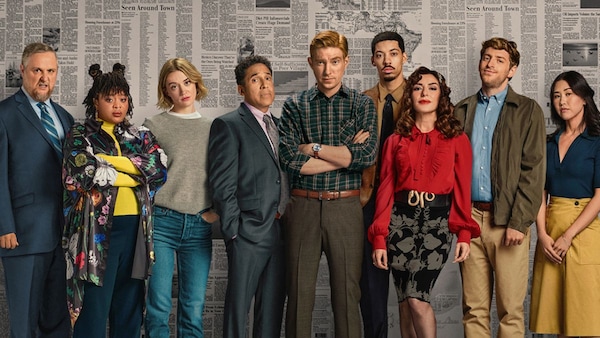
Promo poster for The Paper.
Last Updated: 10.01 PM, Sep 12, 2025
“PRINT IS PERMANENT. It’s like true love,” Ned, the naive new editor of a struggling newspaper, declares off-camera in the first season of the mockumentary, The Paper. As Ned says the line, he frantically arranges half-baked ideas about possible stories on his whiteboard. Nothing sticks — literally and metaphorically — until he is forced to turn to page-fillers like Sudoku, and an ill-fitting excerpt from a book published decades ago. It’s a sequence that, otherwise used to exhibit the thrill of journalism, instead, underlines its foundational ailment — deadlines, budgets and the prison of space. On good days, that blank sheet of paper feels empowering and far too short for the piece boiling within your veins. But on most days, it’s a kind of vacuum that must be filled with stories, if not substance. The Paper portrays the pursuit of ‘actual’ journalism as a ruinous romance. It speaks to the times, but not its predecessor's pedigree, for awkward comedy.
Domhnall Gleeson plays Ned Sampson, the dogged yet brittle new editor of The Toledo Truth Teller, a city paper flirting with extinction in the age of new media. The paper’s tabloid-ish stories score in terms of numbers, but subscriptions are down, readers are leaving, and there is precious little prestige to hang onto, in a place that is supposed to stand for something more. Ned steps into his new shoes, not with bravura or confidence — he isn’t a career journalist himself either — but with the throbbing aspiration of flipping a sorry tide. His subjects, though, aren’t exactly the sharpest or even fit for the job at hand. “Don’t forget the 5 Ws,” he tells a reporter before he heads out. “What’s that? A gang?” the reporter responds, blank and dumbfounded.
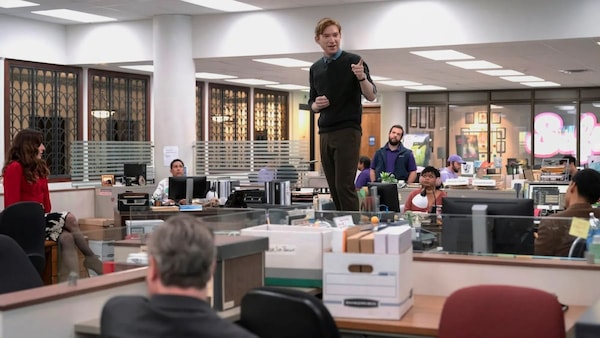
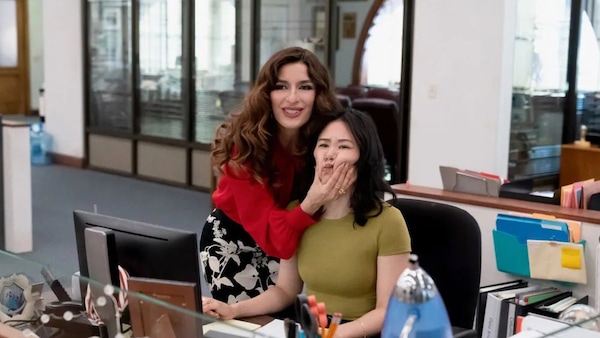
Much like its predecessor, the Truth Teller’s office is a mixed bag of people who behave sanely and those who look like they are returning from the edge of something more colourful than reality. There is Mare (Chelsea Frei), whose bright-eyed optimism is just the right funnel for Ned’s blind visions. There is Nicole, played by the excellent Ramona Young, as the clueless, out-of-groove millennial who seems rather bewildered by most things around her. The highlight, though, is Esmeralda, played by the impeccable Sabrina Impacciatore, an influencer-turned-editorial-head who likens the world to her social media feed. Full of people whose attention ought to be farmed, as opposed to brains that can be enlightened with the pushback of a relevant story. But none of these ideological frictions is painted in the seriousness of a world in crisis. Instead, The Paper adopts The Office’s mock tone to try to merge humour with tragedy.
The result is a soup of some crunching highs but mostly unremarkable lows that leave a lot to be desired. To its credit, the 10-episode first season doesn’t blatantly point the gun at new media culture and the boon of social media alone. It’s prescient and smart enough to capture the absurdity of the age-old business in itself. There are never enough stories on the board, never enough money on the table, and never enough time to detach the two to get a sense of what’s really happening. The portrayals that allow journalists sweeping speeches on the office floor, statements of endeavour and more, feel alien. Here, there is just the act of mimicking something more serious and worthwhile. Lateral thinking is an act of self-identification. That’s what journalism has been for most people pursuing it — a chase that simply leads to another chase.
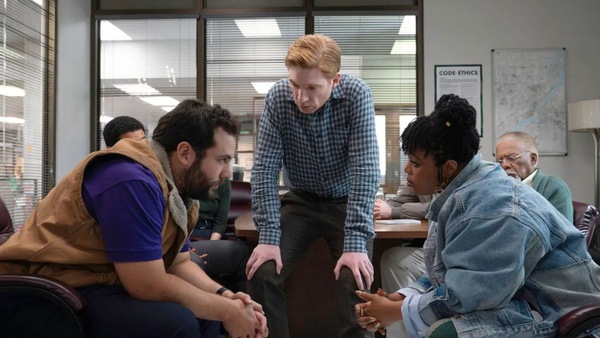
The big problem with the series, Gleeson’s effortless charm notwithstanding, is its dated humour and its inability to mine the lack of energy in the office. Newsrooms were never and still aren’t dull places. To frame it as a screwball, a lounge of whimsy requires the creative teeth of something sharper. The fact that The Paper attempts real journalism with people who aren’t exactly journalists sounds like the perfect sounding board for something more crisp and bold than a milquetoast sequel to the life and times of a middling what’s-even-the-point local newspaper. Even if you look past the argument of scale and pace, the writing rarely allows its cast the oddities that its predecessor stood on. Far too much woke water has flown under the bridge since the release of the last one.


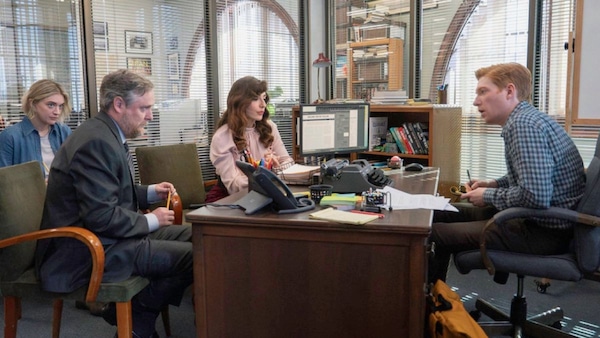
The Paper does have its moments. In one sequence, Ed’s desperation for a news story pushes him to call a morgue to check if any dead bodies have turned up. The act snowballs into the theory that a serial killer story may well be in the making. Only for Ed to realise, the morgue has reported him as the suspicious caller inquiring about bodies. The absurdity of a world where curiosity is now met with derision. This, after all, is the age of doomscrolling. Where it feels almost maddening to — even dressed as jokers — pursue a speck of the truth. To this effect, the tragedy prefacing The Paper might be a bit too much, for it launches itself into the orbit of comedy. For journalists moaning the death of their profession, though, it feels just like the confusing, debilitating purgatory that life has become over the last decade or so. For everyone else, the second season has to do better.