

The Running Man: ‘The Truman Show’ Walks Into A Bar — & Stays There
For a survival thriller packed with so many moving parts — colourful characters, stylised set pieces, post-truth parables and unbridled violence — The Running Man treads a surprisingly straight line.
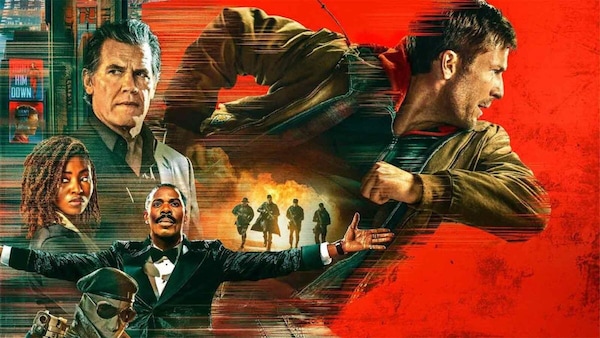
Promo poster for The Running Man.
Last Updated: 12.19 PM, Nov 15, 2025
WHAT IS IT ABOUT Glen Powell and disguises? After Richard Linklater’s Hit Man and the sports comedy Chad Powers, Powell plays another character who must don multiple identities and accents in The Running Man, Edgar Wright’s adaptation of Stephen King’s 1982 novel (which resulted in the kitschy Arnold Schwarzenegger adaptation in 1987 — incidentally the first “sci-fi” saga I had ever seen). Powell is Ben Richards, a working-class hero in a dystopian America ruled by a corporate television network that has weaponised the direness of the land through its murder-happy reality game shows.
Ben needs money for his sick daughter (a clunky, hurried setup plays out like the film is almost embarrassed to be soft), so he channels his rage and nihilism to sign up for the deadliest game-show of them all: The Running Man. He is one of the contestants who stands to win a billion dollars if he survives 30 days while trained hunters and ordinary civilians try to kill them; it’s a rigged chase designed by a network boss who sees the explosive Ben as his TRP golden goose. Naturally, this gives Powell the chance to wear more wigs and moustaches. It’s almost as if the famously handsome Tom Cruise-coded actor is doing everything to remind audiences that he’s more than good looks and moviestar charisma. Sometimes he is. Not in this film, though.
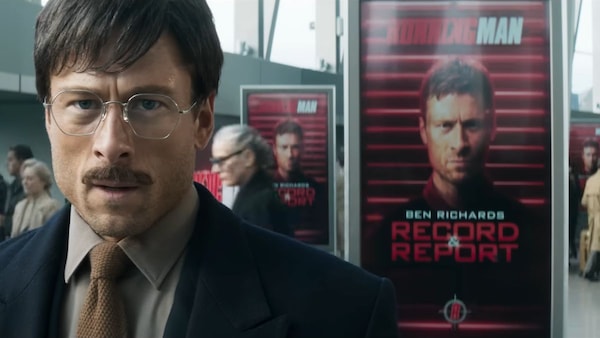
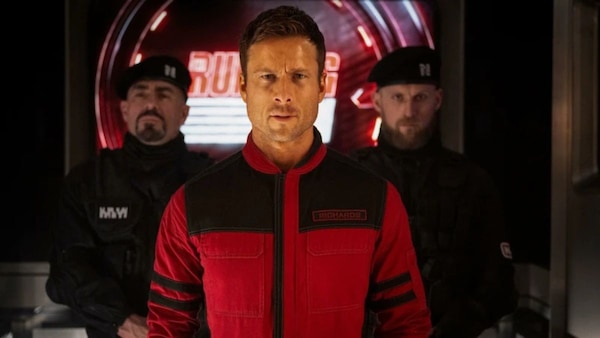
For a survival thriller packed with so many moving parts — colourful characters, stylised set pieces, post-truth parables and unbridled violence — The Running Man treads a surprisingly straight line. Ben’s journey is replete with narrative stereotypes: convenient allies, geeky conspiracy theorists, generous ex-revolutionaries, a Gen-Z character (who is randomly called out by him for her privilege), mob attacks, a masked arch-rival in an airplane. The global broadcast of the show means he becomes the most wanted man in America, on the run, and soon a reluctant messiah for the masses. Ben Richards sets out to win for his family, he wants to be ascribed no bigger purpose or mythology, but along the way, the oppressed nation starts to see him as a movement that’s bigger than a game; his personal courage acquires the halo of political dissent, and suddenly he is no longer just one good contestant defying the odds. It annoys him, until it doesn’t. Think V for Vendetta meets The Truman Show meets Squid Game (meets Air Force One at some point). Chants of “Richards Lives!” fill the streets after every shootout and chase, while the Network’s plan to keep him alive for the ratings begins to blow up in their own face.
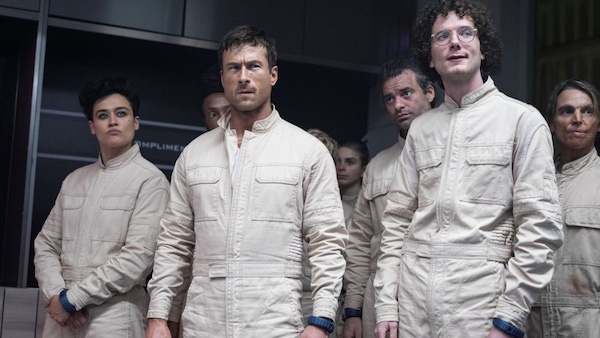
Wright directs with his usual fluidity and eclectic rhythm, staging the film as a futuristic but overlong rollercoaster ride. Every time you think it’s the climactic stretch, there’s one more, and the plot seems to get thinner and emptier. The novelty of the police-state-fascism-media-controlled-narratives thing wears off after the frantic first hour. Ben also ends up becoming the one-man resistance against AI (the Network keeps using his deep-fakes and hypernationalism to provoke the country against him), because the creator of the show sees his swag and swears by the unpredictability of being human. But it’s never a good sign when the bullets shot at the hero feel incompetent, finding various ways not to hit him even when he’s directly in the line of fire. In such moments, the viewer is yanked out of the choreography and forced to contend with B-movie-coded chaos. The helpers emerge at different stages like neat bullet points, trading the ingenuity of the plot for a Mission Impossible-style underdog spectacle — but without the imagination of the spectacle.

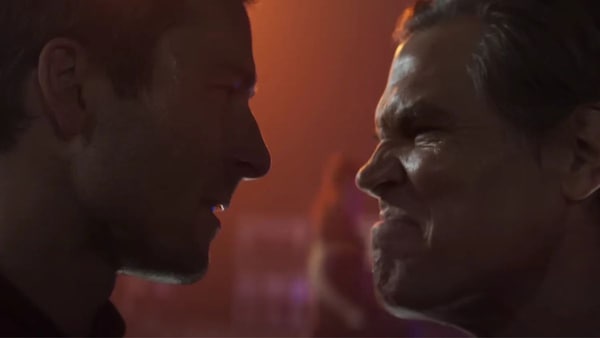
Powell sways between Die Hard and The Dark Knight Rises to make Ben Richards a cult-hero prone to excesses. It’s a performance that borders on parody when Ben is angry, but Powell’s physicality in such roles is impressive for how prolific he is. It feels a bit like an audition tape for the more serious (and award-winning) directors to notice and cast him. An Edgar Wright movie is inherently that vehicle — part campy genre tribute, part striving for its own gravity — and The Running Man is perhaps a little more torn between the two tones. You can tell that the third act is an attempt to remind the audience that it’s an urgent and rousing thriller with opinions about the world we live in, not so much the one we’re heading towards. (In the first film, 2019 was the ‘future’). But it’s hard to get past the orthodox packaging: a functional and VFX-heavy actioner at best, and any deeper meaning is best smiled at. It might be more useful to see it through the lens of a trivial entertainer with pockets of thought, rather than a thoughtful one with pockets of tropeyness. The balance, of course, lies in the eyes of the beholder. For now, Glen Powell can run — and be anyone but himself — but he can’t hide.