


The Teacher's Lounge: When The Road To Hell Is Paved With Good Intentions
The gulf between doing the right things and doing things right proves fertile ground for paranoia and mistrust in İlker Çatak’s classroom whodunit of sorts.
Last Updated: 01.50 PM, Feb 24, 2024
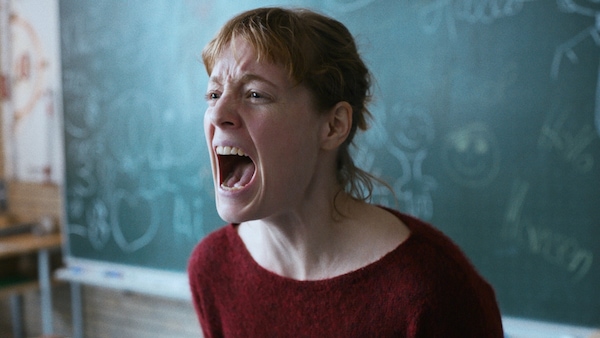
IDEALISM collides with reality, creating a perfect storm of speculations, miscalculations and accusations in The Teachers’ Lounge. Good intentions can sometimes lead to bad outcomes. The gulf between doing the right things and doing things right proves fertile ground for paranoia and mistrust in İlker Çatak’s classroom whodunit of sorts. At a German school, a seventh-grade teacher’s well-meaning attempt to investigate a series of thefts snowballs into a much bigger scandal. The more she labours to remedy the situation, the more she risks becoming a pariah. The bind she finds herself in raises a pertinent question: how do you stand firm against a rigid school system and by implication any bureaucratic system, which seem purposed to wear you down and make you choke on your idealism?
Carla Nowak (Leonie Benesch) is as idealistic as a young teacher just starting her career can be. Arms outstretched like a conductor, she leads her students with a welcoming ritual and song at the start of each class. Carla teaches maths and sports. One is a subject of calculation and problem-solving; the other calls for competition and teamwork. Lessons from both subjects will be weaponised over the course of the film. Early on during a maths class, Carla teaches her students about the distinction between proof and assumption — a distinction that becomes blurred as teachers, students and parents all point fingers at each other in the face of controversy. As viewers, our own tendency to fill in the blanks based on assumptions, not proof is called into question.
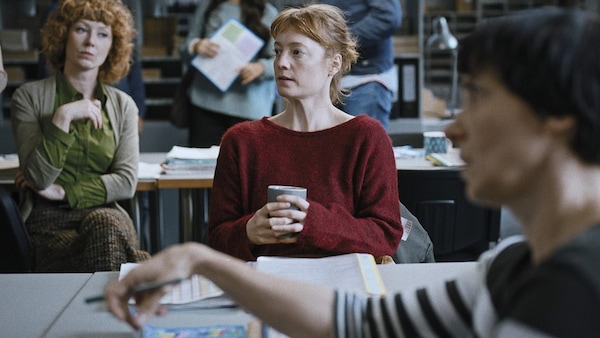
When a series of thefts occur at the school, the administration’s hasty response and its hastier judgement exposes institutional fault lines. One fraught scene sees two class representatives brought in to a conference room, where one of the teachers (Michael Klammer) runs a pen down a list of names and leans on the kids into nodding their heads at the most likely suspect. The result? Racial profiling. The scapegoat? Carla’s student Ali (Can Rodenbostel), a son of Turkish immigrants. The proof? A little extra cash in his wallet. Ali insists he isn’t the thief. Not convinced, the principal (Anne-Kathrin Gummich) brings in his parents, who explain the money was his allowance.
Outraged at the treatment of the students, Carla takes the matter into her own hands by setting up a trap. She leaves her wallet in her overcoat in the staff room and leaves her laptop webcam on to record anyone who might take the bait. Sure enough, someone does. The footage captures the culprit rifling through Carla’s overcoat. Some money is indeed stolen. While the culprit’s face cannot be seen, the culprit’s blouse sleeve has a striking pattern, which Carla traces to the staff secretary Friederike Kuhn (Eva Löbau). Forgetting her own lessons about proof vs assumption, Carla confronts her colleague. Insulted at the accusation, Frederike denies the crime outright. When Carla escalates her concern to the principal, it triggers a chain reaction of misguided decisions.
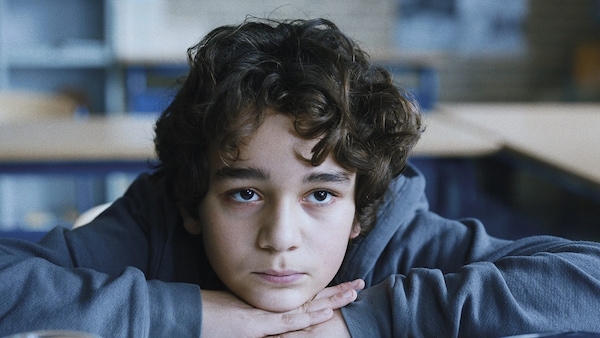
Due process is skipped in the name of “zero tolerance policy.” Suspicion leads to blame games lead to condemnation. The “safe space” Carla aspires to offer the children becomes anything but. Friederike, as it turns out, is the single mother of Oskar (Leonard Stettnisch), a shy but bright student in Carla’s class. Targeted by classmates after his mother is suspended on suspicion of theft, Oskar decides to turn the tables on Carla, making it his personal mission to cripple her authority. Meanwhile, Carla’s colleagues aren’t too happy about being filmed without their knowledge. Does the need to ensure a safe space for children justify an invasion of their privacy?
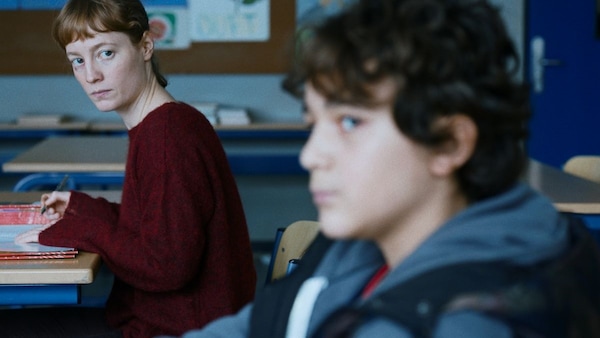
Between answering questions from miffed colleagues and negotiating with parents as demanding as their children are unforgiving, Carla feels cornered. The kinetic realism of the film lends the school the harsh atmosphere of a prison, with Judith Kaufmann’s camera skulking behind Carla through a maze of classrooms and hallways and faculty lounges. Shooting in 4:3 format helps Çatak zero in on Carla’s suffocation, while drawing us closer to Benesch’s arresting portrait of a woman battling to hold on in the face of mounting pressure. Carla’s anxiety, her paranoia and her exhaustion are all betrayed by the tension in her face and her eyes. We learn Carla is a Polish immigrant. But who she is outside the classroom is anybody’s guess — a deliberate choice to foreground the universality of her dilemma.
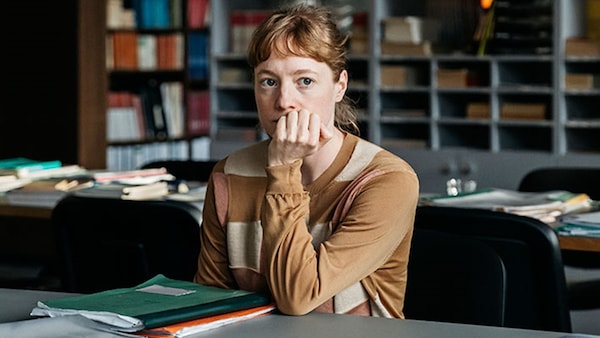
One of the most electrifying scenes in the film comes when Carla decides to give an interview to the school newspaper — an ill-advised decision that creates a level of suspense worthy of a horror movie. Only here it isn’t a literal death, more a character assassination at the hands of an editorial team of young journos who may have learnt the art of grilling a little too well. With each deliberately charged question, Carla’s devotion to her students is used against her. It’s a smear campaign. Only Carla realises it too late. Once the interview is published with her quotes taken out of context, the principal responds to the resulting backlash by making another ill-advised decision: banning the issue. The school here becomes a snapshot of the world outside, an incubator of all the issues we are familiar with, be it misinformation, trial by media, censorship, systemic racism, bureaucratization, and the weakening of all our democratic institutions. For making sharp observations as a real-world parable without sacrificing the pressure-cooker intensity of a classroom thriller, The Teachers Lounge merits at least a B+ with bonus credit for no tidiness.
The Teachers’ Lounge, a Best International Feature Film nominee at the 2024 Oscars, is out in theatres across India.