


Virat Kohli Is Absent But Not Missing
Kohli's return doesn't look like one; it's more of an appearance. Cricket used to be an extension of his personality; now it’s an exception to it.
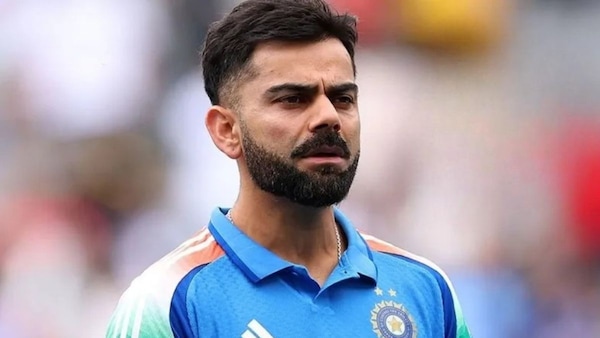
Every time he walks out to bat at no. 3, there’s an illusion of a man politely dropping into a party before a family dinner. Cricket is a pitstop on the way home.
Last Updated: 12.34 PM, Oct 24, 2025
AS I WRITE THIS, the knives are out. The eulogies are being written. Social media is buzzing. The fandoms are frothing. And the experts are wondering. Virat Kohli has been dismissed for a second consecutive duck in a 3-match bilateral ODI series against Australia. The venue is Adelaide; the year is 2025. 11 deliveries and two innings later, he is yet to open his account. Two zeroes in a row is a cause for concern at any stage in a batsman’s career. But for Kohli, right now, at this very moment, the concern fuels a broader narrative. It’s his first international outing for India since he played his final Test match in early January. It’s a “return” to cricket, though he was never technically gone. He did play and win the IPL — for the first and only time — in a summer of curated absence. He has retired from two out of three formats already. He’s in shape, still chiselled and fit as ever, but competing is more of a part-time job now.
It doesn’t look like a return, though. More of an appearance, a flying visit. The sport used to be an extension of his personality; now it’s an exception to it. His partial retirement has unfolded like a vanishing act — from public view, from media scrutiny, from prying eyes, from civilisation almost — with blink-or-miss cameos in between. His digital presence is largely limited to brand endorsements. His life in London is hardly reported on. There’s “low-key” and there’s Kohli-warning-us-that-he-will-disappear-after-cricket low-key. Poof, gone. He had said this would happen, of course. The scary part is that it’s just a taste of the future. His decision to be in the mix for the 2027 ODI World Cup means that every innings poses as an isolated rally. Every time he walks out to bat at no. 3, there’s an illusion of a man politely dropping into a party before a family dinner. Cricket is a pitstop on the way home. It’s a strange tussle between fame and anonymity. It’s nostalgic to see him on the pitch, because it’s almost the only way to see him and the part of ourselves that supplied his legend every day for years.
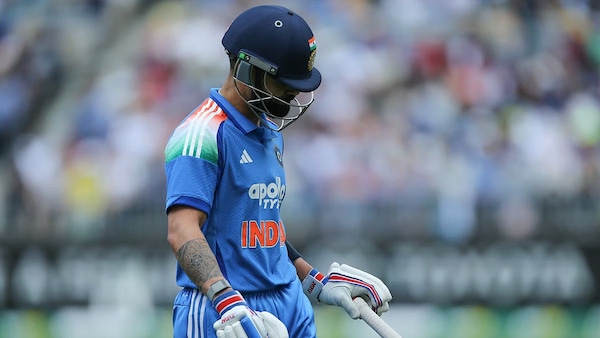
Virat Kohli is almost 37, which is not terminally old per se, but in Kohli years, it’s a bit like 50. One can argue that it’s due to the toll of playing all formats in a country that treats cricket as a full-time religion, in a culture where there is no escape from the spotlight. That it’s due to the toll of influencing, leading, energising and shaping the Indian cricket team for long. This is mostly true: physical fatigue aside, it’s the mental fatigue of being a professional athlete in an age where every sport seems to be evolving faster than the perceptions of those who watch it. And when you’re at the top, there’s the added burden of expectations. Sachin Tendulkar may have played longer, but in this context, it’s unfair to compare generations. Those like Dhoni and Kohli simply had to play more and harder in a shorter time; it’s like comparing 9-to-9 shifts for a decade to 9-to-5 shifts for two decades. It doesn’t matter in the end, because each career represents an indelible and unique imprint.
But the thing about Kohli’s cut-to-black transition — as opposed to other fadeouts and dissolves — is that his fatigue isn’t one-dimensional. His tiredness is different because it seems to stem from a psychological battle of being Indian. The burnout of post-2013 fame cannot be underestimated. It’s difficult enough for anyone with an opinion or two on the climate that swallows the sport. For someone as aware and informed as Kohli, it’s next to insurmountable. When I watch him bat now, there’s a sense that he fought more than poor form, intense opponents, crippling self-doubt or career milestones. There’s a sense that he has had to fight the very system that once propped him up to be the next Tendulkar; that he has had to defy the institution, the cultural shifts and the political posturing to stay in love with the game and the individualism that defined him. There was always a sense that he, along with Rohit Sharma, shielded squads from the external noise — from the ‘orders from above’ that so often forced a performance of nationalism, false bravado and one-upmanship.
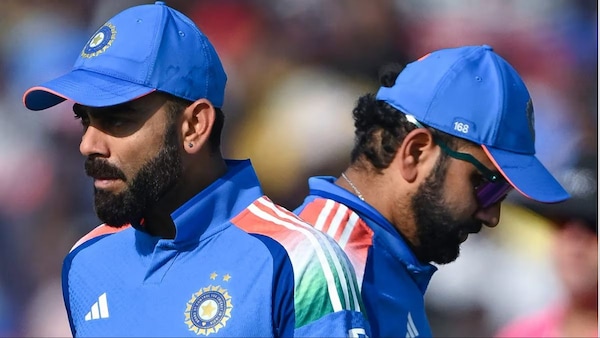
In other words, Kohli’s tapering off is a result of disillusionment with a game that’s become a cog in the wheel that has already consumed cinema and entertainment. The appointment of Gambhir as coach has aggravated the rot. Every Kohli or Rohit failure on the pitch has brought the team closer to being younger, greener, malleable and therefore more subservient to a structure that demands complete surrender. It’s a system designed to hold ambition hostage and turn players into echoes of mainland majoritarianism — especially ‘seniors’ like Suryakumar Yadav who have tasted success late enough to be a pawn in rejected-handshake optics beyond his paygrade. It’s designed to normalise allegations of religious favouritism (the non-selection of Sarfaraz Khan after the exclusion of Mohammed Shami), mediocre management, and a lack of method to the madness. When Kohli bats, it’s like watching an elastic string separating church from state; the less he bats, the closer the string is to snapping. Not to romanticise the significance of his survival, but he needs to be missed. In a way, he’s one of the final frontiers standing between Indian cricket as a sport and Indian cricket as a medium.
Ironically, Kohli’s legacy as an ‘expressive’ player might have laid the foundation. I was never a fan of his on-field aggression and siege mentality, even as it swayed a nation waiting to snap out of a Dhoni-shaped reverie. You could sense that Dhoni, too, was losing a rather specific battle of identity towards the end of his career; his exhaustion went beyond the field. Kohli’s behaviour felt like an urgent reflection of the New India that propaganda movies and revisionist war epics had started to milk. Consequently, for me, he was easy to admire but difficult to love — his in-your-face gestures provided an outlet to a generation of strivers and overseas yearners wired to weaponise their masculinity and persecution complex. I didn’t agree with his yes-man bubble, and I still don’t believe he accomplished enough as the king of an all-conquering outfit. His partnership with coach Ravi Shastri often felt like a reactionary echo chamber where they agreed and communicated in smoke and bluster. Basically, he was a flawed role model who silenced critics with cacophony as much as craft. Despite where he came from, his manner of mutiny solidified a growing resentment against elitism and order.
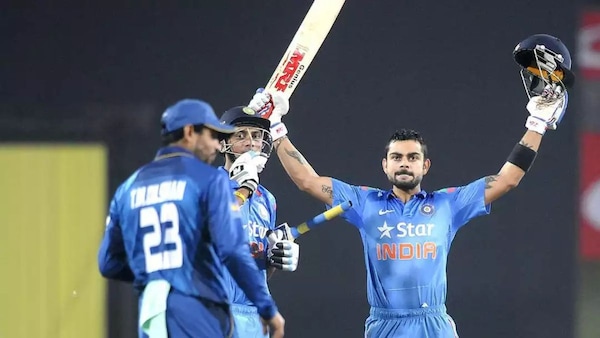
The way things have panned out, however, it’s hard not to suspect that Kohli’s boyish rebellion was used to light a spark whose flames are being stoked as we speak. I don’t think he intended to trigger a revolution that was, ultimately, co-opted by the establishment. It was perhaps who he was, for better or worse, and his chaos may have been a front for a conflicted interiority. If anything, his arrogance might have been a consequence of having to play more than cricket; of having to turn his talent, body and indispensability into a foolproof negotiation tool. He cannot be blamed for walking away the way he is — with a “I’m so done with you” aura, with a sort of nonchalant coldness that comes from a cascading break-up rather than an amicable separation. Age is an excuse. The inability to reverse time is not the issue; the inability to be history is. He looks spent, like a currency that was demonetised to create the illusion of justice.
Perhaps it’s fitting that he’s mirroring the paradox of the format he hasn’t retired from — the format he has no equal in. One-day cricket is on the brink of extinction, yet it’s the cornerstone of the only ICC tournament that people care about. The World Cup is nearly two years away, but there’s a feeling that Virat Kohli won’t step away quietly; his Rome wasn’t built in one day. Most superstars retire to avoid the ignominy of being dropped, but Kohli seems to be confronting the prospect of being dropped to avoid the ignominy of retirement. As I write this, Australia has taken an unassailable 2-0 lead in the series. It’s tempting to imagine that Kohli will not quit; that he will outlast Gambhir’s stint and ‘reach’ 2027 with a third wind; that living, not leaving, will become his full-time job. But it’s more gratifying to imagine that he is human, not a story. It’s this humanity that has seen centuries, ducks, dissent, and common sense co-exist with each other. It’s this descent that Novak Djokovic — his contemporary from another sport — is willing to reckon with to understand the value of the ascent. It’s this fragility that encourages us to dream of a day in 2027, when Kohli proves that disappearing is not enough. After all, a great magic trick is only complete with its third act, the most difficult part: the prestige of coming back.