


Weapons: The Adolescence Of Horror
Zach Cregger's Weapons appeals to our inherent quest for answers — for an endgame — from a horror film, and delights in the journey rather than the destination.
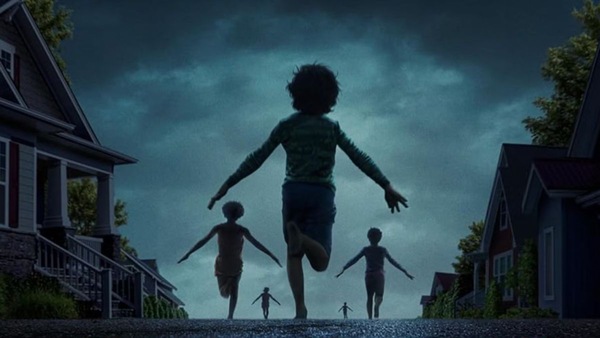
Promo poster for Weapons.
Last Updated: 06.40 PM, Aug 14, 2025
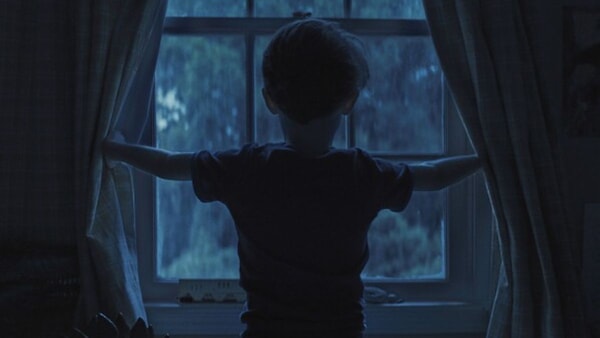
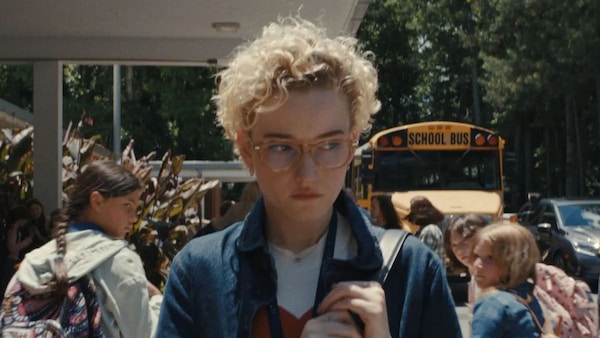
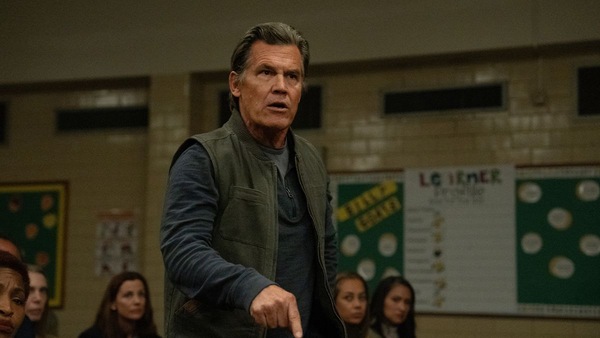
"ZACH CREGGER" just sounds like a horror movie name. Maybe because it has the phonetic ring of Freddy Krueger. And Zack Snyder (derogatory). Cregger’s latest, Weapons, is many things and nothing (complimentary) at once. It opens with a spooky shot: 17 children run out from their houses in the middle of the night and disappear into the darkness. We then see the aftermath unfold from the interconnected perspectives of a few small-town residents: the young teacher whose entire class of students (bar one) vanished, a troubled cop who is also this teacher’s ex, an obsessive father of a missing boy, a homeless junkie who stumbles upon a secret, a gay school principal struggling to handle the crisis, and last but not least, the one ‘survivor’ and his mysterious house situation.
Weapons opens and closes with a kid’s voiceover, but the anonymity of this narrator kind of ties into the film’s thematic fluidity. As viewers, we are simply wired to look for social cues, for hints and allegories. Weapons knows this and toys with our instincts. The meaning — or lack of it — lies in the eyes of the beholder. The horror in the film becomes anything we want it to be. For some, it could be a self-aware take on community trauma and urban isolation. For some, it could be a nifty riff on our biases about witchcraft and creepy relatives. For some, it could be a naughty satire on our perception of true-crime and supernatural stories. For some, it’s the wicked title, where the emotional ‘weaponisation’ of an entire town on edge prevents them from looking in the most obvious places. The twist — of a fragile outsider arriving to cast a voodoo over victims and turn them into literal weapons — is an entertaining rendition of this simple idea.
For some, it could even be a tragicomic nod to the shapeless relationship between reality and storytelling. Like a version of One Cut of the Dead (2017), where we see a tragedy and then the “making” of a tragedy: the fraught existence of a genre from different angles of a real-world setting. It’s why some of the scenes are so wryly funny, almost as if the fiction keeps breaking the fourth wall to expose the apathy of living. It’s hard not to chuckle when a woman mumbles “f*cking help me” to a gas-station cashier whose pressing problem is the damage to his shop and not the sight of a possessed man trying to kill her. Or when the dad wakes up from a nightmare and screams “what the f*ck?” to himself. Or when the junkie breaks into a home but doesn’t stop stealing despite his terror. Or even when a gay couple is preparing to spend the Sunday with a massive hot dog platter before the doorbell rings.
Every now and then, Weapons seems to remind us that it’s fine to merely be engaged with a movie from one scene to another, regardless of where it goes and what it says. It doesn’t allow us to obsess about the little details and loopholes of logic. It appeals to our inherent quest for answers — for an endgame — from a horror film, and delights in the journey rather than the destination. It’s the most primal bond between moviegoers and the suspense on screen.
For me, personally, Weapons is also what happens when grief is dressed up as a genre movie. I’m not sure what it is, but the perversely enjoyable film is underpinned with a desire to make sense of the randomness of loss. Life always offers a death-shaped hole — a sudden void whose permanence the human mind often struggles to process. It’s hard to distinguish the absence of a person from the absence of an entire future. When someone dies, the only reference to miss them stems from our experience of breakups and mortal longing; the immortality of pain is difficult to understand. As a result, we tend to rationalise the loss by telling ourselves stories and, subconsciously, expecting the invisibility to end. The memories are so potent that a person is never fully gone; it feels like a temporary separation. Cregger captures this bridge between hope and delusion very well through a film that reframes denial as a plot device.
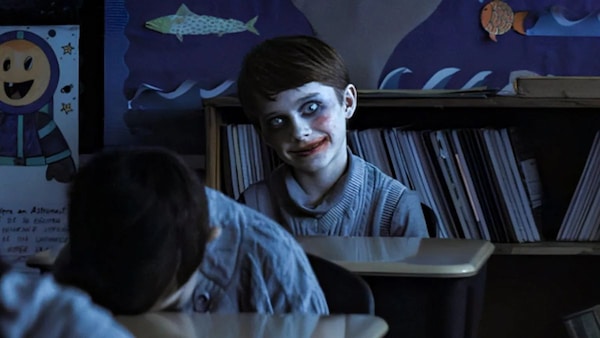
The truth of the town’s tragedy might be far more rooted: a classroom full of kids has probably died in a bus accident. The child who survived is likely the one who woke up late that morning. The film stages the shared trauma of the community by refurnishing them with the agency of fiction. It literalises the hope at the end of the tunnel, as if to legitimise our flawed instincts about grief and death. The paranormal is blended with their new normal to offer them an alternate ending: a culprit that can be brought to justice. And a return. Witchcraft might look far-fetched, but it's a creative sketch of closure after the abrupt “disappearance” of lives. You can tell that this is the most humane way to confront questions that have no answers. That's why the narrator is a child; the incidents have a whiff of youth and adolescence. It’s as if the child is recalling a story that was perhaps told to him by his parents — a story that shields him from the horrors of growing up. A story that becomes a weapon to deflect his loss of innocence.