


Dominic Arun: 'Audience Has Taken Over Lokah & Made It Their Own Film'
In conversation with Subha J Rao, Dominic discusses creating the world of Lokah, the writing and ideation process, and the bonds formed during the making of the film.
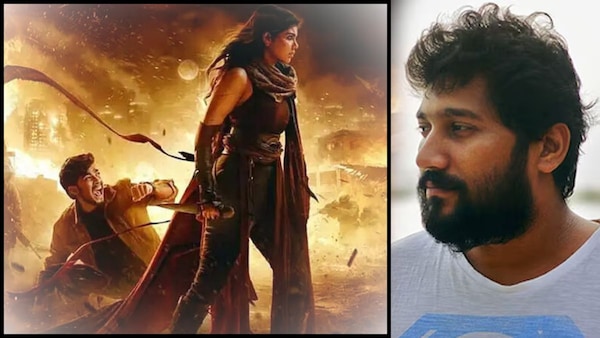
Dominic Arun (right) and the promo poster for his latest film Lokah - Chapter 1: Chandra.
Last Updated: 06.22 PM, Sep 18, 2025
THE WORLD might be celebrating Dominic Arun, whose sophomore Malayalam movie Lokah - Chapter One: Chandra has wowed audiences, set the box office on fire, and got fans sharing their theories on social media. And, Kalyani Priyadarshan becomes the first heroine from the South to spearhead a 200-plus crore film. But the reason we got to see the film is a bunch of friends who backed Dominic when he was at his lowest, much like Sunny’s band of boys in Lokah. After his 2017 film Tharangam with Tovino Thomas and Santhy Balachandran did not do as well as expected, he was plagued by self-doubt, wondering if he was in the right field at all.
Dominic took a break, overcame his dark phase and began writing again. “That was a very lean patch. It is very lonely in the industry when you’re not doing well or when you don’t have work. I am not a very social person, and I isolated myself. Luckily, I had family and friends who were very supportive. Friends from school and college and Tharangam, including Tovino, sustained me.” But that phase, Dominic feels, prepared him for today. “I went through the lows early on in my career, so I am much more grounded during the highs. I am also trying to stay as real as possible and not get swayed. Yes, Lokah has done well, and it is a very happy space to be in, but this space is not permanent.”
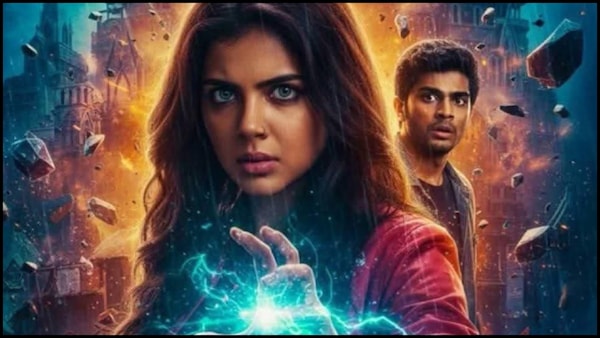
Dominic has taken a few weeks off, and once the film’s promotions are done (they are scheduled to visit the UK later this month), the architect of the Lokah universe hopes to get back to something he does best — world-building.
Dominic discusses creating the world of Lokah, the writing and ideating process, and the bonds formed in a freewheeling conversation. Edited excerpts below:
Lokah had many firsts, but it also showcased a ‘safe male’ in the form of Sunny after a long time. He’s playful, drinks, but is deeply caring and knows his boundaries.
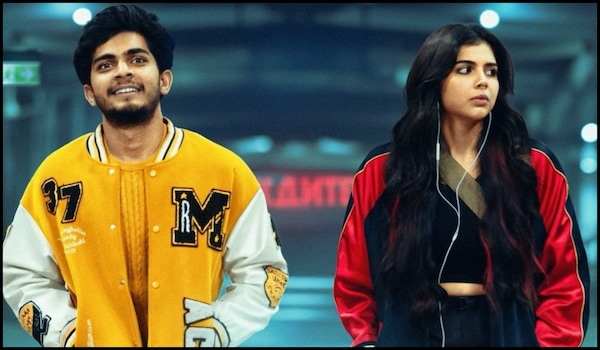
Ha! Glad you think so. The initial version of the script was very different — the character was not as sweet. But, as we went through the drafts and I introduced a lot of humour into the script, we felt that when you have a strong character like Chandra, you need someone innocent and nice for her to like him. Only then will she see him differently from the men she’s met over the centuries. I did not want just a resemblance to the person she liked in 1905. There should be some quality in Sunny that draws her. So, you have someone who does all the wild things boys his age do, but he’s also very pure, innocent. That balance shone because Naslen is the kind of actor who can pull off anything. And, when Santhy came on board as co-writer, she also felt this was the way it should be.
You mentioned 1905, and that’s something people have remembered. Like they’ve noticed most of the detailing in the film. How does it feel when your audience ‘gets’ you?
It is very fulfilling; it is a dream come true when your audience picks those points and discusses them. I did this in Tharangam too, but that did not get noticed. This is why I am very conscious when placing certain objects/details. Many have been identified, and many fan theories have been created regarding the backstory, and I am overwhelmed that they’ve made the film theirs.
Some are there as a homage of sorts to the people who have inspired me. I am a self-taught filmmaker, and I have learnt by watching films. I am a huge fan of director Priyadarshan (lead actor Kalyani Priyadarshan’s father), and when I write something, my influences find their way in too. For example, the apartments of Chandra and Sunny face each other, as they did in Priyadarshan Sir’s Vandanam. I changed the look, though. This homage is my way of thanking my mentors.
Lokah is one of those films that recognises the fact that many languages can co-exist in a space. How did you work to ensure that you did justice to them…
I have huge problems when I watch badly-dubbed Malayalam portions in other language films, and so I wanted to ensure that other languages sound sensible and like how native people would speak them. I got help from Toby director Basil Alchalakkal, for the Kannada portions, from writer Tamilprabha for the Tamil lines. They are good at what they do, and it was a huge help. Santhy knew almost every language we hear in the film, and helped make sure that the dialogues sounded authentic. Our dubbing director, RB Bala, comes with vast experience and his expertise helped too.
Lokah is also one of those rare films where women have rightfully been placed at the centrestage.
We had a huge crew of women on the set, and I think all of this fell in place very naturally. Having a creative person like Santhy on board was a huge plus. We wanted everything to be portrayed in a nuanced manner, with the correct gaze. If only I’d written Chandra, there would have always been a male perspective, because even if I tried my best, I would not be able to go through every experience of a woman. That was the whole point of collaborating with Santhy. Even when we were showing a possibly violent scene, we wanted the audience to feel the tension without anything really happening on screen. Violence does not have to be shown to be believed.
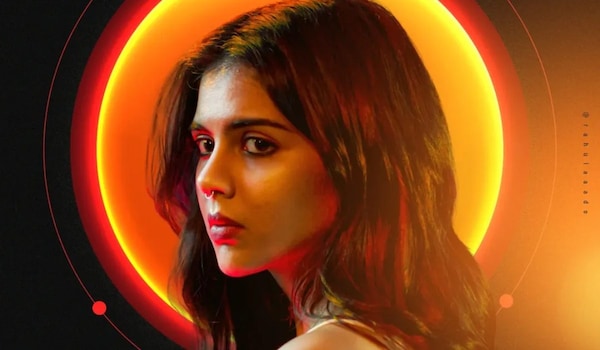
Chandra might be a female superhero, with a scaffolding of what we are used to seeing from the West, but her spirit was all Indian…
When I was researching vampires and folklore from the West, I saw a lot of similarities to our yakshis. And, I was clear that if we wanted to pull off something, it should be rooted in our culture and nativity. So, while Chandra had some facets drawn from canonical vampires, the fact that we infused Yakshi lore helped people connect to Chandra’s character. Kalliyankattu Neeli was the best thing that happened to our film, because it established a direct connection to every childhood memory of people from Kerala.
Casting Tovino as the playful Chathan Michael seems like quite the masterstroke.
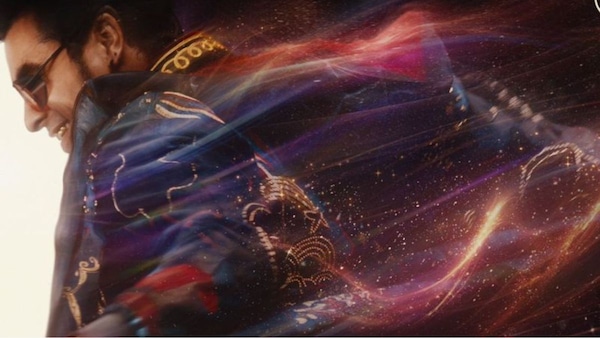
Our first draft never had a chathan. But, when we were looking around for producers — this was before Dulquer Salmaan stepped in — a creative producer elsewhere suggested we needed to have one more character to keep people’s interest alive. We then began sketching this fun, playful guy who is a contrast to Chandra, but we needed him to be someone with the kind of stardom that would take Chandra’s burden off for at least ten minutes. Honestly, Tovino’s the one person I can call up and ask for a favour and tell, “Do this for me, da”. I was hesitant to, though, because he was already part of a superhero franchise in Minnal Murali, and I know of his thirst to explore varied characters. He was immediately on board, saying it's a different universe.
At a time when a single theatrical watch is a tough ask, some have watched Lokah multiple times. Have you met any of them?
I recently met someone who watched it four times and wanted to speak to me about it. I spent 10-15 minutes with him, and he had a lot of interesting things to say about the movie. Many have come up with backstories for Chandra and the other characters. It is like they’ve taken over the story and made it theirs.
You never really mention the film is set in Bengaluru, but it shows in the love with which you’ve showcased its bustling streets and the silent bylanes. What has your tryst with Bengaluru been like?
I used to work with Wipro in Bengaluru and was fascinated by how cultures intersected here. When I was writing the film, I was clear that I did not want to place the yakshi in a rural setting, like they used to. I wanted her to have a cosmopolitan outlook, and I wanted her to be living amid people in a city where she can easily get lost. Also, Bengaluru, because it is one place where you have a lot of Malayalees. And, people from every place make this their home. That also frees up the space for me to open the film to people from other industries to join this world.
We shot in quite a few places, including Kengeri, Indira Nagar, Manyata Tech Park, MG Road, Commercial Street, Chickpet, Nandi Hills and UB City.
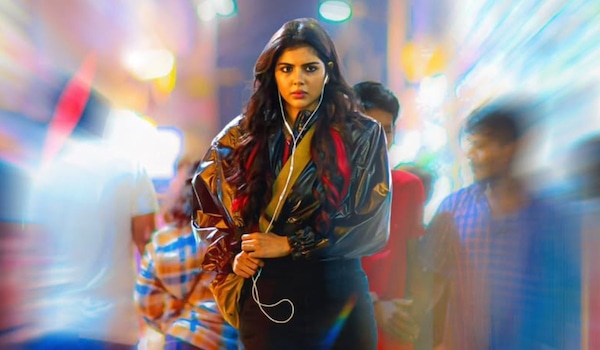
While Nachiyappa Gowda’s character is sharply written, compared to the rest, there were some chinks. Why did he speak Kannada the way he did? He’s a Gowda but his mother is dressed in a madisaar…
Ah, yes. We had to make those changes. A Kannada actor was to play the role, but had to pull out at the last minute. I was desperate for someone who was menacing and who could also do action well, and Sandy master came in. The mother is Tamil and the father is a Kannadiga and I hoped that would work.
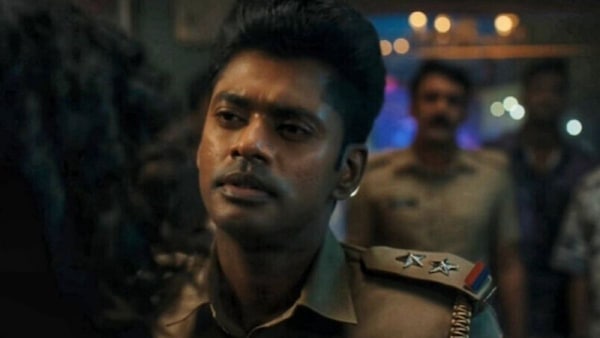
Rarely do power-hungry cops get portrayed as teetotallers and as purists who keep off intoxicants. He’s a misogynist and cruel, but he does not abuse his body. This ties in later. Why did you write Nachiyappa that way?
Bad cops are always portrayed as smoking, almost as if it is a tool to show they are wicked. You are meant to feel safe when you see a cop at night, but the opposite happens. And, I wanted to explore that. I was trying to do that differently, and so we added this logic of a clean body. People are not what they seem from the outside. And, it fell into place with the vampire bit later.
I think the character has been received the way we intended it to. No one is celebrating him because we never show him as heroic. He triggered fear, and that’s what I wanted.
You always refer to Lokah as “our” film. This collaborative spirit seems endearing
I have always believed cinema is a collaborative space. It needs top-notch people working together without any ego to pull off an idea on paper into something fabulous on screen.
That’s why I never refer to Lokah as my film. Without Nimish Ravi’s cinematography, Chaman Chakko’s editing, Jakes Bejoy’s music and Santhy’s perspective and writing, this film wouldn’t be this film. They helped bring the concept to life. And they did so by owning the film. It was just incredibly fulfilling to see everyone work towards one goal — to make our film.
Subscribe to our newsletter for top content, delivered fast.
