


Hebbuli Cut Director Bheemarao Paidoddi: Hope The Film Nudges People To See Everyone As Equal
In this conversation with Subha J Rao, the 35-year-old debut director speaks of the genesis of his movie Hebbuli Cut, why the issue remains important, and his politics.
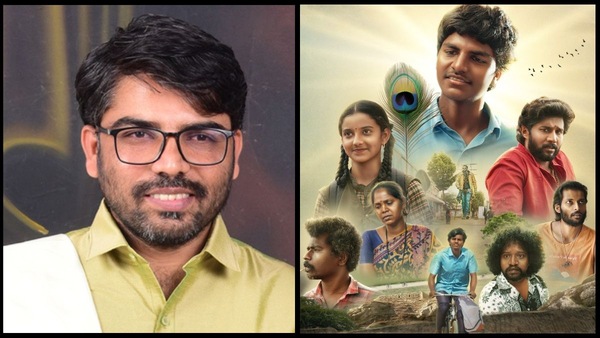
Bheemarao Paidoddi (left); promo poster of his film Hebbuli Cut (right)
Last Updated: 05.19 PM, Aug 26, 2025
A RECENT newspaper article from Banaskantha, Gujarat, spoke of how on August 7, 2025, farm labourer Kirti Chauhan, 24, became the first Dalit ever to walk into a barber’s shop in Aalwada village for a haircut. All five barber shops in the village opened their doors to Dalits, the report added.
When Kannada film Hebbuli Cut released in July this year, one wondered if a haircut, which is the core of the film, was something to aspire for. But for 35-year-old debut director Bheemarao Paidoddi, the story came from lived experience. The article from Gujarat and similar stories from other states only prove that not much has changed.
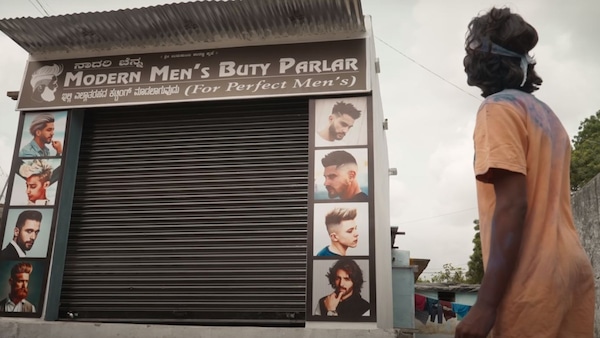
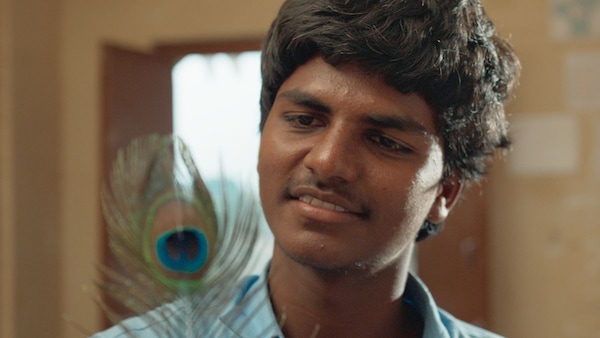
Though it had a short theatrical run, Hebbuli Cut has found a new lease of life after its OTT release on SunNXT, where it is ‘trending’. It is that rare Kannada film which discusses caste without sugarcoating it. The film takes an issue that might seem simple, even implausible, to some folks, and shows you how spirits can be crushed. It is set in Chandrabanda in the North Karnataka–Telangana border and throws the spotlight on Vinaya (Mounesh Nataranga) — all he desires is a fashionable haircut, like Sudeep’s in Hebbuli. But, caste Hindus won’t allow it — if a young Dalit boy is shown his place, no one else would attempt to bridge the divide, right?
In an interview, Bheemarao speaks of the genesis of his movie, why it remains an important issue, and his politics. Edited excerpts below:
Let’s begin by speaking about your thought process and how you honed your politics and ideology…
I hail from Bagalavada village in Manvi taluk of Raichur district, and grew up surrounded by obvious as well as subtle discrimination. If we needed to cut our hair, we had to go to an area called the Camp, where Telugu-speaking people originally from Andhra Pradesh would live. The barber shops in the village were not for us.
Later, when I left my village to study in Dharwad and Mysuru at the Educational Multimedia Research Centre, my worldview expanded. As I read, I was able to see clearly where we were oppressed and what must be done to overcome it.
I began working on short stories, and while writing one of them, I decided to bring alive the struggles I had seen. To set it in a time period, I chose the one after the Sudeep-starrer Hebbuli (2017) was released.
Your film features conscious writing. Some of the characters in the film, like Rafiq, act as conscience keepers, questioning their faith when they feel it is slipping up…
We had a Rafiq in our village who would indulge in bike stunts. He would seem like a hero to us. In fact, for this film too, I wanted one song with his character performing stunts, but our budget did not allow for it. I wrote him as being confident enough to question his faith because I liked that trait. Change should come from within.
When you decided this was going to be your story angle, did you fear any backlash?
This has happened before, and continues to happen in places such as Mandya, Koppal and Bidar. So, I was not imagining a situation. This is many people’s reality.
You are a trained filmmaker, and decided to become a director without assisting anyone…
Yes, I did not want to, since I had learnt both the theory and practical aspects in college. And, I had put together a team drawn from my senior and junior batches, who were working in various other languages. I did work on other projects, though, for brief periods. I was also part of the pre-production of Daredevil Musthafa.
One area your film shone in was performances. How did you manage to extract that with many first-timers and very few experienced folks?
Barring a handful of people, I worked with newcomers, and we got them to do workshops in order to get into the zone the film required. It helped draw natural performances where no one was conscious of the camera. Mounesh, who is from Sidhanur, was trained in theatre in Gadag. He had very little camera awareness.
What kind of support did you receive while making the film?
Ours is a team that believes the oppressed people deserve a chance, everywhere. It helped that we had put in the money, and those who lent money were friends. At least for their faith, I was clear we should not do a bad job or a half-hearted one where we dilute our intent.
You’ve retained a neutral gaze while making Hebbuli Cut. Was this intentional?
Yes, I would always go back to Devanoora Mahadeva’s seminal book Edege Bidda Akshara (A letter that touched the heart). He writes with power and sensitivity about Dalit issues. He says that despite capitalisation breaking barriers and encouraging people to eat together, nothing has really changed.
I have read a lot of Ambedkar, and like the fact that while he pointed out flaws in the caste system, he also offered an alternative path — Buddhism.
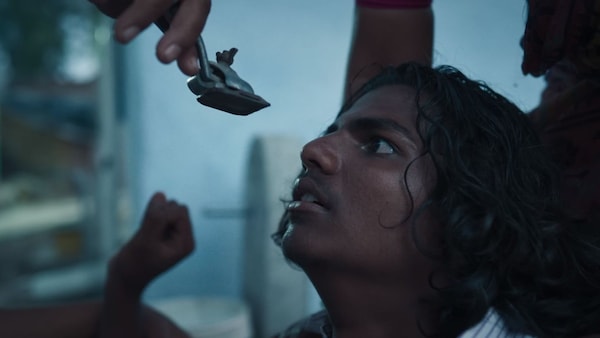
Your film also speaks searingly about the dignity of labour. In a scene, Basavan Gowda thinks nothing before wiping the faeces on his slippers on Mallanna’s workspace — his footwear repair shop.
We lack that concept of respect in India. No one respects labour, and that is why some things are tied to caste. It becomes easier to discriminate, and the oppressors find it easier to lay down the rules.
There’s a reason for the scene with Rafiq where some hardcore people from his community ask him about the frequency of his prayers. Expecting people to follow rules is common across religions.
Hebbuli Cut is also an ode to North Karnataka, a region we don’t often see represented on screen.
Yes. I was certain the film had to be set there, because so far we have either not had representation, or whatever has been there is badly done. Our people are so innocent. They might speak roughly, but their heart is in the right place. They trust so easily.
How’s the response to the film on OTT?
The film did not do well theatrically, hence I am incredibly moved by this gush of love. Something has struck a chord among people. There is a sense of empathy, but also of being seen. And, I am so glad people have understood the nuances, the fleeting shots. Because people fell in love with Vinaya, the discrimination hit them hard. I hope it nudges people to think and act on the thought that everyone is equal.
Subscribe to our newsletter for top content, delivered fast.
