


Kritika Kamra: 'OTT was edgy once, but now it's becoming data-driven' | Exclusive
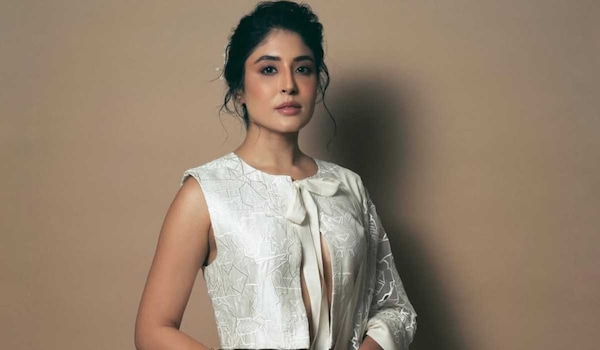
In an interview with OTTplay, Kritika Kamra opens up on Saare Jahan Se Accha, blending history with fiction, 70s styling, OTT transition, creative choices, and misconceptions about her career.
Last Updated: 05.56 PM, Aug 18, 2025
Summary:
- Kritika Kamra discusses her role as Fatima Khan in Saare Jahan Se Accha and what attracted her to the project.
- She talks about blending historical events with fiction, 1970s styling, and character preparation.
- Kritika reflects on moving from television to OTT, industry pressures, and common misconceptions about her career.
Following the release of the Netflix series Saare Jahan Se Accha, Kritika Kamra speaks to OTTplay about her role as Fatima Khan and what drew her to the project. She discusses how the series blends historical events with fiction, the research and styling involved in portraying 1970s fashion, and her approach to building the character. Kritika also reflects on her transition from television to OTT, navigating creative and industry pressures, and addressing misconceptions about her career.
Edited excerpts below...
What drew you to Fatima Khan in Saare Jahan Se Accha, and why did you feel this was the right project back when you signed it a couple of years back?
Yeah, it's been a few years actually. And at that time, there weren't as many spy thrillers out as there are today. So I think the first thing that attracted me was that right from the beginning, I saw the ambition of the show, and the ambition was really big. Also, the makers, in the very beginning, were very clear about how sensitive this topic is and how they didn't want to make it jingoistic or very feeling-driven.
It is fiction. I'm not saying there are facts; it is a fiction story. But as far as the historical things are concerned, they wanted to sort of have a very balanced view of the subcontinent, of both the countries and how things were back then. The idea was to not have a good guy and a bad guy, but instead, really delve into the reasons why people do what they do and how spies operate. And towards the end, India comes out. As we know, India also acquired nuclear energy before Pakistan. So it ends that way, but it was always very careful about the portrayal of both sides, and that really mattered to me.
I thought that it was good to know that people want to tell this story sensibly and with sensitivity, which resonated with me. So that's what attracted me to the story. As far as my part is concerned, I shot way more than there is in the show. So yeah, it's hard now to separate what we've seen from what I have read, because they are quite different. But back then, when I read it, I thought that my character had a really pivotal turn and influenced the climax of the show very impactfully. So, yeah, I thought it'd be a good decision.

The series blends real historical events with fictional espionage. Did that mix of fact and drama change the way you approached your character?
Not really, because you're approaching it like any other story. I mean, we don't know; we are hoping, and we see even today that there are brave journalists on both sides of the border. I mean, in any nation, if you see, there are always some people in the media who are doing their job, which is questioning people in power. So we are assuming that there must be somebody like this. I'm sure there are people from both sides and all opinions in every country. There must be somebody like Fatima Khan over there. But it was never supposed to be based on somebody.
So I approached it like I approach any character, which is basically that. I mean, we did really have long discussions about the background of the character, where she would have studied, what her opinions are, and what she would be like in her work life. But we don't see a lot of it. It did not make the final edit, so we don't really see that in the show, but it was all very useful for me, because it does inform how she handles herself in the scenes that you do get to see in the show.
ALSO READ: Saare Jahan Se Accha review: Pratik Gandhi anchors a safe spy thriller that avoids real risks
In your first introduction scene, we see you in a saree, engaging with an Indian politician, while also drawing attention because of your presence and look. Later, the peak ’70s fashion comes into play. How was it for you to embody both the elegance and the style of that era on screen?
It was very exciting, to be honest. Yeah, I'm a fashion enthusiast. Meera Kapoor is the costume stylist and designer for our show. I've worked with her in the past, too, so I know exactly how she is. Her detailing is impeccable. So I got to wear it, and even my hair—I could for this continuity—I basically had it like this in life. I also had to have this hair for a long time. We cut it into this fringe that used to be really popular back in the 70s. Again, the idea was to show her as somebody ahead of the time.
And stereotypically, when you think about a Muslim country, you would expect people to only dress a certain way. That was definitely not the case in the 70s if you look everywhere. We also figured that maybe she is somebody—like, as a backstory—she was somebody who would have studied abroad and has come back because she feels so strongly for her country. So there was another working professional, and being a strong female character, there was this opportunity to dress her in flared pants, bell bottoms, blazers, skirts, and Mary Jane shoes. A lot of that fashion is back in right now. But there was a lot of research that went into it, and we really had fun with the fashion, even with small accessories, and what kind of leather bags people carried back then, or even the colour palette when it's summer or winter, that sort of thing.
The show has sparked strong reactions since its release. What’s the most interesting or unexpected feedback you’ve received so far?
Expectedly, people are noticing that the show is fair to both sides. Because that's something that matters to me also, as a person. I feel like it's one of my principles. So that is something that is very important to me, and that's what drew me to the show. Even after so many years and so many changes, that part is intact—that we are not—we've stayed away from a stereotypical depiction of Pakistani people in our cinema. I think that's not here.
People have also noticed the detail that goes into creating that world and era. It's a collaborative team effort, and period shows take a lot of effort because they have painstakingly made every detail, and then the effects—from the interiors and the cars of that era to our styling and everything. So it is collaborative in that sense, even in the way we are talking, the pace at which one is talking, or the Urdu that we've all tried to attempt. I think Sunny (Hinduja) does a very good job. Suhail (Nayyar) does a really good job. I also think it was important to keep it different from them, because, again, as a backstory, she was probably somebody who studied abroad and came back to Pakistan. So her Urdu is more urban and lighter touch-and-go. These things were very minute, and they are getting noticed, and that's what's nice.
What has moving from television to the OTT space taught you about yourself and your craft?
I feel like one has to keep adapting constantly. I will say that a few years ago, what OTT felt like has—I mean, the last two years have not been very encouraging, to be honest. I think that was the golden era of when it began, and I feel like it's getting safer—just that whole edginess of it and the risk-taking and the diversity in content that we saw for the first few years of OTT in India. My fear is that that's sort of going away, and we're becoming very algorithm-data driven. Everything is about views, everything is about minutes of views, and what's working and what's not working. That’s why you see one genre being explored more than the others. My fear is because I come from television, and the bane of television is that it is completely TRP-driven. Ultimately, you start serving what you think is going to work and what’s going to give you the numbers, and originality is compromised in that process.
My fear is that we are headed in that direction. I want to be wrong on this. I really, selfishly, want to be wrong because I quit TV cold turkey and started all over again because this space was so exciting and because there was so much new talent and new concepts and things that you couldn't say on TV and cinema were allowed to thrive here, and it found an audience. I feel like, especially since the pandemic and what happened with Tandav, there is a sense of conformity coming to OTT, which I'm not particularly happy about.
In such a competitive industry, how do you manage to maintain your individuality without succumbing to trends or pressure?
I mean, I like to be well-informed. Like I said, if I have the capacity to wait, I want to wait for the right thing to come by. But in the end, that right is very personal and instinctive. You instinctively feel like this seems to be the right thing. I think one major factor for me is who the people are; the people involved really matter to me. Filmmaking is a very intimate process. You end up interacting with the people a lot, and there is an exchange of ideas, and you hope to grow from it, to learn from it. If I want to get better at my craft, I have to work with people who are good at what they do. So I want to surround myself with people from whom I can learn. That’s one way to think that you've made a good choice.
But increasingly, especially in the past couple of years, I feel that you, as an actor, don't really have any creative control. You can take that instinctive decision, and things could completely change when you're on set, editing, or coming out. So there is no shortcut. You make the best decision from whatever you know at that moment. I have no regrets. If I could go back, I'd still do the same things. But I wish actors had a little bit more—we say it's collaborative. Actors have power, and sure, actors have a lot of soft power on a set and everything. But ultimately, what the film or the show will become is that we don't have anything; we are in service to somebody else's vision. You can only hope that what you read and signed is translated as it is on screen.
What’s one major misconception people still have about Kritika Kamra, the actor?
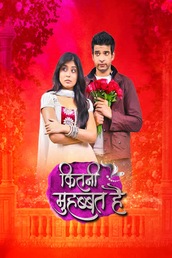
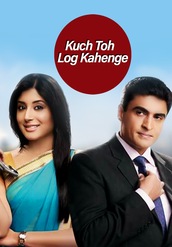
I've been acting for a while now, and I've done eight projects that are not television, but I still feel like the first question that's asked to me—I don't have a problem, but I'm just saying that every single time I've done promotions for anything that's a film or an OTT, the first thing that people ask me is about my transition from television.
So I'm really waiting for this transition to be complete. I don't know how many more projects I need to be seen in, and they've all been on media platforms. They’ve not been things under the radar. People have also been with directors and other actors who are noticeable, but I still feel like people maybe have a hard time separating that. But I'm kind of waiting for that transition to be complete so that I don't have to talk about the transition anymore, because for me, it happened years back.
Given that web series often have multiple seasons, and you haven’t explored reprising a role after a gap yet, do you think it would come naturally to you if you were asked to return for a second season of a show?
Oh, I wish! I must be so much nicer because you understand your character so much more when you hear other people talk about it. I'm somebody who reads every review, every opinion, every comment. I have a hard time watching myself, but I read everything that's written about it, and some you might agree with, and some you don't like. That's okay, but that constructive criticism is really useful.
So if I were to go back and play something for another season, I am very sure I would do a better job, but it just hasn't happened. Somehow I keep signing things for the second season. This carrot has been dangled in front of me a few times now. I was quite bummed out when Bambai Meri Jaan did not go into Season Two immediately because that was a show that was formulated like that. My character was going to take centre stage. I had read the Bible of Season Two, so it was very sure. I was quite heartbroken when that didn't happen because that would have been a great opportunity for me to explore that character that got me so much love, and I knew that there was enough in the second season.
So honestly, that show, even this show, when I signed. Now, if anybody tells me about the second season on the phone, I hang up. I mean, I don't, but I don't fall for it anymore because there is absolutely no certainty of any subsequent season happening for any show. You see how many shows are getting renewed? Hardly. Even when they are announced, are they really going on floors? Not really. In that era, there were these shows that were better at doing multiple seasons, but after that, it hasn't happened in the past couple of years for most of the shows.
FAQs:
Q: Who is Kritika Kamra?
A: Kritika Kamra is an Indian actor known for her work in television and web series, including hit shows like Kitani Mohabbat Hai and Saare Jahan Se Accha.
Q: What are Kritika Kamra’s popular OTT projects?
A: She has appeared in Netflix’s Saare Jahan Se Accha, Bambai Meri Jaan, and other web series, making a successful transition from television to digital platforms.
Q: How did Kritika Kamra start her acting career?
A: Kritika began in television with shows like Kitani Mohabbat Hai, earning recognition for her versatile acting and strong screen presence.
Subscribe to our newsletter for top content, delivered fast.
