


Narivetta writer Abin Joseph on why he chose Muthanga stir as the inspiration for Tovino Thomas-starrer | Exclusive
In an exclusive interview with OTTplay, Abin Joseph talks about why he chose the Muthanga stir as the inspiration for Narivetta, the impact Tovino Thomas' film has had and more
Last Updated: 09.17 AM, Jul 23, 2025
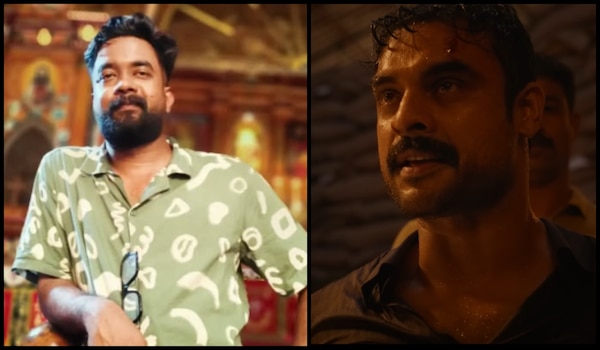
Abin Joseph is a noted author, having won prestigious awards for his short stories. But it was his screenwriting debut for the 2025 Malayalam film, Narivetta, starring actor Tovino Thomas, that put him on the map and brought wide recognition. In an exclusive interview with OTTplay, Abin Joseph opens up about the challenges in writing for the big screen, choosing Muthanga stir as the backdrop for Narivetta, collaborating with director Anuraj Manohar, the impact the film has had and more.
You are a published author, how did you enter films?
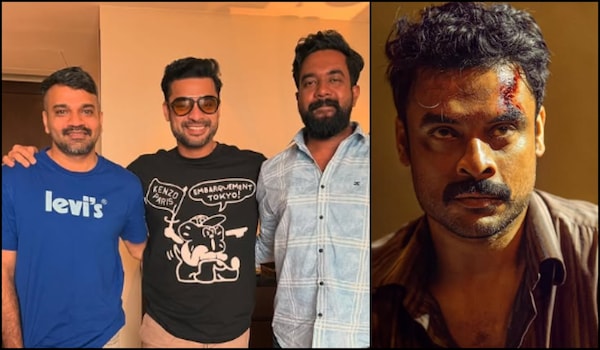
I have known Anuraj for many years as we are from the same place, near Iritty in Kannur district. When he decided to direct a film for the first time, he called me, and I was then a short-story writer. At the time, I was not seriously thinking about entering films. I was in a comfortable daily job. Later, during the first wave of Covid, one of my stories was published in the Malayala Manorama weekly Onam special, and he again contacted me, and we decided to work on a project.
You are a book author, and that is very different from screenwriting. So what was the biggest challenge you faced while writing for a film?
Though Narivetta is my first film to release, I have written 4 or 5 scripts for films before. The medium of the screenplay is not difficult as it is. The writing process itself is a challenge, even if it is a screenplay or short story or even messaging a person. The person at the other end should understand what we mean; that’s the thing with writing also. That is challenging, irrespective of what is being written. In short story writing, there are a lot of instances where you can leave it for the reader's imagination. But in films, people connect to it visually. So people should be able to connect from one visual to the next, and the writing pattern itself is different. A writer’s requirement is to provide - ‘What to shoot’, while it is for the director and artistes to focus on ‘how to shoot’ and ‘what to deliver’.

This first film script has put you on the map, though you have won prestigious awards like the Yuva Puraskar by Sahitya Akademi for your short stories?
Among literary circles, I am a known figure. But film is obviously a more popular medium. For the first few days there was this curiosity, what is the reception and how are people taking it. Once I saw that the film is a success, I moved on from that.
Why did you choose the Muthanga incident as the inspiration for Narivetta?
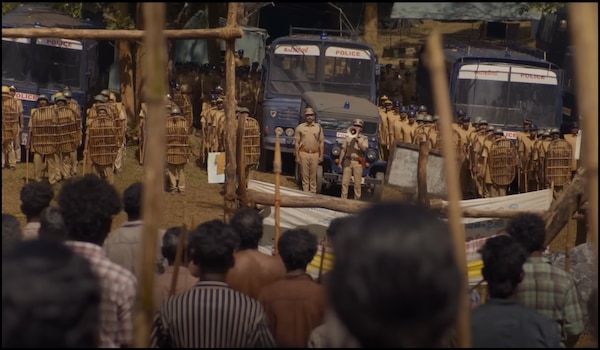
First, I started with the character of Varghese (played by Tovino Thomas), who is ambitious but also very choosy, which is like a dangerous combination. Being a cop is one of the toughest jobs, especially in Kerala. So one person who has no desire to be a cop ends up being one and faces a crisis situation. First thought of a typical mystery/crime investigation thriller. But then I thought of connecting it to a real-life incident from the recent past. And the first incident that came to my mind was the Muthanga incident. But taking it as it is not right, as it is part of our history, a very sensitive subject. So I developed the story such that it resembles or reminds people of the incident.
How did you build your world for Narivetta, the research into the communities or the actual incident?
I am from Keezhpally, which is near Aralam Wildlife Sanctuary in Kerala. I have visited tribal settlements, similar to Muthanga. I am well-aware of their life before the government intervened and the settlements were set up, during the process and the life after that. There was no difficulty in creating that world as I knew their daily life - Not in depth but enough details that can be included in a film. Also, most of the tribals in the film were played by the indigenous people themselves, who also contributed in rendering the dialogues correctly and setting up their huts. We cannot write the dialogues in their slang, nor can I explain how to pronounce them. So they helped with these and even in the art department, about building their huts, and such.
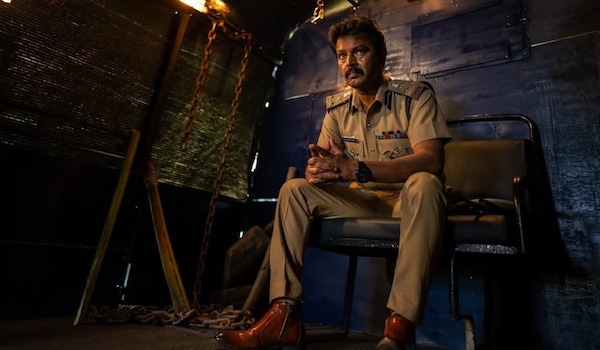
At the end, Cheran’s character Raghuram is portrayed as the villain. But isn’t he just part of the system and followed the orders?
Even Cheran’s character is telling Varghese that if it had been you in my position, you would have done the same. The system is the villain. And the system is never a single person but there would be those who represent and execute it. I think we need to take it like that only.
Narivetta is a sensitive subject and hardly has any commercial elements but for the Minalavala song. But still the social-political thriller ran for housefull shows.
For such a serious film, we knew from the beginning that it would require a significant budget. So we wrote the screenplay with the intention of making it maximum engaging for the people. And from the success, we can say that it was indeed engaging. Also, it has been long since a film from the political action drama/thriller genre was released. Earlier, like in the 80s and 90s, there were such popular films. So when a film comes in a genre after a long time, it is likely to get acceptance. So we were pinning our hopes on the novelty factor, too. But our focus was on narrating the story genuinely.
Though not explicitly about the Muthanga stir, the film has once again put the spotlight on the incident that happened 22 years ago.
We cannot make a film, claiming it to be based entirely on the Muthanga incident because then we would have to portray it accurately, do justice to the politics of the times and a lot more factors. So we can only give certain hints that it can be interpreted to be that incident. When that incident becomes discussed again, as far as I am concerned, it means the politics of the film has succeeded, even though that was not the intention. It is a huge thing, right? After the Muthanga stir, there were one or two tribal protests. But for that, tribal issues have not come up in mainstream media so much in the last decade. Some of the positive impacts, according to me, is that the media had to take up how miserable their lives are. Secondly, the Muthanga incident happened in 2003, and we made the film in 2025 with that kind of a background. So, those born in the early 2000s are not the potential audience and honestly, they are not really aware of the incident. I came to know that many teenagers have asked their parents about the incident or Googled it. I take it as a positive impact.
This film has a strong message, on being the voice for the marginalized. Do you believe films need to convey a message?
We did not plan on giving out a message. If people can read it from the film, let them. At the end of the day, we are all story-tellers. We are telling a fairly good story in a decent way. After that just give it up to the audience and keep quiet! (laughs)
Upcoming projects?
One of my novellas is being adapted to a film, which Anuraj is directing. Discussions are just happening for the rest of the projects.
Subscribe to our newsletter for top content, delivered fast.
