


Sahil Vaid on returning to his roots in The Hunt: 'Have been dying to tell people I speak Tamil' | Exclusive
Sahil Vaid opens up on playing SP Amit Verma in The Hunt, embracing his Tamil roots, the emotional toll of the role, and working under Nagesh Kukunoor’s nuanced direction in the political thriller.
Last Updated: 11.10 AM, Jul 09, 2025
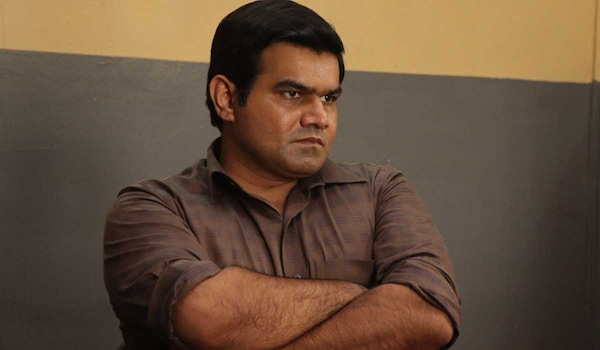
In a candid and comprehensive conversation with OTTplay, actor Sahil Vaid shares his transformative journey into the character of SP Amit Verma in Nagesh Kukunoor's The Hunt: The Rajiv Gandhi Assassination Case. A North Indian born and brought up in Tamil Nadu, Vaid reflects on the serendipitous alignment between his real life and the role he plays—an SIT officer fluent in Tamil, caught in the emotional and political complexities of one of India’s most defining manhunts. From the thrill of finally speaking Tamil on screen to the emotional toll of portraying a character burdened with responsibility and loss, Vaid breaks down the process, pressure, and power of being part of a story so steeped in national memory.
You've spoken Tamil so fluently. Since you understand Tamil well and were born and brought up there, what was it like going back to your roots and getting the chance to speak Tamil on screen?
Believe me when I say this, I've been dying to do it. I've been dying to tell people I speak Tamil—I know how to speak. But also, it was a tricky process, because when I got into it, when you say, "I can do it," and then you go on to the process, and then you realise, "Oh, wait, hold on, it's been a while. I haven't done it." In fact, I've never acted in Tamil in my life, which is sad. I've always wanted to work in the Tamil industry. My first opportunity came in the guise of Merry Christmas, which was a bilingual film. It was one scene, but I was like, I want to do it. I've been so eager to act in Tamil ever since I became a professional actor that the first opportunity I got, I was like, Sriram Raghavan, yes, I want to do it. But this, oh my god, this was a completely different ballgame. I got into this—Tamil was one thing, but the fine detail and the meticulous requirements in the detail that was required to pull off character. I don't think when we started off, I was mature enough to play this part, but I was trusted, and I was given the opportunity. Now I feel that was a good decision, but when I was starting out, I thought it was a huge responsibility, not just the Tamil part but the whole character of a superintendent of police. It's not something that I'm cut out to be in life; it's not like I was a police officer. I've always been an actor, so I don't know. It's just fun, I guess.

You play SP Amit Verma, a pivotal member of the SIT during the intense 90-day manhunt. What was your initial reaction when you were approached for this role?
I honestly didn't know what I was testing for. I got a call from this company called Casting Bay. Kritarth Sethi was the person who, very nicely, called me and said, "There's a screen test I want you to come for." So I went in and the scene was written in Hindi, and all the names were changed and everything, obviously for the purpose of anonymity and for the purpose of the security of the show. I went in, and it was a normal interrogation scene, and I just did it, and I don't know what discussion happened behind the scenes, which I found out later, which I'll come to...
Kritarth called me back and he said, "So we need to do the scene again." I said, "Why? What happened? Didn't you like what I did?" He said, "No, it was really nice. Now they want the scene in Tamil." I said, "Yeah, let's do it." He says, "No, no, no, you're not hearing me right. I want you to come and do the same scene in Tamil again." I said, "Yeah, let's do it." He's like, "Sahil Tamil bolni hai." I said, "Haan, main bolunga." He was like, "Aap aa jao," and I went in—a couple of rehearsals, and we just did the scene, and he was looking at me and he was like, "What? Did you prepare for this?" I said, "I don't need to. I've spoken Tamil all my life." He's like, "Wait, what?" I said, "Yeah, I was born and brought up in Salem, Tamil Nadu," and when Nagesh Sir saw the test, he later on told me, he said, "Your structure worked for me. And the one thing that I was thinking was, He's either a very good actor who can speak Tamil or he knows how to speak Tamil." I said, "That's disappointing, because I thought I was a good actor." He says, "No, now I realise you're both." So it was very sweet, but yes. I think I would always accuse luck as an actor, but this literally just fell into my lap. I mean, they were looking for me. They were literally looking for a guy who was like me, a North Indian who spoke fluent Tamil, who grew up in Tamil Nadu, the character I'm playing in the show. He himself lived in Tamil Nadu almost all his life and trained himself to be a police officer. There he was from Tamil Nadu and who would have known that my whole life would turn out to be a preparation for this show? I think that's how love luck works, and that's how serendipity functions. So I don't know what to say, just thank you.
This isn’t just a fictional crime thriller—it’s rooted in one of India’s most traumatic political events. Did that historical weight influence the way you approached the character?
No, it didn't, because I am aware of this whole, their thought process. I've lived in Tamil Nadu. I've lived amongst these people, and I know how they think, and I know why they think the way they do. And believe me when I say this, this show, The Hunt, addresses both ideologies. It goes into the mindsets and you must agree with me when I say that it is done very responsibly. Nobody is a hero in the show.
I mean, I was in school when this happened; I was in Tamil Nadu. I was living there, so these echoes of what had happened—I was what, six or seven years old, hardly, and I don't think I was smart enough to understand what was going on, except for the fact that everybody was really upset around me. Everybody was like, "Oh, this has happened. Oh, this shouldn't have happened." All that information comes to you in pieces, and when you're watching those news channels, you see how news channel anchors back in 92 spoke in Tamil Nadu. You hear things, but you can't really understand the Tamil that you're speaking. It's not very conversational, but the sense of responsibility came right from day one, because I knew this was a sensitive issue for all the Tamils. But at the same time, I knew that I understood that sensitivity to the T because I've grown up there. I also have North Indian blood, so to speak; this combination makes me—my heart is in both the places. When they speak ill of them (South Indians), I feel bad; when they speak ill of them (North Indians), I feel bad. So like I said, I have been preparing for this all my life. So when we started doing the show, when I would read the scenes, I would be impressed beyond measure, and I would sit and have long conversations with Mr. Nagesh Kukunoor, a brilliant man, and I would ask him questions, and sometimes. And he would say, "Sahil, I don't want you to think about that aspect." I'm like, "Why?" He says, "That's a discussion for when we are done with the show." Think of this: follow this path and he would just slightly nudge you towards a particular path, and he would just sit like this monk, and he would smile; that pressure was never on me. That pressure must have been on Nagesh sir a lot, because he was the one who was crafting it. He was the one who was putting pieces together and we were just like action figures to him. We were these really efficient action figures who he would—when we were children, we used to do stuff like that; that's what he was doing with us. I was very glad that I was an action figure in his whole play table.


There’s a strong undercurrent of urgency in the series, especially in the last episode. How did Nagesh Kukunoor direct that rhythm and keep everyone grounded in that ticking-clock energy?
The best part about the last episode is I was discovering things as we went along, and the frustration that you see on my face is actually real. I'm like, "Really? Why? What is the reason?" Nobody knows. I don't know if anybody even knows why it happened. The last episode is tragic; it's heartbreaking, especially for my character. There are multiple belief systems within an organisation always, be it a news channel like yours or a media house. Be it that those ideologies take the organisation in different directions, which is fine, because that's the strength in different people coming together because they have different thought processes and different ideologies. But when all of them, all different ideologies, are angry, frustrated and not happy because of the same reason, then there is something definitely wrong. There is a force behind whatever is happening, which is just, and it's not like we can't control it, but we don't have answers. So the last episode is frustrating, not only as the character, but also as an actor, as a human being, and as a person. Whoever watches that last episode, they're going to be like, "But why? Why did this have to happen?"
Nagesh Kukunoor is known for pulling quiet, layered performances from his actors. What’s one direction or insight from him that stayed with you?
I asked him, "Have you seen any of my previous works?" He said, "No." He asked, "Are you glad?" I said, "Yeah, kind of." He asked, "Why?" I said, Because it's nothing like this. Whatever I've done before, it's all fiction; it's all fun. It's another way of jumping around and all that stuff. He's like, "Don't tell me." He had to tap me a lot, and he had to control me a lot, because I did come from that environment where impressing the audience, making them laugh, and entertaining them was the key priority in any performance, be it any of my performances. Yes, I am someone who comes from the theatre, so I understand where I need to take a performance; that understanding is there, but there's something called getting used to a certain way of doing things. So I was coming from that world, and I still remember there were times when my face and my whole body were too reactive. It was too, like, especially in that last episode that we spoke about, he would just come up to me and he would say, "Sahil, SP, SP." I'm like, "Okay." So that became a little bit of, like, an action word for the both of us. When he would say, "SP," I would just calm down and relax because there were times when I felt like I was not doing anything in the frame, and I would go up to him and I would ask him, "Is that okay for you?" He'll be like, "I got what I wanted. Believe me, trust me." Eventually I did start trusting and I don't think I worked with any other director—it's a big statement—who understood me as a human being first, and then he learnt how to direct me. Then he directed me with such finesse that now when I watch the show, I'm like, I did not know I was so mature. Two years ago, when we were shooting this, I did not know I could pull off something like this. There are things that have been said in fine Tamil that I am like, "What? Did I say that?"
I would say it's all because of the team around me. There was this boy Raja who was helping us with the Tamil dialogues and everything. Being able to speak Tamil is one thing and understanding subtext in a different language is a completely different ball game, especially when something is so real, and something is so sensitive and something is so detailed, it becomes a responsibility. But I think that that whole feeling that I had around me, my whole team, sometimes even our DoP, everyone, that environment was so comfortable that I think coming out of that became uncomfortable. Then I felt like, "Yeah, let's make six more episodes. Let's make 10 more episodes. Let's keep making this." It was a very good environment to work in.
You had some kind of withdrawal symptoms...
I have always said withdrawal symptoms are a very good thing, because it means that something was feeling right, something was feeling good. Withdrawal symptoms only happen if you were enjoying something. If you don't get me wrong, we enjoy a lot of wrong things in life, and then we have withdrawal symptoms from them. But when a process is so beautiful, you want to come out of it; you feel a little "Yeah, that was fun." It's a very good sign.
Subscribe to our newsletter for top content, delivered fast.
