


Divyenndu on getting offered similar characters: 'To say no to work is to say no to very big egos, so that was never easy to navigate' | Exclusive
Actor Divyenndu discusses his role in ZEE5's Saali Mohabbat, his process for humanising grey characters, why comedy is his greatest challenge, and the joy of fan recognition.
Last Updated: 03.45 PM, Dec 08, 2025
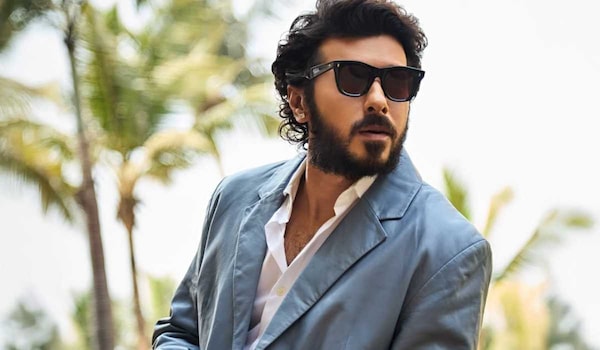
Divyenndu, an actor known for his compelling screen presence and willingness to embrace morally complex roles—from the beloved Liquid in Pyaar Ka Punchnama to the iconic, menacing Munna Tripathi in Mirzapur—is currently riding a wave of diverse and successful projects. As he gears up for the release of his upcoming ZEE5 (OTTplay Premium) film, Saali Mohabbat, where he once again delves into a grey character, the actor opens up about the excitement and anxiety that precedes a release. In this exclusive conversation with OTTplay, Divyenndu shares his approach to humanising complicated roles, the unique dynamics of working with an actor-director like Tisca Chopra, and why he considers comedy to be far more challenging than intense drama. He also reveals the feeling of "asli naam kamana" (earning one's real name) when fans recognise him by his characters and gives a quick update on the highly anticipated Mirzapur: The Film shoot.
Edited excerpts below...
You've had a very exciting few years with distinct projects. How are you feeling right before the release of Saali Mohabbat?
I'm feeling really happy. The past couple of years have been so exciting—doing different kinds of stuff, being part of different stories and characters, and people receiving them so nicely. That's a cherry on top. Saali Mohabbat is one such project where I have again tried to experiment with the narrative and the character. I'm really, really excited and anxious to see how people will like this one.
You are playing a morally ambiguous, grey character. How do you approach humanising such roles so that the audience doesn't entirely hate them, as you've done with earlier roles, like Munna in Mirzapur?
This is the first stage of an actor entering into the characterisation: not to judge the character. That is a very important part of it. In day-to-day life, we do stuff according to our sensibilities; it doesn't always gel well with others, but we are not villains in real life, right? First and foremost, what I understand of a character is to find the human aspect in that character. Whether they are greedy, selfish, sweet, or salty, it is very important not to judge your character.
Saali Mohabbat is directed by actor Tisca Chopra. How does having an actor as the captain of the ship benefit you as a performer?
A lot of things become much easier, and you don't have to explain everything in detail. The other person, when they are an actor-director, knows that if they are pointing out something, this can be done; aise-aise karke ho jayega (it will be done in this manner). You don't really always have to talk stuff in great length. Very unsaid things are there, which just by, just isharon-isharon mein (in gestures), that talk happens and you move on. So that's one very interesting aspect. Also, it becomes very interesting for a person like me to see the other actor, how they conceive direction, and what their perspective is.
You shot this project a while ago. Is it tough to promote it now, as you have to "relive" a character you've already moved on from?
I love this question. This is actually such a good question. I mean, it's definitely not easy at all that a project you shot like last year or a year and a half back, maybe, to relive, to recollect everything you did for the character – film mein kya kya hua tha (what all happened in the film) with your co-actors. It's absolutely not easy. But at the same time, it might give you a sense of objectivity, where you can look back and see the whole process now and relive the whole process, and it's very interesting to see. It becomes a very different sort of exercise where it almost feels like, although for the people it's going to be a new experience, for you it's like looking back into it; it's almost like a retrospective. So, it's the past and the future coming together.
With back-to-back releases, how do you approach the mental switch between such diverse characters and avoid being typecast?
That's not an easy thing to do. Honestly, I can tell you that's a very brave thing to do because if one character of yours becomes a hit, and since we are in a business where commerce is also involved, people think that's a bankable thing to do. Now, for them, it makes a lot of sense to go back to what they have seen on screen and ask the person, 'This is what we like, and can you redo this for us?' For me, it becomes a slightly weird thing where I would say that I have already experienced this thing. I'm not really excited to redo this. So, it takes a lot of nerve to say that I'm not really interested.
But then there are people like me, who would say, "Ki nahi yaar, main yeh kar chuka hoon. I would like to try something else." So, one has to maintain that balance; it's not an easy one. Right now, honestly, I'm very fortunate that filmmakers trust me with different kinds of stories and different kinds of characters.
What qualities define a challenging role for you? Is an intense role more challenging, or something like the comedy in Madgaon Express?
Honestly, comedy is very challenging for me. I was trained in drama during my theatre days. But comedy, man, it's so hard to get comedy right. because it's not just one man's thing. You need to have your co-actors on the same page; your script has to be on the paper, which has to be very good; your director; everything. Comedy is like, this is a serious business. So whenever I get offered a comedy, my first thought is, "Yaar, bahut mehnat karni padegi phir se." It's because comedy is either you get it right or it's all the way wrong. There is no grey there. In drama, you get a lot of grey area to play with. But personally, I enjoy drama more than any other genre.
You are often recognised by your characters, like Munna and now perhaps Dodo. Are you glad people remember you by these roles, or do you wish they would move on?
I'm very glad when people recognise me from my characters. It's like the other day, I was just having a light conversation with an actor friend of mine. We were discussing this: "Ki yaar, jo humara jo real naam hota hai, is the name we get from our parents, right?" That has nothing to do with us. But the characters we make, and we get, when people recognise us from those characters, usko bolte hain asli naam kamana. When they call you by that character's name, I'm very happy. It's more than any big award for me when people want to recognise me with my characters.
Was your strategic and patient approach to selecting quality roles what ultimately led you to this diverse filmography?
Oh yes, and I'm telling you, it wasn't easy! Like I told you, like after my first couple of films, because those films became box office hits, everyone was actually offering the same kind of characters. And to say no to people is to say no to work and to very big egos, so that was never easy to navigate. But I guess when you get a character like, say, a Mirzapur, where you are Munna, you can showcase the other side of you as an actor, which is when you feel, "Okay, whatever I was thinking was worth it." You're relieved for those people also and for yourself also. Aap bhi ek cheez sochte ho na, ki yaar main kar sakta hoon. What if you can't justify it? So, I was very relieved, more than happy.
Q: How did your foray into South films with the Telugu film Peddi come about?
Oh, it wasn't actually my decision. It was a call that came from the other side. The director of the film, Buchi Babu, is a huge fan of "Mirzapur" and my character, Munna. He just said that I'm making this film, and I only see you in this, Ram Bhuji, my character's name. Trust me, when I met him for the first time, it was just meeting a long-lost friend. He just met me with so much warmth, with so much respect. He was so sure that I would be part of this project that he didn't even meet any other actor. I just became a fan of that guy because of that, and I was like, "Ab dekha jayega." Whether it comes out good, bad, ugly, or whatever it is, when someone shows that kind of conviction in you, that kind of respect for you, you're like, "I'm with you now."



Q: After Saali Mohabbat, people are definitely going to be impatient to see you again as Munna in Mirzapur after what, five years? Have you completed the shoot?
No, we haven't. We are almost halfway, but still a big chunk is left.
Subscribe to our newsletter for top content, delivered fast.
