


Exclusive! Vivek Agnihotri: If I fight Fattwas, I can deal with intellectual terrorists sitting in their Bandra offices
Vivek Agnihotri's movie The Kashmir Files has released in theatres on March 11.
Last Updated: 08.01 PM, Mar 14, 2022
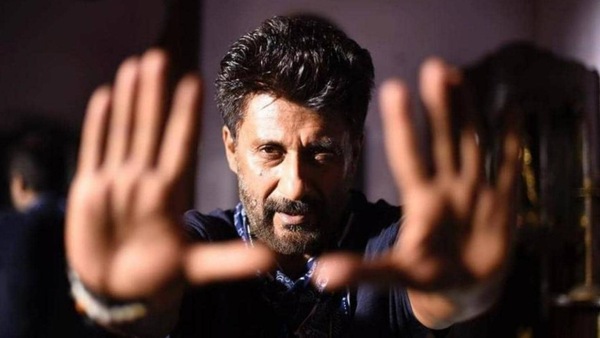
Vivek Agnihotri is currently in news for his movie The Kashmir Files. The filmmaker had to fight Fattwas in order to be able to release his movie in theatres. In an exclusive interaction with OTTplay, he also happened to call some people ‘intellectual terrorists from Bandra.’ Excerpts…
The Kashmir Files has been in the making for a long time. Where would you say most of this time was invested?
It’s been almost four years since we worked on the movie. The first two years, without even knowing whether we’ll make a feature film, web series or documentary, we dedicated the time in hard-core primary research, which nobody does in India. The primary research included meeting 700 Kashmiri Pandits victims of Kashmir genocide. The next six months went into writing. We made the film quickly – in six months’ time. Then we wasted about six months due to COVID-19. We were supposed to release the movie on August 15 last year but COVID didn’t allow us. Four years in the making – all productive and absolute. In Bollywood, people believe that the making begins when you start shooting. We took our time behind the research and so we consider that as a part of the making too. This film was made over the labour, sacrifices and struggles of four years.
There are a lot of scenes where the public (played by actors here) demand revolution. You need to get in a certain headspace and energy on sets to do justice to those kind of scenes. What was your approach like when it came to filming these scenes?
I have developed a very different direction style. I don’t do it how I worked during Chocolate, Goal. Now I work with very good and seasoned actors. You have to be an amazing actor for me to work with you. That is pre-conditioned. That should be the pre-condition for any film which is made but unfortunately it doesn’t work that way.
The second thing that I do is creating reality on the set itself. For example, if there are scenes between Anupam Kher and his grandson, we would just lock them up in a small one-room apartment (if he’s supposed to play a poor guy) for the first three-four hours of the day till lunchtime. We ask them not to even rehearse but be themselves. Thus, the props, walls and everything around you have to be real. If it is about students who set a revolution or such, for the first hour, my assistant works with them, then I give a speech for half an hour to 45 minutes as if it’s real. They then believe that there is some debate going on and start relating to it. We mix up with them so much. I always tell my actors to be a part of the crowd and my actors hate me for that. Even if they are the best of actors, nobody likes to be crowded, right? I put them in the real scenes, wherever they are and I don’t protect them. The first 10-20 minutes are uncomfortable but then slowly they become one of that, which is why you’ll find such senses between everybody. There’s a lot of harmony and senses between actors.
I came across an interesting comment somewhere regarding The Kashmir Files. This user believed that your characters need to be 'more grounded'. And this is the same person believes you can achieve The Leftovers and Mad Men level of writing. What are your views on that, that your characters should be more grounded?
What he’s saying is right but being grounded doesn’t mean that you are a weak person. It doesn’t mean you have to be very sophisticated or understated. My films are on themes that nobody has told before. There are already a lot of stories, narratives and thoughts. Today, if I have to participate in BJP-Congress kind of a narrative, I will be very understated because everybody is already interested in listening to that. There’s a lot of interest in that subject and people are talking about it. However, when you make films like The Tashkent Files, the young generation doesn’t know or care about Lal Bahadur Shastri. The distributors, financers and stars told me the same thing. During such a time, you have to increase your pitch so that people listen to you – they understand and hear. Therefore, as a creative tool, I have to raise the pitch of my character. Second thing is, my themes are of conflict. All my themes. Buddha In A Traffic Jam was about the naxal conflict, The Tashkent Files was about the government conflict and this one is about conflict with the justice. Nobody is interested in these themes. Why should anybody be interested in getting justice to the persecuted community of Kashmir, whether it’s Hindu, Muslim, Buddhist or Sikh? Who’s interested in that? When a train is burned with people sleeping, it becomes news but nobody is interested in getting them justice. When in a massacre or riot, innocent people are killed, who cares about their justice? We care about how they become headlines. Therefore, my pitch has to be a little high. That’s why those characters cannot be understated. The minute you make an understated story, see what happened to Shikara. There were a lot of grounded people. Falling in love is the most grounding thing but people don’t care. That’s the reason.

Tell me about picking Anupam Kher. I'm sure he had some experiences to share. Did you sit together, talk about those and execute them in the film?
Yeah. Once we take on a project and the kind of actors I work with, then these actors are so senior and responsible that they’ll go to the last mile. They’ve worked very hard. Everybody has worked exceptionally hard. My style – what I do as a director after writing the script – I never ever brief anybody. Once I have the first and last sitting with the actors, we do one reading and then I say it is them. If Pallavi is playing a professor in a university, what can I tell her? You are an actor. It’s your job. So you add value. You put your soul and take this act wherever you want to. That is when they come with their ideas. 99% of the times I tell my actors it is their choice and they can do what they want. 1% of the times I take the call. All I see as a director is, when a train is supposed to go from Delhi to Kolkata, is it on its path or not. It’s not being derailed. It should not start moving towards Bangalore. I have to bring them back and say this is where we have to go. That’s all I do.
You have been widely appreciated for staying as close to the truth as possible. The audiences are loving The Kashmir Files already but tell me this, is the industry as supportive? Are you receiving screens or offers as you expected for the movie?
Whether Bollywood is supporting or not, I resigned from the industry in 2012. I said I’m not Bollywood because that is a mindset. There’s no factory or an office called Bollywood where you go. I said I don’t want to be a part of this system and have nothing to do with it. Just because I use the camera, it doesn’t oblige me to be a part of Bollywood. I just mentally resigned from it. I make films on my term. It is why you see I don’t fall on the shoulders of my stars during publicity. My biggest problem with the studios is that they expect the stars to grow. If I make a film and I’m not capable of marketing it on my own, then it’s not worth making that film, if I have to depend on others. It’s what I realized. The second thing is, I don’t expect any kind of support from Bollywood. Why should I? I make it for the audience and seek their support. Some support, some don’t. That is acceptable. My problem is that when I have nothing to do with you, don’t interfere in your affairs and don’t comment on you, then why do Bollywood big wicks want to sabotage my film. That’s my only problem with the so-called industry. When they attack me, then I’m capable of fighting and defending for my project. If I can make The Kashmir Files taking all the death threats and Fattwas on my head, then I’m surely capable of dealing with these ideological, creative or intellectual terrorists sitting in their Bandra offices.
On the other hand, you went off Twitter. While you have clearly stated why you took those steps, tell me more.
There was a technical reason behind taking that step. There were too many threats and some were really serious. I took professional advice and it made sense at that time to deactivate my account for some time so that, A) You get rid of all the bots. There are lots of them from Pakistan and all. B) Also, shift the attention from me. If I’m given a choice, I’ll go to the Himalayas, write poetry, paint and just not be on social media. The problem is that I’m not a regular production house so we don’t have the kind of PR and marketing muscle where we can market ourselves. Therefore, as an independent filmmaker, I have to be on social media. How would I communicate with people otherwise? That’s why I had to be back for sometime. I don’t know what I’ll do after the release of the film. I’m a very spontaneous person so I don’t have the long-term goals or plans.
Do you have anything apart from and after The Delhi Files?
Yeah, I have a few things cooking in mind. I’m not a 20-30 year old boy greedy to make lots of films. If I take four years to make a film, I’m a very patient, chilled-out and cool person. I have some ideas cooking up but I make one film at a time and don’t think about second film. People keep coming to me with lots of offers to make films for them and I have a very bad reputation because I say that I will only after my film releases. It also gives me a lot of peace of mind and makes me feel good about myself. It is why I adopted this style of living.
Subscribe to our newsletter for top content, delivered fast.
