


Freedom at Midnight Season 2 ending explained: Why move from Independence to Constitution? Look at 'NVG', political relief, and the Nehru-Patel-Ambedkar alliance
Freedom at Midnight 2 depicts the brutal 1947 Partition and the complex birth of secular India, following leaders' struggles through violence to the 1949 Constitution as a hard-won, fragile legacy.
Last Updated: 12.57 PM, Jan 10, 2026
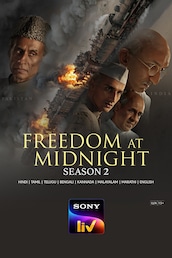
Season 2 of Nikkhil Advani's Freedom at Midnight, a dramatisation of the Indian independence movement, premiered on SonyLIV (OTTplay Premium), bringing a stark and unembellished finish to the story. Season 2 turns its attention to the harsh realities of a nation created in blood, while season 1 focusses on the complex discussions and excruciating approach to August 1947. This concluding season scrutinises the delicate nature of the newly established secular state and the significant cost of sovereignty, starting from July 1947 and culminating in the actual approval of the Constitution in November 1949. It is dense, emotive, and politically complicated.
How is the transition of Partition depicted in Freedom at Midnight?
The latest season opens with the flag-bearing ceremony's misleading optimism. B.R. Ambedkar's presentation of the Tricolour to Congress members is a watershed early event in which the Ashok Chakra is described as the wheel of time. Jawaharlal Nehru's "Tryst with Destiny" was idealistic, but the humanitarian and logistical calamity of Partition soon eclipsed it. Cyril Radcliffe, a British lawyer assigned the responsibility of dividing Bengal and Punjab, works quickly throughout the story. The show depicts Radcliffe as a helpless guy who is pushed by Lord Mountbatten to finish a job that should have taken years in just a matter of weeks, rather than a villain.

The show depicts the ensuing bloodshed with a brutal, frequently monochrome severity. The show spares the "midnight hour" any romanticism and instead depicts the slaughter in Kolkata, Amritsar, and Lahore. The protagonists' political manoeuvring takes place against the backdrop of the vast departure of millions and the destruction of community cohesion. Subplots involving the Indian Army, in which troops must decide between the two new countries, show how religious identity shattered even the most disciplined institutions.
What personal and political dilemmas does Jawaharlal Nehru face as an idealist?
As the story develops, the show explores the leaders' inner struggles. Nehru, played by Sidhant Gupta, is an idealist who, in the face of growing communalism, struggles to hold fast to a secular worldview. Here we see Nehru's pragmatic efforts to strike a balance between scientific pragmatism and deeply ingrained tradition at work as he compromises with religious sages on the "auspiciousness" of August 15 and institutes the midnight ceremony.
Rajendra Chawla's Sardar Vallabhbhai Patel, who stands in opposition to Nehru, provides the season's anchor. The defining moment in his journey is the unification of the 565 princely nations, symbolised by the image of an enormous basket of apples. Kashmir, often called the "rotting apple" because of its rocky integration into the union, is the most important of these. Although they respected one another, the series reveals that Nehru's emotional connection to Kashmir and Patel's clinical pragmatism caused conflict, which in turn left political legacies.
What human elements are explored in the portrayal of Muhammad Ali Jinnah?
Arif Zakaria’s portrayal of Muhammad Ali Jinnah offers a more humane look at the architect of Pakistan. The scene where Jinnah leaves Bombay for Karachi is one of the most memorable parts of the series. Tragically, a character who is typically portrayed as entirely antagonistic finds a new dimension in the stillness of the deserted house and in the revelation that his fight for independence has cost him his own past. The negotiations take on an extra urgency due to his secret battle with tuberculosis, which he kept hidden to preserve his political influence.
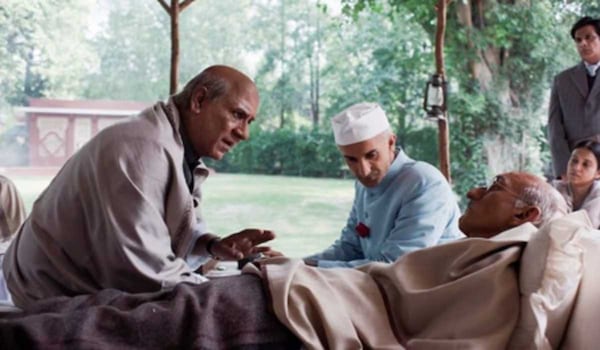
Mahatma Gandhi's growing estrangement from society lies at the heart of the story arc of the conclusion. Chirag Vohra portrays Gandhi as a "melancholic patriarch" who bears the burden of each Partition-related death, rather than a victorious hero. An emotional high point of the season is his "Last Fast" in Delhi, where he tries to quell the communal rioting and get the Indian government to give Pakistan money. The city is calmed down by the fast, but the anger of Hindu nationalists, who see Gandhi's inclusive position as a rejection of the majority, grows stronger.
How does Freedom at Midnight interpret the political fallout of Gandhi’s assassination?
The series purposefully avoids sensationalism in its portrayal of the January 30, 1948, assassination. The series chooses to keep the assassin, known only by the initials NVG, out of the spotlight. The series highlights the event's political implications. The government can find solace in the assassin's Hindu faith; a Muslim assassin would have likely targeted minorities in a systematic extermination. As a result, Nehru and Patel put aside their disagreements and worked together to keep the country united, keeping their word to Gandhi to safeguard the secular fabric of the nation.



The second season finale of Freedom at Midnight takes place on November 26, 1949. The "freedom" attained in 1947 was really the starting point of a lengthy and challenging process of nation-building, as this leap in time demonstrates. An iconic image shows Ambedkar, Nehru, and Patel walking together after India's formal approval of its constitution, serving as the series' concluding image. A photograph of Mahatma Gandhi stands behind them, symbolising that even though he is no longer physically present, his principles continue to form the controversial foundation of the state.
What "inconvenient truths" about secularism and healing does the finale explore?
The last section contemplates the "inconvenient truths" of India's past. It implies that secularism, which Nehru fought for, was not an inherent quality but rather a deliberate and much contested political decision. The show highlights how Radcliffe's borders were psychological as well as geographical, and the characters recognise that it would take generations to heal from the wounds they've endured. With its final episode focusing on the Constitution's adoption, the show portrays the document as the independence movement's defining triumph. The text's laws quelled the season's growing anarchy and bloodshed.
A children's choir sings Vaishnava Jana To at the end, which completely circles back to Gandhi's vision for humanity. The series ends on a sad note, recognising the sacrifices made rather than on a cheerful one. After watching it, viewers will understand that the "freedom" they received in 1947 was actually a "fragile and fractured" gift that cost millions of lives and the souls of those in power. The series finale emphasises that the fight for a secular, united India was an ongoing obligation for subsequent generations and did not conclude at midnight.
Freedom at Midnight Season 2 FAQs:
Q: What happens at the end of Freedom at Midnight Season 2?
A: Freedom at Midnight Season 2 concludes on November 26, 1949, with the formal adoption of the Constitution of India. It moves past the tragedy of Mahatma Gandhi's 1948 assassination to show Jawaharlal Nehru, Sardar Patel, and B.R. Ambedkar standing together
Q: Why does the show refer to the assassin as ‘NVG’ and hide his face?
A: Director Nikkhil Advani chose to depict the assassin only as "NVG" (initials for Nathuram Vinayak Godse) to avoid sensationalizing the killer or granting him "cinematic fame."
Q: Is Freedom at Midnight Season 2 based on a true story?
A: Yes, Freedom at Midnight is a dramatisation based on the 1975 non-fiction book by Larry Collins and Dominique Lapierre.