


IND vs AUS 2nd T20I Highlights: Abhishek Sharma’s Heroics Go In Vain As Australia Cruise
From a fifth lost toss to another collapse, India’s tour blues deepened despite Abhishek Sharma’s brilliant 68 off 37 and Bumrah’s late surge. Neither could change the script, writes Harsh Pareek.
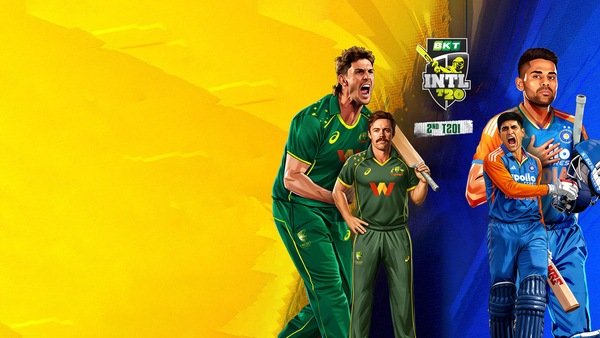
India’s batting faltered once again, but Abhishek Sharma’s fearless fireworks gave fans a glimpse of what might have been.
Last Updated: 08.48 PM, Oct 31, 2025
IT WAS A TAKE TWO after a false start in Canberra where the rain swept in, and this time in front of a buzzing crowd of an expected 80,000 at the MCG. But while the showers over the stadium had subsided before the start of the proceedings, it was quite a disappointing outing for India, as they were swept aside first by an efficient Australian bowling attack, and then a relentless top batting order that made it look almost too easy at times.
After three ODIs of little consequence — that saw Rohit Sharma and Virat Kohli finish up with a flourish but the visitors losing the series 2-1 — and a washed-out opening T20I, it was time for India, the No 1 ranked team in the T20Is, to once again take on the hosts Australia, ranked No 2, under the floodlights at Melbourne.
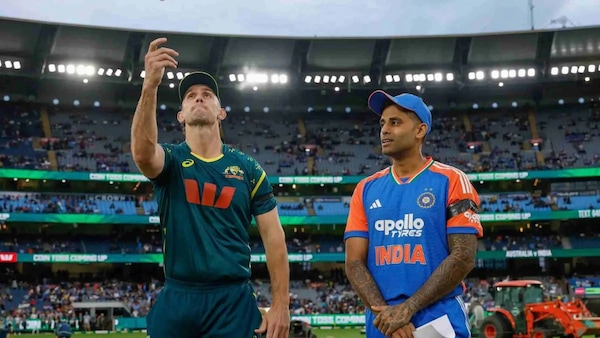
With India losing a fifth consecutive coin toss on the tour, Australia once again decided to bowl first. Josh Hazlewood was joined by fellow pacers Xavier Bartlett and Nathan Ellis, while Matt Kuhnemann took the spin spot from Adam Zampa, out on paternity leave. As for India's own bowling department, things remained unchanged from the first T20I line-up, with Jasprit Bumrah set to lead the pace attack later on along with Harshit Rana, while spinners Kuldeep Yadav, Axar Patel and Varun Chakravarthy — in a repeat of Asia Cup final — all found themselves in the playing XI.
On a ground with long boundaries, India began with their most destructive and disruptive player in the format at the moment, Abhishek Sharma. At times a little too reliant on his talents, India needed him to fire on all cylinders alongside the more conservative Shubman Gill, especially with skipper Suryakumar Yadav — another giant of the format — who had set off some fireworks in the abandoned match but has otherwise been struggling for runs this year having failed to score a half-century in his last 14 innings, averaging 10.50.
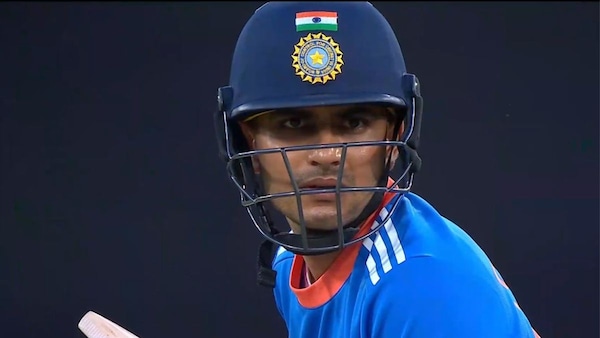
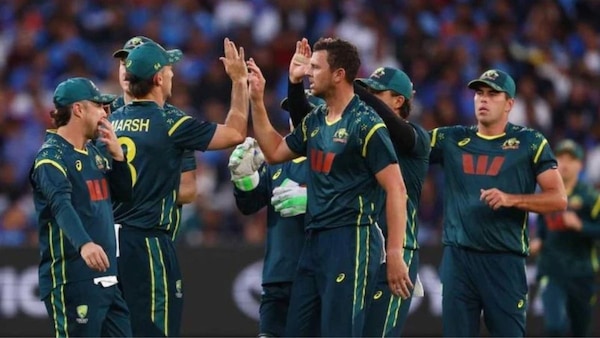
And it was indeed Sharma who saved India's blushes as the team began to crumble almost from the get-go with Hazlewood providing an explosive start for the Australians, backed by Bartlett. Gill, who had looked out of sorts against Hazlewood, was caught in the third over by skipper Mitch Marsh, managing only 5 runs in 10 deliveries. Next was Sanju Samson, who only lasted four balls and was caught lbw by Ellis.
All eyes were now on the Indian captain, but his opening fixture's luck wasn't to carry, as he was trapped on the crease by Hazlewood and nicked for a routine take by Josh Inglis. Out for only one run, India were 32 for 3 in just 4.3 overs. Tilak Varma next wouldn't even manage that, and two balls later in the same over fell victim to another Hazlewood delivery, skying it and getting caught once again by Inglis.
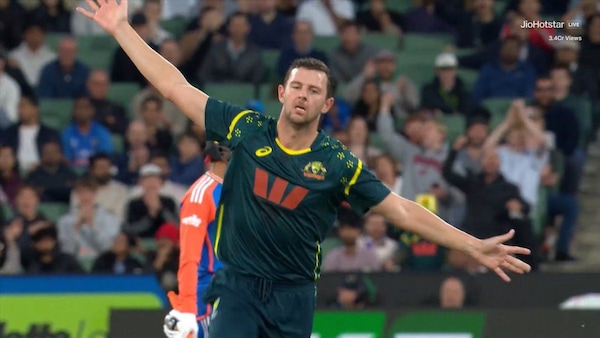
With four wickets down for 32, one would have imagined that Patel, the next to walk out, would be a little more cautious, but in a show of poor running and little urgency to deal with the matter at hand, he was run out for only 7, the fifth Indian wicket to go down in single digits. In a bit of a surprise move, Rana moved up the order and walked out at number six, and for the first time in the innings, India managed to stop the bleeding.
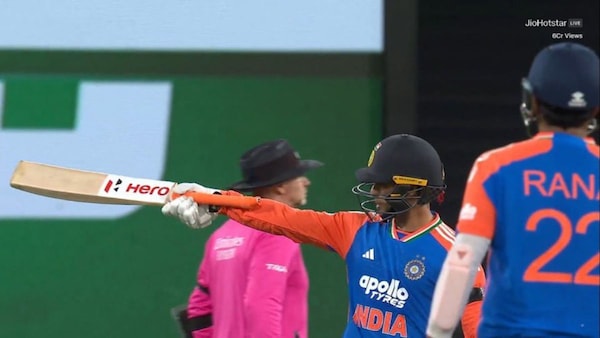
Amidst all this, Sharma was in his own happy little world, smacking everything around the ground, looking unstoppable. The carnage around him bore no meaning for him. The two managed to put together a precious little partnership, but Sharma kept finding himself on the non-striker's end, increasingly frustrated at the state of play at Rana's hands. After a handy 35 off 33 balls, the latter would be caught by Tim David off a slower ball by Bartlett. Once again, the revolving door of Indian batters on and off the crease would open, with the remaining ones sent back for only 4 runs.
In the end, Sharma's parallel universe 68 off 37 (a strike rate of 184) would be the only score keeping things somewhat competitive for India — all out 125 in 18.4 overs — albeit in a far-fetched fashion.
Bumrah — a sight for sore eyes — began the proceedings in typical Bumrah fashion along with Rana, but openers Marsh and Travis Head had no intention of taking the foot off the gas, both racing off the mark.
It would be the two spinners who'd find a breakthrough. Chakravarthy, introduced in the fifth over, saw off Head off only his third ball, with Verma taking a great catch at the long-off. Yadav, starting his spin spell in the eighth over, was immediately put under pressure by Marsh — scoring 20 runs off the first five balls — but was rewarded with the Australian captain's wicket off the last delivery. But the hosts were already 87 runs up by then. Both would manage to bag one more wicket each, but the match was all but out of India’s hands.
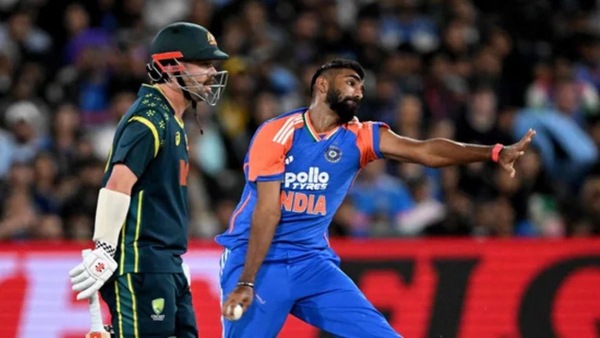
In a final flourish, Bumrah managed to take two wickets in two balls (the latter an absolute peach of a yorker) with Australia needing just two runs to win. Australia won by four wickets (with 40 balls remaining), taking a 1-0 lead in the series.
Next up, the teams will be heading to Hobart for the third T20I on 2nd November. Most noticeably, Australia's ace Hazlewood will miss the game (in fact, all the remaining ones) as he begins his Ashes preparations. A chance for India to still turn things around.