


Indian cinema in 2025: From Lokah to The Girlfriend, women seize the narrative
What has been cinema for women in 2025? Quiet assertions, powerful storytelling, simply having fun, and more expectations from 2026...
Last Updated: 12.52 PM, Dec 22, 2025
In 2025, women-led stories did not arrive as a wave, but surfaced as quiet assertions. Across theatres and streamers, stories centred on women sparked conversation and paved the way for a calmer uprising of untold narratives. What emerged was not a singular arc of triumph or struggle, but a complex ecosystem where voices persisted despite economic caution, industry hesitation, and structural bias.
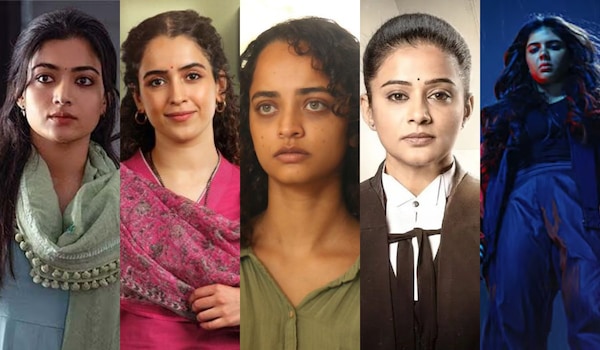
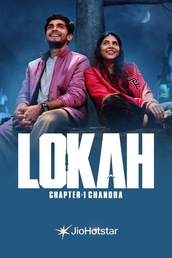
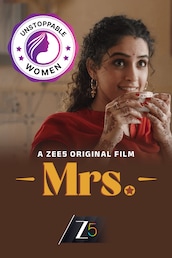
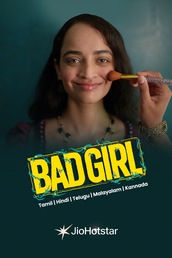
From Lokah Chapter 1: Chandra, the Malayalam superhero film that emerged as the industry’s top grosser, to Rashmika Mandanna’s Telugu drama The Girlfriend, which unpacked the silent aggression of male chauvinism, the presence of women on and off screen was not incidental. There were more shining examples with Tamil cinema’s assertive coming-of-age drama Bad Girl; Kaadhal Enbadhu Podhu Udamai (KEPU), a tender exploration of love between two women; Hindi film Mrs , which found life with OTT release, and Good Wife, the Priyamani-led series greenlit for a second season, that made it deliberate, persistent, and impossible to ignore.
‘Feminism coming from a man is accepted but not from a woman’
Who gets to tell women’s stories remains a deceptively simple question. Must lived experience alone determine authenticity? If so, where do films like KEPU and The Girlfriend, directed by men yet rooted in empathy, stand?
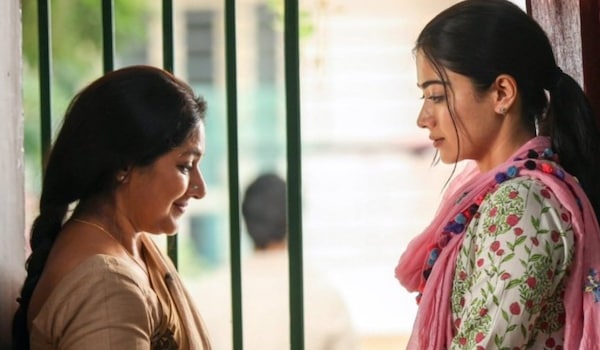
Actor-filmmaker Rohini, who featured in both The Girlfriend and KEPU, points at a long-standing double standard. “When feminism comes from a man, it’s accepted, but not from a woman. Balachander’s films had women at the centre and were accepted. But when women directors do the same, we are asked not to repeat,” she says emphatically.
Rahul Ravindran, who directed The Girlfriend, believes the foundation is empathy rather than gender alone. “Empathy is what separates the best ones from the rest. I also think that a good female writer and director would have done a better job than me with The Girlfriend. At the same time, women should not be the only ones to tell their stories. But it shouldn’t always be a privileged man telling everyone’s story. The Girlfriend should not be the only film talking about this issue, and many of them should come from women,” as he hopes The Girlfriend becomes irrelevant someday.
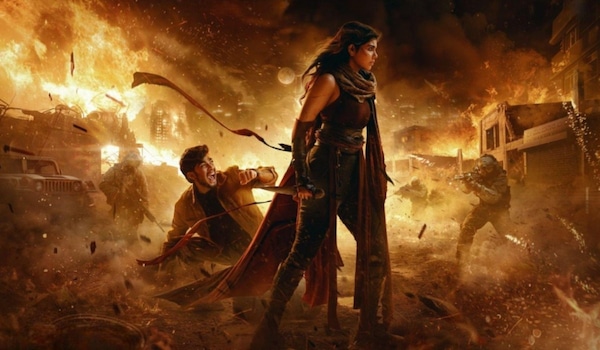
Breaking this mould in 2025 was Lokah, which never positioned itself as a “women-led film”. Actor-writer Santhy Balachandran articulates why that distinction matters. “Patriarchy is a social fact; it looms over women’s lives and affects them in very real ways. However, the stereotype that women’s lives are all about trauma does a disservice to the full expression of women’s experiences on screen,” she explains. Adding that there is room for stories that are fun, entertaining, and expansive, Santhy insists, “Lokah is definitely not the first to break the mould.”
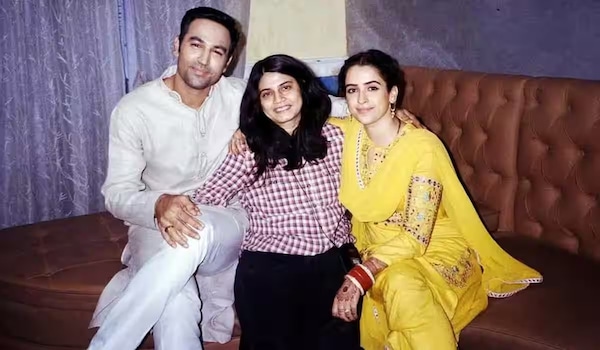
But for Mrs director, Arati Kadav, the answer lies in balance and breadth. She is wary of how easily representation becomes a restriction of being boxed into a smaller sub-genre. While the West has already seen directors like Kathryn Bigelow give The Hurt Locker and A House of Dynamite, a similar story is scarce in India. Arati states, “Women telling women stories is not an empowering slogan but a limiting one. It is a glass ceiling which needs to be broken. Keeping aside its politics, I would love to see something like Dhurandhar from a woman director.”
‘Women are not getting to be part of high stakes’
The imbalance is undeniable. Women-led and women-directed projects remain significantly fewer, and hesitation often sets in long before a film reaches audiences.
Rahul recalls the scepticism surrounding The Girlfriend even before its release. “Many advised against making the film because the majority of movie-goers are men and they won’t watch it. But I believed that women don’t come to theatres because we fail to offer something that resonates with them. Eventually, the film made money at the box office, made an impact, and more women came to theatres,” he explains. Pointing out the systemic tilt behind the scenes, he says, “Most filmmakers and writers are men. So, we resonate and connect with man’s way of looking. But champions like Samantha Ruth Prabhu, Anushka Shetty, Alia Bhatt and Nayanthara instilled faith among producers.”
Arati addresses the bias directly as she states, “Only very few get theatrical releases, because it is high stakes, while OTT is perceived to be low stakes. Women are not getting to be part of high stakes. I hope for bold content for women.”
On the acting front, the challenge is equally stark. Bad Girl actor Anjali Sivaraman highlights how marketability dictates opportunity. “People in production always want to see someone who is marketable and who can sell the film better, which makes sense commercially. So younger actors do not get more opportunities that they may have gotten years back,” she explains.
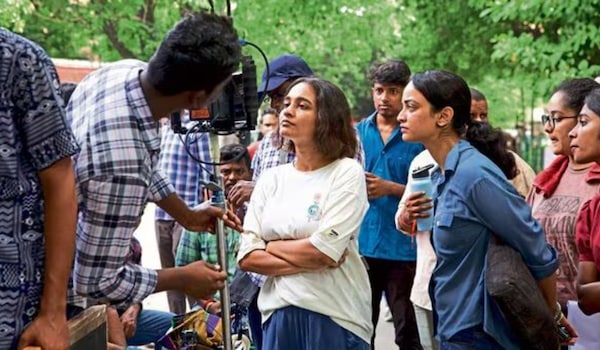
Bad Girl director Varsha Bharath links this to how entertainment itself is defined. “It is not just a male problem, but also what women want to watch. Even if women don’t go to theatres, younger women stream as much as men. It is about viewing patterns, and it starts with the audience,” she points out. At the end of day, she only wishes for less misogyny to prevail.
‘The OTT space provides greater reach’
Once seen as secondary to theatres, OTT platforms have become central to the industry’s survival and evolution. In 2025, streamers hosted a diverse slate, from Mrs and Bad Girl to Dabba Cartel, Delhi Crime and Good Wife.
Halitha Shameem, who worked on Good Wife and is set to direct its second season, notes a significant shift, as she points out that the heads of content at most platforms right now are women. Monika Shergill at Netflix and Aparna Purohit, who headed Prime Video until recently, while creators like Gayathri, JS Nandhini, and Madhumita continue to churn out OTT originals. “With Good Wife, we wanted to tell how this character balances her work and life. Any day, there are platforms that want and do not want women-centric tales. It depends on the needs, and despite that, we are telling stories that we want,” Halitha adds.
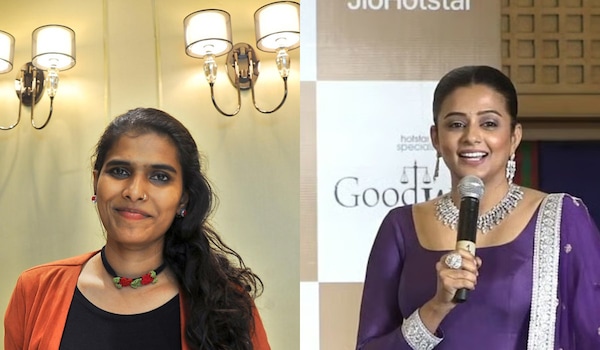
On the other hand, Santhy believes OTT’s strength lies in accessibility. “The OTT space provides greater reach as the audience has grown comfortable watching content from home. Since the pandemic, the audience is more likely to go to the cinemas if a film offers a fresh theatrical experience. So, I think it has more to do with the cinematic treatment rather than the content,” remarks the Lokah co-writer.
For films like Mrs, OTT proved crucial amid a recession-hit year. Arati recalls, “Nobody picked up Mrs for a long time. For a year and a half, it was doing the festival rounds. Many platforms passed it as they saw it as a film that would not evoke any interest in people. But I’m glad Z5 came on board.”
A similar second life awaited Bad Girl. “Even though we did not have the most incredible theatrical run, which was expected of a smaller budgeted film, our OTT run was successful. For young women to be messaging saying, they felt seen, feels nice,” says Anjali, while also acknowledging that OTT has grown increasingly commercial.
‘Women behind the camera is position of power’
Across voices, there is consensus that representation must extend beyond the screen. “All artistic outcomes are a byproduct of our lived experiences, and the presence of more women across creative departments will result in more diverse and nuanced storytelling,” says Santhy.
Arati reflects on how power dynamics behind the camera have historically played out. “If not for costumes and make-up, you can find a woman in the editor’s room because the director might need someone who is patient and mother them. But women behind the camera is position of power, and in general, a new image, and we should work towards it.” While acknowledging growing openness, she adds, “I have seen prejudices of being a woman, and for being taken seriously. Hence, I have learnt to choose my team wisely.”
The last word
As the industry looks towards 2026, the hope is cautious yet collective. Yes, very much like Arati says, “It’s easy to be a director for hire but hard to be one with a voice”, but women this year have dared to dream and came out with flying colours. If 2025 proved anything, it is that women-led cinema no longer needs justification, only space. Space to fail, to succeed, to experiment, and most importantly, to exist without apology.
Best of Indian cinema 2025 FAQs
Q. What are some of the best Indian movies 2025?
A. Films like Rekhachithram , Court, The Girlfriend, Tourist Family , Su From So are best ones to release in 2025. Most of them are available via OTTplay Premium.
Q. What are some of the best female centric movies to stream on OTT?
A. Lokah Chapter 1 , Mrs , Kaadhal Enbadhu Podhu Udamai are available for streaming on OTT via OTTplay Premium.