


Kennedy ending explained: Is Rahul Bhat's Uday Shetty a predator or a victim of a system cloaked in darkness?
Anurag Kashyap’s Kennedy is a clinical, pandemic-set neo-noir. It follows hitman Uday Shetty through a corrupt Mumbai system, exploring nihilism and trauma over justice in a haunting slow burn.
Last Updated: 12.15 PM, Feb 22, 2026
The neo-noir thriller Kennedy, directed by Anurag Kashyap, has finally made it to Indian screens after over three years of waiting, following its 2023 Cannes Film Festival international debut. After domestic viewers having only heard whispers about the film's standing ovations at international festivals, they finally got to see it on February 20, 2026, when it debuted on ZEE5 (OTTplay Premium).
How does Kennedy challenge the conventions of a typical crime thriller?
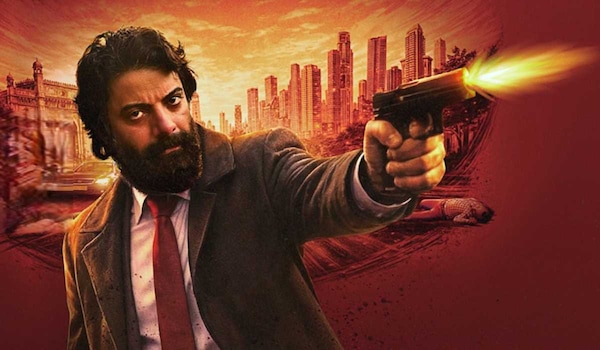
Kennedy is less of a conventional crime thriller and more of a clinical examination of a man whose soul has been exchanged for institutionalised violence, all set against the oppressive neon backdrop of a Mumbai city hit hard by the pandemic. As audiences explore the 146-minute running length, the intricate conclusion has ignited lively debate about what happens to the film's protagonist, Uday Shetty (Rahul Bhat), and the systemic corruption it depicts.

The film centers on Shetty, a former high-ranking police officer who was officially presumed dead for several years. It turns out that he is actually a hitman working under the name "Kennedy" for the crooked Mumbai Police Commissioner Rasheed Khan (Mohit Takalkar).
How does Uday Shetty use the pandemic lockdown to stay undetected?
Shetty works as a private driver for an elite cab company during the COVID-19 quarantines of 2021. By adopting this persona, he manages to remain undetected as he carries out "nuisances" for Khan, targeting politicians, whistleblowers, and rivals on the deserted, disguised streets of Mumbai. As a trade, he assures Shetty that he will reveal the whereabouts of Saleem Kattawala (Aamir Dalvi), a criminal with whom the latter has a deadly grudge from his past.
This portrays Shetty as a man of mechanical aggression and profound quiet. However, his inner life is chaotic; the "ghosts" and voices of his victims, particularly the first person he killed, haunt him. A socialite and fixer named Charlie (Sunny Leone), who has a nervous chuckle and becomes an unwitting witness and confidante to his shadowy world, is his tenuous link to humanity.
What real-life events influenced Kennedy's narrative climax?
An event known as "The Night" serves as the culmination point of the Kennedy narrative structure. The real-life Antilia bomb scare episode certainly served as inspiration for Commissioner Khan's attempt to terrorise one of India's wealthiest tycoons, as he is eager to recoup a ₹200 crore bribe he paid to win his job.
The plan is for Shetty to get a car and set off explosives near the tycoon's house. The goal is to make everyone freak out so the cops can "solve" the case and pay out big. Shetty, however, begins to suspect manipulation as "The Night" countdown continues. It turns out that the commissioner is not planning to turn over Saleem, and Khan discovers this. Actually, Khan has been juggling multiple roles, shielding Saleem from harm while utilising Shetty to take out the gangster's rivals.
What role does the character Chandan play in Uday Shetty's final moments?
When Shetty's private and public lives intertwine, the tension reaches its height. Until the very end, he pays little attention to Chandan's (Abhilash Thapliyal) philosophical tirades about the world, yet he acts as a mirror for his dwindling conscience.
Kennedy breaks away from the "justice-served" clichés often seen in popular Bollywood police dramas with its finale. The protagonist's mental breakdown and his helpless position inside the system are the central themes.
What realisation does Uday Shetty face during his final confrontation with Rasheed Khan?
Shetty confronts Commission Khan after he completes the explosive job. The "heroic" hitman's mask is removed. Shetty comes to terms with the fact that the system views him not as a justice seeker or vigilante, but as a reimbursable instrument. According to the movie, "Kennedy" persona was never about a greater good; it was only a mask that allowed him to act out his psychopathy.
Shetty kills the commissioner as a final act of nihilistic rebellion against his deceitful master, not due to a sudden epiphany about right and wrong.
Does the death of the Commissioner truly end the systemic corruption?
Something bittersweet happens at the end of the hunt for Saleem Kattawala. Even though Shetty's desire for vengeance has driven him for years, the film shows that the mobster is just a cog in his wheel. The "Bada Papa" character, a shady allusion to the top echelons of governmental and corporate power, controls law and disorder. Although Shetty slows the cycle by eliminating the intermediary (Khan), he does not end it.
Among the ending's most moving aspects is the connection between him and his estranged daughter. Shetty, who struggles to reconcile his violent past with his need for family, is depicted throughout the film as he distantly obsesses about his ex-wife and daughter.
Does Uday Shetty find redemption or change during Kennedy's closing moments?
Final scene: Uday sits alone after "The Night" destruction. In an emotional speech about the need to let go, Chandan begs him to stop following his daughter around and give her a chance to grow up free from the trauma of his abuse. The fact that Shetty pays no attention to him is distressing and illuminates his fractured mental state. He proves he can't change or sacrifice by sending a message to his daughter.
An enigmatic, extended shot serves as the film's closing shot. The sounds of the city coming back to life (post-lockdown) can be heard while Shetty sits in the darkness. The possibility of a last bullet or a door shutting leaves his eventual survival up for debate. But the theme is crystal clear: "Uday Shetty" has long since passed away, and "Kennedy" is an eternal condition, regardless of his physical or mental health.
How does Anurag Kashyap use the pandemic setting as a metaphor for his characters?
Both literally and metaphorically, Kashyap employs the COVID-19 setting. Every character's mask represents the need for secrecy and anonymity to thrive in Mumbai. Shetty hides his violent addiction under the guise of the "Kennedy" alias, which he uses in conjunction with his face mask.
The film also satirically portrays institutional corruption. Kashyap implies that the classic underworld is still there, but it has relocated to government offices, by depicting the Mumbai Police as the principal extortionists and "hoodlums" of the city. Scenes parody the "clapping" and "thali-bashing" campaigns as distractions from the true collapse of the state. An ambitious watch that refuses redemption, Kennedy satirises the public's cooperation throughout the pandemic.
How do the lead actors bring these complex characters to life?
In a performance that will go down in history, Bhat plays a man who is physically "dead on paper" and emotionally empty via the use of his gravelly voice and physical appearance. In contrast to the icy Uday, Leone's Charlie offers a vital, albeit disorganised, counterpoint.



The film's 148 minutes and slow-burn pace may put off viewers seeking a fast-paced actioner, but ZEE5 (OTTplay Premium) subscribers can get a better look at one of Kashyap's most introspective and pessimistic films. This film does more than only depict darkness; it beckons viewers to sit in it until their eyes adapt.
Kennedy FAQs
Q: Where can I watch the movie Kennedy in India?
A: After a long wait following its 2023 Cannes premiere, Kennedy began streaming in India on ZEE5 (OTTplay Premium) on February 20, 2026. It is also available globally on the Letterboxd Video Store.
Q: What is the meaning of the title "Kennedy"?
A: "Kennedy" is the undercover alias used by Uday Shetty. Beyond a simple code name, it represents the mask he wears to perform sanctioned violence. Director Anurag Kashyap has noted that the name also serves as a "call sign" for a man who has become a ghost within the very police department that officially declared him dead.
Q: Is Sunny Leone’s character, Charlie, a ghost or real in Kennedy?
A: In Kennedy, Charlie is a real person—a socialite and "fixer"—who serves as a witness to Uday's world. However, she acts as a psychological foil to the "ghosts" Uday sees. While Uday is haunted by the silent victims of his past, Charlie is a living, breathing person whose nervous laughter and chaotic energy provide the only human connection left in his otherwise clinical, violent existence.