


Newsletter | Apple TV's Ghosted Is A Spy-Com That Ghosts Both Style & Substance
This is #CineFile, where our critic Rahul Desai goes beyond the obvious takes, to dissect movies and shows that are in the news. Today: Ghosted.
Last Updated: 04.15 PM, Apr 25, 2023
This column was originally published as part of our newsletter The Daily Show on April 25, 2023. Subscribe here. (We're awesome about not spamming your inbox!)
***
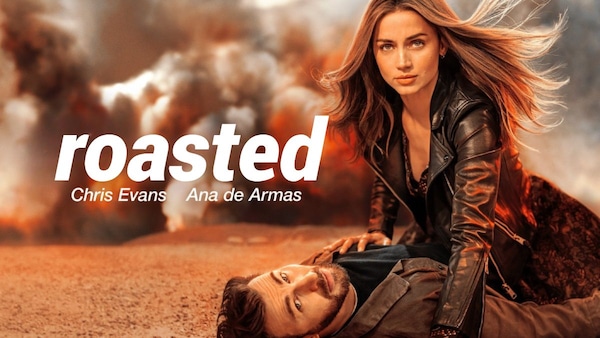
AT first and second glance, it’s easy to mistake Ghosted as a Netflix venture. It looks like the sort of title that’s commissioned to be a nice thumbnail. There are two famous and pretty Hollywood faces, an inconceivably unoriginal spy premise, a total lack of chemistry, a few cheap and cheerful action set pieces, an incoherent comic tone, and a bunch of A-list cameos that play out like Disney cartoon vignettes. But the tragedy is that Ghosted — an action dramedy that ghosts good sense, cinema and entertainment — is an Apple film. Which implies that Apple TV is now no more a niche streaming platform; it’s big and messy enough to be just another number-crunching and space-filling enterprise. Ghosted is so algorithmic in its form that it’s hard to imagine how four human writers were involved in a script that could have well been composed by a malfunctioning Siri.

The problem with Ghosted starts with its trailer. Not surprisingly, it gave the whole gig away, leaving no room for genre-shifting surprise in a film that can’t be bothered to be smart. The trailer revealed that the film opens as a romantic comedy of sorts — a gorgeous woman (Ana de Armas) and a handsome man (Chris Evans) go on a terrific first date, she then ghosts him, and when the needy fellow decides to track her down, he discovers that she’s a butt-kicking CIA agent who reluctantly pulls him into a long-winded bio-weapon-oriented chase across the globe. So much for that ‘twist’. I mean it’s a cute way of suggesting that everyone pretends to be different in the honeymoon phase of a relationship. (She poses as an international art curator). But Ghosted isn’t concerned with messages or metaphors — it’s a semi-slick, dull and dumb dive into the world of gender-inverting spy stories. You see, the woman, Sadie, is a mysterious CIA legend called “The Taxman,” and the mercenaries out to nab the Taxman (and get some passcode) keep mistaking the guy, Cole, to be that agent. Nobody believes that she’s the mysterious agent. This little device is squeezed dry, until the film itself gets bored of trying to be quirky.
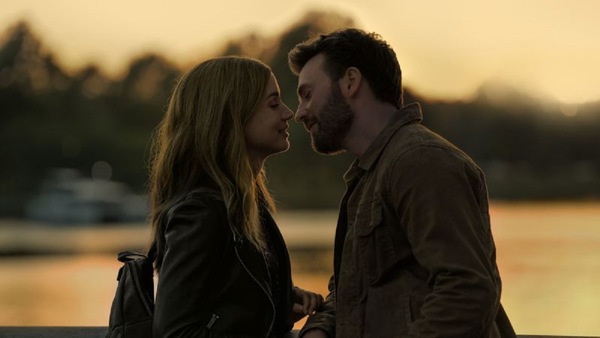
But let’s forget that Ghosted is instantly forgettable. Even as a spy romcom, it has some serious problems in its posture. Sadie is disillusioned with her job in the beginning; she’s hoping to quit the race and settle down. So naturally Cole enters her life as not just another man, but a son-of-the-soil farmer who hasn’t travelled beyond Washington. The characterisation is jarring. The film treats him as some sort of exotic rural experience for Sadie, who looks amused with herself when they sleep together. It also propagates the view that microaggressions and nastiness in a relationship is a sign of sexual tension — their meet-cute is triggered by an argument about plants, and later on when Cole is stuck with Sadie during her dangerous mission, the two are consistently mean to each other — only to kiss when they’re marooned on an island after a plane crash. It’s not just uneven storytelling but also lazy and harmful stereotyping, made worse by the fact that the two actors kiss like siblings and not steamy partners.
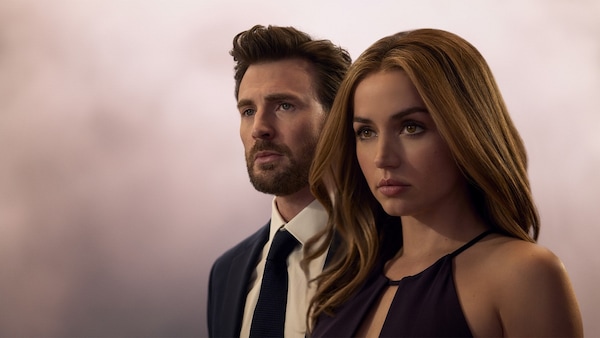
At no point do they sound or look compatible, but we’re supposed to believe it because Cole wants to write a book on farming and has put off his own life plans to help run the family farm. Their friction is apparently a consequence of the curiosity they have for one another. It doesn’t help that the film mines Cole’s stalker-like persona for comedy. He is obviously the needy one, but he tracks her to London hoping to surprise her once she stops replying to his text messages. He also secretly takes a selfie in bed while they’re sleeping, and then blames her during her mission for being cold and calculative. This might have been funny in an Adam Sandler-ish movie, but it’s hard to imagine someone as strong as Sadie letting all of Cole’s problematic traits slide because he’s a farmer who doesn’t know better.
The cultural appropriation in Ghosted is another of its ‘strengths’. Pakistan looks like one giant market in Saudi Arabia, the Khyber Pass looks like the Western Ghats, and the weapon in question is called Aztec. Sadie speaks Urdu at one point and it sounds like Russian, while the villain, a chap named Leveque (Adrien Brody; how the mighty have fallen), has an accent reminiscent of Martin Short’s in the vintage Father of the Bride movies. The climax, too, is dizzyingly loud and unimaginative — the chaos in a revolving restaurant starts to feel like the insides of my brain. The only decent bounty-hunter cameo is Sebastian Stan’s as a man who calls himself ‘God’; the rest of the design is so awkward that even Ryan Reynolds looks uncomfortable in a blink-or-miss shot.
The only good scene of the film appears during their first date, when the film is still threatening to be more of a love story going pear-shaped. Sadie takes Cole to a karaoke bar, and she brings the house down with her lively performance. It’s her favourite place. She sneakily signs him up to sing next, like movie characters on dates often do. But when he shyly declines, she coolly asks the host to carry on with the next singer. There’s no disappointment in her eyes, and he thanks her for understanding. They are different people, and there’s no shame in that. It’s a sweet and unassuming moment. It reminded me of a similar moment in Aftersun, where the girl says something cruel after the man refuses to join her on stage. The only difference is that Aftersun featured a young father and his daughter. Given the virginal guilelessness of Ghosted, maybe it’s not so much of a difference after all.