


Premier League 2025-26 Week 2 Updates: Manchester City Grounded; United Left Waiting
City were rugged and found out by a committed Spurs press. Man Utd resembled the United of last season and Chelsea might just have more cards up their sleeve other than Cole Palmer.
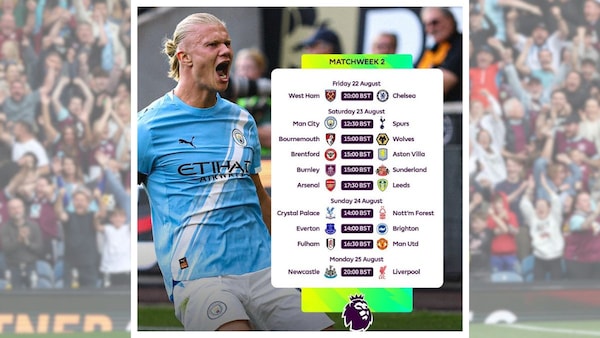
Last Updated: 05.59 PM, Aug 25, 2025
Manchester United are no better than last season
IT'S TELLING that after 80 minutes on the clock, the game is even, and there to be won, United’s coach Ruben Amorim sent on two defenders to try and pluck an unlikely and undeserved win out of nothing at Fulham. Harry Maguire may have resuscitated his reputation last year — a low bar for an excruciatingly poor team — but a footballing messiah he is not. But that’s where United are, two games in, a brand new forward line to boot, but precisely the same drudgery of old. New boys Mbuemo and Cunha can huff and puff vigorously, but they already look short of ideas and inspiration in a United team that has managed to, in all of two games, repeat the pattern of last season: play well and lose to big teams, play atrociously and scrape results against the weaker ones. That Bruno Fernandes missed a penalty — a horrific one, mind you — is a sidebar to the fact that United can’t compete, let alone win anything, with the midfield they have. It’s been a couple of seasons in the making, but that much-needed midfield revamp still feels like a missed bus.
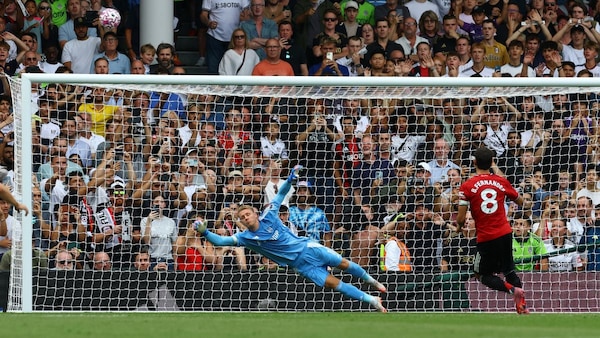
De Bruyne who, you asked?
Manchester City’s opening day couldn’t have gone any better. Their new signings shone. Their battering ram of a striker scored a ruthless brace. And they swept aside a team with the jogging-pace ease we’ve come to associate with Pep Guardiola’s City side. Flip the page to chapter 2, and things take a glib turn. The creativity is suffocated, the midfield malfunctions, the defending is last-ditch and kamikaze, and your Trump card striker can hardly get a touch of the ball. Spurs didn’t just squeeze City, they went home, virtually put on red shirts of a certain team managed by a certain Jurgen Klopp and hounded the hell out of Guardiola’s control machine. On paper, City’s B team ought to obliterate Spurs, whose front three on the day strictly belong to mid-tier teams. Popular consensus had us believe De Bruyne’s exit last season was due to his decline in performance and relevance to the squad and its evolving style. But it's his precision and range of passing that City could have used on a day that offered more questions than it presented answers.
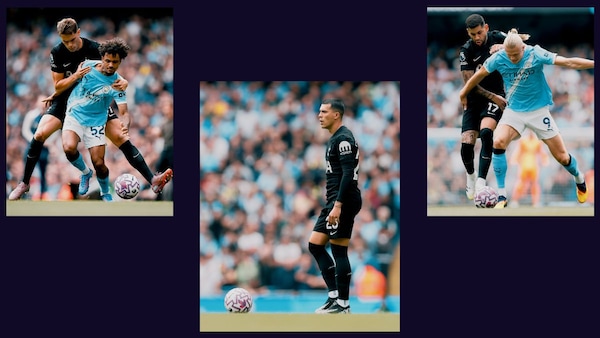
Chelsea can look beyond Cole Palmer, but still needs him
The early Friday night game, which Chelsea eventually coasted past with a frenzied, at times imperious display of attacking football, confirmed two things: Chelsea can play without Cole Palmer and that they still need Cole Palmer. Palmer injured himself in the warm-up, but his substitute, the young Brazilian teenager Estevao, deputed perfectly as a pacey, unpredictable assembly of lightweight components. However, much of what Chelsea accomplished was also due to the kind of opponent they faced — a slow, underconfident squad, possibly one of the poorest in the league in terms of quality. Most of the goals had a slapdash feel to them, which is where someone like Palmer instils calm, grace and poise. They all went in on the day, but in games when they don’t, it takes a Palmer to separate the patterns, the spaces, from the noise. That said, Chelsea’s other options are quietly adding up. All they need to do now — which is bizarre to admit of a top-tier European club — is to stop buying more players (which they won’t).

Arsenal’s set-piece prowess will eventually become their undoing
Arsenal are really good at set pieces. They scored two in a 5-0 thrashing of Leeds. And while that sounds like a day well spent at the office, it has ominous subtext for a team that is becoming overly reliant on a singular playbook. Their prosaic performance in the opening-day win at United, coupled with the muscular decimation of Leeds, suggests that a new identity is taking shape. It’s just not the one Arsenal supporters are used to witnessing, nor are silky players like team captain Martin Odegaard suited to. The team is hard to beat, is increasingly becoming physical and can pluck a goal from a mob of dissident men, quite literally. But while they may bode well for a title charge that resembles the act of going through walls made of brick, it doesn’t augur well for the kind of football the club assumed, their manager, Mikel Arteta — having been Guardiola’s understudy — would have imported to the club. Would they take a trophy over the style of football? Most likely, yes. Should they? That is a question for the die-hard supporter.
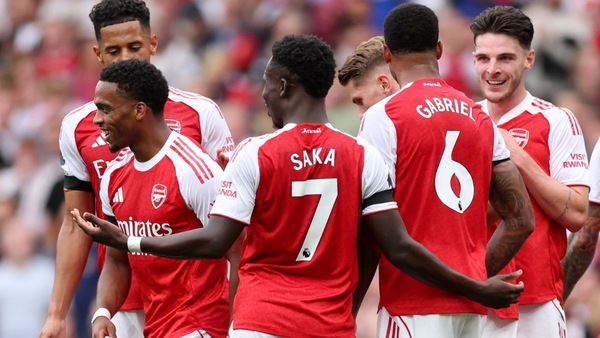
Postscript:
Let goalkeepers be goalkeepers.
In no other moment, over the weekend, was Pep Guardiola’s influence on modern football simultaneously pronounced and desecrated than the one he himself oversaw from the dugout. James Trafford — the stand-in for out-of-favour Ederson — made a mess of a routine short pass that could have been a mindless, but stress-relieving long kick. When you have the physical presence and speed of Haaland up front, why not punt it once in a while? Also, the pageantry of demanding goalkeepers to play like sweeping midfielders ought to stop. The elegance and seduction of, at least, that part of Pep-ball is past its expiry date. Not everything that’s an accessory has to be gold.