


Senna Hegde On Setting Avihitham In Kanhangad: 'Working From Home Takes The Stress Off Filmmaking'
In a conversation with Subha J Rao, the filmmaker spoke about his movie-making process, why he prefers working out of Kanhangad, and why he’s partial to working with non-stars.
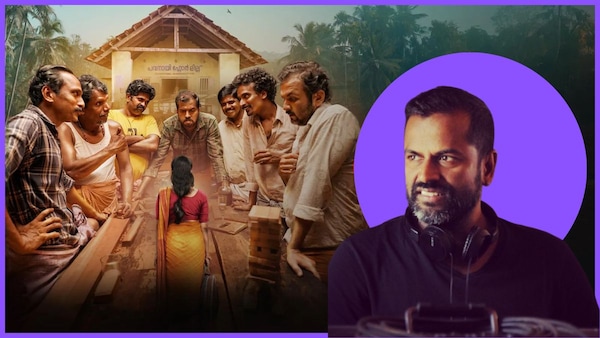
Senna Hegde: 'Some films are not sellable on paper, probably because the genre is different, but they might work well once made.'
Last Updated: 04.25 PM, Nov 14, 2025
IN THREE OF Senna Hegde’s films — Katheyondhu Shuruvaagidhe (Kannada), the National Award-winning Thinkalazhcha Nishchayam and the more recent Avihitham (both in Malayalam), the women get amazing character arcs. If the first was about a young woman discovering life after a heartbreak, the second was about another asserting her right. Avithitam (Illicit), on the other hand, is about women, but primarily features men, though most of the women on screen have agency.
Of all his movies, by now called the Kanhangad Cinematic Universe (Senna laughs at this, but says, "Who are we to stop people from giving it a name?"), Avihitham hits the hardest, though it has a healthy vein of humour running through it. The story can be narrated in a single line: a couple is engaged in furtive love in a garden, and the villagers gang up to find out who the woman is. What Senna and co-writer Ambareesh Kalathera manage is shine the spotlight on patriarchy and its myriad faces — the men who size up women, those who don’t mind sitting on their haunches amid stinging nettles to find out who the woman is, men who casually forgive the man, because he’s a ‘man’, and men those don’t know how to even talk kindly to their wives.
In a conversation, even as the skies poured in Kanhangad and Mangaluru, Senna spoke about his movie-making process, why he prefers working out of Kanhangad, and why he’s partial to working with non-stars. Edited excerpts below:
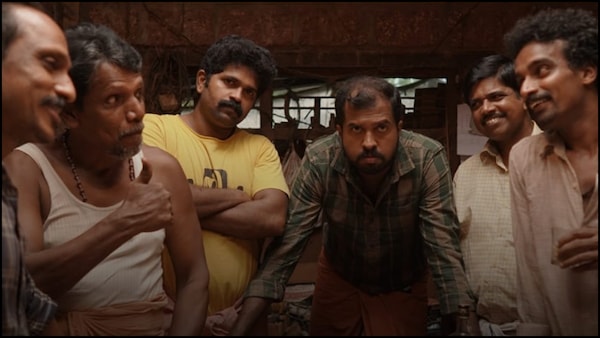
Senna, your film is about a space for women. In your opinion, what’s a safe space for women?
I’d probably look at a safe space for anyone. It is where they can be themselves without any fear or interruption, where they don’t have the thought that someone is watching them or taking advantage.
Women, sadly, have always been at the receiving end because of this lack of safe spaces. I wish, in an ideal situation, no one should have to double-think.
The film tapped into our subconscious bias. At one stage, the audience saw the character of Nimmi, coloured by what they had seen and heard…
Ah, that’s exactly what happens, no? In smaller towns, it is so easy to feed into that kind of information and sway people’s perception. It is so easy to pass on your bias to others.
In Avihitham, if you notice, all the perceptions are reserved for women. After a point, every action of hers is seen through the lens of what you think you know. The men, on the other hand, even if they maintain blouse sizes before and after Onam, are seen as custodians of culture. Tailor Venu is seen as trustworthy because of his loyalty to Nirmala’s father-in-law, Madhavan.
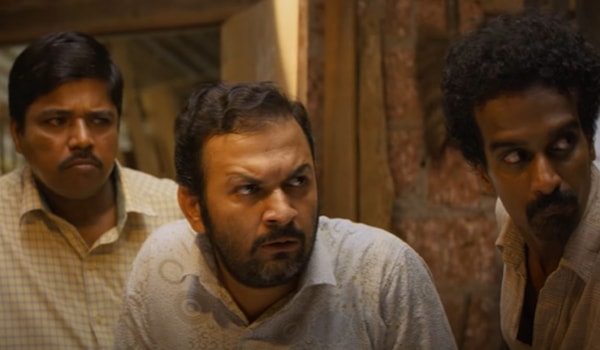
At a certain level, all the men hatching grand plans and preparing blueprints are bullies. How did you write them that way?
From a young age, we tend to gang up on people. Kids can be the biggest bullies and get away with it. That sets the foundation for adulthood, too. It is in human nature to bully. You’ve to work on it to avoid it.
In the film, people have the free time to interfere in others’ lives, and no one really stops others from doing it. The entire town is intrigued and gangs up on a woman, without even confirming her identity.
Could you speak about how Avihitham came into being?
Writer Ambareesh Kalathera narrated a story to Sreeraj Raveendran (also the cinematographer and creative director of Avihitham). He knows what I veer towards, and said I would not be interested. When he was dropping him back to the bus, Ambareesh said he had another story. The moment he heard bits and pieces, Sreeraj asked me to speak to the writer. I heard a long narration in mid-July last year, but I was not interested in the tail end. I liked it till the point they got caught. It offered the scope for quite a spectacle. We would write one portion, lock it, then move to the next. I think we took about 20 days to finish.
Later, the other producers came on board — friend CV Sarathi, Mukesh R Mehta, Harris Desom and PB Anish — and we kept polishing the story, fusing observations about society, till November, when we shot it. The foundation was strong by then, and I usually keep sprinkling humour into a scene till I call cut.
I liked what we did with Avihitham. When I write, I ensure there’s a great feeling when we walk out of the theatre — this can overcome the initial lag too. Here, we also chose to show the couple in a positive light — they owned their relationship.
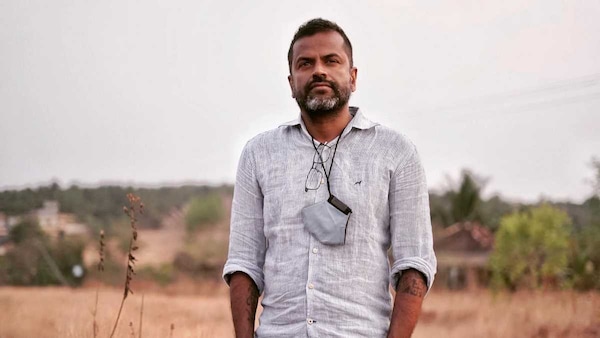
It is interesting how Vinod, the man seen by all as one with a roving eye, is the only one who seems to know how to hold a conversation….
Ah, yes, while one can be initially attracted to the physique, there is something else about Vinod’s character that charms — he listens, speaks. That’s an ideal partner. I wanted him to possess physical charm to act as a foil for his tenderness and sensitivity. Also, both physically and metaphorically, I wanted him to be the woman’s shoulder.
What are the limitations you work with when you mount an indie set in a town whose dialect is distinct?
Ah, quite a few. But when you decide your budget well, the rest falls in place. The slang used in the film is not even spoken throughout Kasargod. This is spoken in one portion of Kasargod and the northern part of Kannur. But we had solid backing from the producers. They wanted to create an ecosystem where such films exist. If it did well at the box office, that was an added benefit. Since COVID, everyone’s scaling up, but for me, a good movie is anything that makes you feel some emotion. But I hate the stress of marketing it. And, I cannot sell to OTT without a theatrical release. We began with 130 screens, and then we got into a second week with huge numbers.
What is the joy you experience with indie-style filmmaking?
I love that the control is in my hand. Filmmaking is not an easy job. There’s so much to worry about. It is good not to have to look over one’s shoulder and wonder what someone else is going to think. Indie-style filmmaking eliminates that unnecessary worry.
I had one of the best experiences making this film. Not only as director but also as producer. It was the most amazing team, every step of the way.
In the case of Avihitham, the producers were very generous. But when I decide to make a movie, I always give it a value. Some films are not sellable on paper, probably because the genre is different, but they might work well once made. And so, I stretch the rupee to get the effect I want, while being prudent.
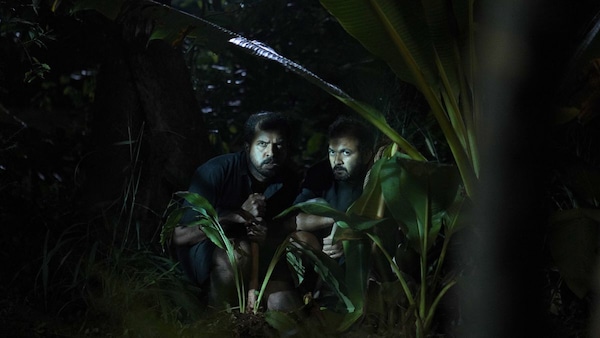
Why did you never try anything like this before?
CV Sarathi has been asking me to make movies with him for a long time. I was the one who held back, because I did not want to mix work with friendship and spoil our relationship.
I usually don’t have regrets in life, but now, thinking about it, I wish we had collaborated earlier. We had a good time.
Does it help you set your films in your hometown?
Very much. Home is where my heart is, and every time I shoot in Kanhangad, I have a better time. Intimately knowing the place you’re setting your film in matters a lot.
Some films have a universal theme — they can be set anywhere. Avihitham could have been set in Kochi, Mallapuram or Thiruvananthapuram, but I like that it is easier to work from home. It takes the stress off filmmaking when you get back to a known space. Seeing familiar faces around you eases your worries. They can be depended on to sort out any issues.
It helps that I am very fond of my hometown. I was born here, but never lived here. My familiarity with Kanhangad was 15 days a year, till I came back for good in 2014. This gives me comfort. The green is usually never green on the other side.
That said, some movies are location-specific. Then, you venture out, do work, and get back to base.
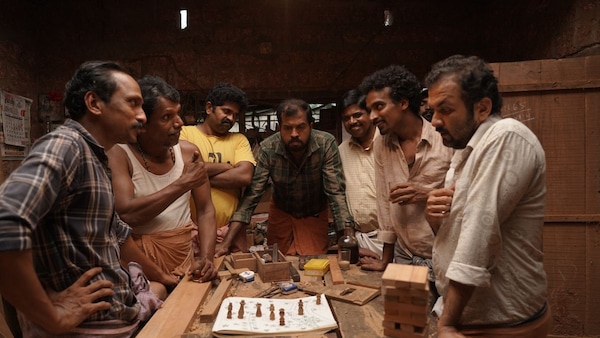
Setting your movies in Kanhangad has also opened up possibilities for actors from the town, right?
Very true. Many of them have lived here, content, in the district farthest from the State capital. They’ve been part of theatre, and made their peace with it. Our industry thrives in Kochi, and now, people have started to approach people from here. It has opened up huge potential, and that’s a beautiful thing.
Subscribe to our newsletter for top content, delivered fast.
