


Sister Midnight ending explained: Is Radhika Apte's Uma a supernatural vampire or a psychological 'misfit'?
Sister Midnight follows Uma’s transformation from a repressed bride into a feral monster. By killing her husband and rejecting social norms, she reclaims her power and defies the patriarchy.
Last Updated: 07.40 PM, Dec 27, 2025
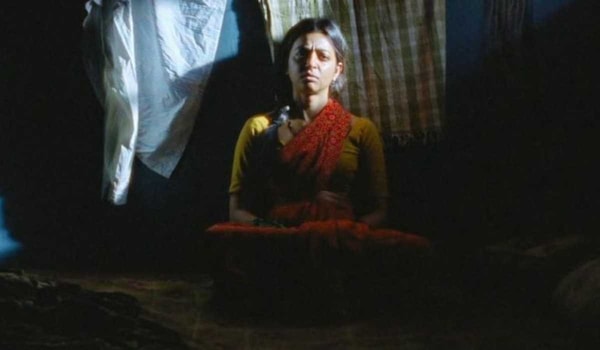
Sister Midnight defies genre conventions as it examines home confinement, feminine wrath, and the concretisation of "misfit," directed by Karan Kandhari and starring Radhika Apte. The film, which premiered at the Cannes Film Festival and saw its theatrical release in 2025, examines a woman's mental collapse as she is pushed to the periphery of urban society via the lens of a dark comedy-horror.
Arranged marriage foundation
A woman named Uma (Apte) from a small town is married to a man named Gopal (Ashok Pathak) from a crowded Mumbai "kholi" (shack) in an arranged marriage. Many people wonder about Uma's transformation and whether the events in the film are real or imagined, particularly after the ending.

In Sister Midnight, the first act sets forth the oppressive reality of Uma's new existence. Unskilled in the kitchen and surrounded by critical neighbours, she struggles to keep herself and her family fed and hydrated due to her husband's inebriation and frequent absences. She experiences deep seclusion until a crucial event at her cousin's wedding. The unfortunate Uma gets bitten by a mosquito—or "vampire fly"—as she vents her frustration at a bug zapper.
The Metamorphosis
After this happens, Uma becomes even more savage and unfriendly. She goes from eating little birds to biting a goat on the street as her intolerance to sunlight and appetite for raw meat escalate. This change embodies her fierce defiance of the "docile housewife" stereotype. Instead of allowing the city to overwhelm her, Uma begins to absorb all the life surrounding her.
During an unexpectedly intimate moment between Uma and Gopal, the storyline takes a dramatic turn. They try to have sex after months of uncomfortable silences and pent-up stress. Uma bit Gopal to death while performing because her wild side takes control.
Severing of social ties
Uma enters a time of surreal grieving instead of escaping or disposing of the body immediately. While Gopal's body decays, she tries to keep up the home illusion by decorating it with marigolds and fairy lights. This scene emphasises Uma's inner struggle: she feels she has no place in human society, yet she holds on to the one person who represents humanity. Uma completes the process of cutting off all ties to social "normalcy" by killing a nosy neighbour who finds the body.
Uma begs a band of trans women (hijras) for assistance in the last act, and they help her cremate Gopal outside the city. Thereafter, she takes momentary solace in a Buddhist temple. This part is essential since it provides a counterpoint to the Mumbai shantytowns. The women have likewise "opted out" of conventional domesticity, but they've done it via spiritual tranquillity rather than savage aggression; Uma is welcomed without criticism in the monastery.
Reclaiming the "monster" identity
Nevertheless, upon her return to her hometown, Uma's history finds her. With the help of a priest and a police officer, she discovers a group of her neighbours plotting to torch her house and label her a "daayan" (witch). Uma chooses to believe the story they've made up about her instead of battling or begging for her life. She frightens the audience into submission as she emerges before them, her smeared black lipstick adding to her terrible, gaunt presence. Adopting the moniker "monster" grants her the authority that "humanity" had previously denied her.
At the end of the film, Uma boards on a train and heads towards the Himalayas. On the train, she assumes the role of the titular Sister Midnight by donning all-black attire and black spectacles.




Final imagery
The final shot, depicting hallucinations of vampire lambs behind the train, suggests multiple interpretations. Uma is no longer striving to embody the roles of a housewife or a neighbour. She has transformed into her "undiluted" self-image. The lambs stand for her "children" or the victims from her past, such as the birds and goats. The spectres of her wild deeds stick with her even as she starts over. The lambs' cyclical nature has led some to speculate that they represent either a dormant feral pregnancy or the persistence of her "pack" in a different setting.
Sister Midnight employs the "vampire" stereotype as a commentary on the marginalisation of the marginalised, not solely for classic horror purposes. People who live in the shadows of the city, like Uma, are like the transgender community and the homeless. The film implies that Uma's situation calls for a woman to transform into a "monster" to gain genuine control over her life. She instead opts to "rot loudly" rather than fade into oblivion as a subservient widow.
Legend is born
A reference to an Iggy Pop song in the title further suggests a defiant, nighttime personality. By the conclusion, Uma has transformed from an arranged marriage victim into a legendary figure who torments the patriarchy that sought to control her.
Sister Midnight is streaming now on JioHotstar (OTTplay Premium) and Prime Video.
Sister Midnight FAQs:
Q: Is Sister Midnight a horror movie?
A: While it uses elements of horror—such as body horror, blood-drinking, and the supernatural "vampire fly"—Sister Midnight is primarily a dark comedy and a genre-defying character study
Q: Is Sister Midnight based on a book or a song?
A: The title is a direct reference to the Iggy Pop song Sister Midnight (co-written with David Bowie).
Q: Who stars in Sister Midnight?
A: Sister Midnight stars Radhika Apte in a tour-de-force performance as Uma. She is supported by Ashok Pathak, who plays her husband Gopal. The film is directed by British-Indian filmmaker Karan Kandhari.