


Space Gen: Chandrayaan ending explained - Why the crash of 2019 was necessary for the victory of 2023
Space Gen: Chandrayaan (TVF) dramatises ISRO’s grit via Arjun & Yamini. It bridges the 2019 failure to 2023 success, merging personal redemption with technical mastery, resilience, and national pride.
Last Updated: 10.12 AM, Jan 24, 2026
Space Gen: Chandrayaan has rekindled the public discussion over India's most ambitious scientific venture since its release on January 23, 2026, through JioHotstar (OTTplay Premium). The five-part series, which is directed by Anant Singh and produced by The Viral Fever (TVF), shifts the focus from the mechanical roar of rockets to the silent and frequently excruciating perseverance of the scientists responsible for the endeavour. Though the real-life result is known to everyone, the series conclusion explores the fictional characters' journeys to redemption in great detail, giving viewers a multi-faceted view of what "Shiv Shakti Point" stands for.
Where does Space Gen: Chandrayaan begin and who are the central figures leading the story?
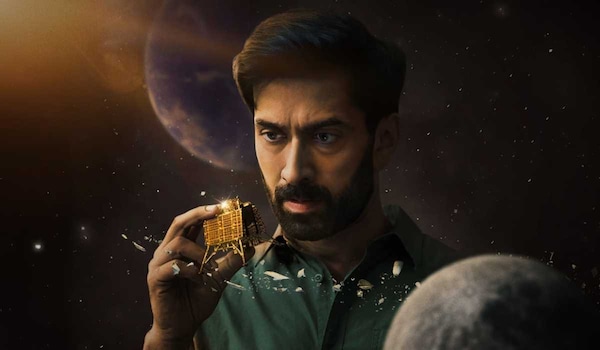
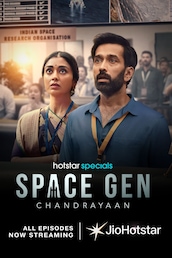
Starting with the 2019 failure of Chandrayaan-2, the series picks up where the Indian Space Research Organisation (ISRO) left off. Nakuul Mehta portrays the bright but tormented navigation systems expert Arjun Verma, while Shriya Saran plays the resilient project director Yamini Mudaliar.

The "valley of failure" is where the show mostly focuses, unlike a typical documentary. Following the first Vikram lander's loss, it painstakingly details the meetings of the Failure Analysis Committee, as well as the public criticism and internal demoralisation that ensued. The story then fast-forwards to 2023, covering the four years before that year and how the team dealt with budget constraints, changing geopolitical landscapes, and the extraordinary disruption caused by the COVID-19 pandemic.
What makes the final episode, "The Phoenix," the emotional and technical climax of the series?
The Phoenix (the last episode) focuses on the chaotic hours before Chandrayaan-3's soft landing. For a squad that has spent the last four years haunted by the memory of a disaster, the emotional payout is just as important as the technical "20 minutes of terror" at the conclusion.
The series concludes by focusing on the lander's upgraded features, including its stronger legs, larger landing surface, and better sensors. Using both historical archival video and state-of-the-art CGI, the program depicts the lander's approach to the Moon's South Pole. The leaders fall into a sombre, reflective stillness amidst the euphoria in the control room after the touchdown confirmation signal at Station Shiv Shakti. Success is more than simply a national milestone for Arjun and Yamini; it validates their four years of "staying in the room" when others wrote them off.
What is the personal significance behind Nakuul Mehta's character Arjun Verma’s obsession with the "Vikram" lander?
Arjun Verma's history is the most important "ending explained" component. As the series progresses, we learn that the absence of real-time satellite intelligence contributed to the death of Arjun's father, Vikram, an army officer, during the Kargil War. Arjun's fixation on the "Vikram" lander served as a metaphor for his powerlessness to rescue his father.
In its last moments, the show makes use of a powerful visual metaphor: a scene from his father's struggle in Kargil's snowy plains fades into the lunar south pole's drab, sandy plains. Now that the lander has successfully landed, Arjun can release his survivor's guilt. The landing represents the completion of the "Vikram" project, which he is now overseeing, and brings closure to his family's heritage.


How is the global space race and the contrast with Russia’s Luna-25 portrayed?
Also discussed in passing in the series finale is the larger historical backdrop of the space race. The series adds a level of high-stakes rivalry by depicting the simultaneous fall of Russia's Luna-25. The authors highlight the "slow and steady" strategy of the Indian scientists by showing the failure of Luna-25 alongside the triumph of Chandrayaan-3. This technique prioritises precision over the optics of being the first.
Additionally, the conclusion highlights the "Make in India" ideology. The team's efforts to indigenise components that were unavailable owing to global supply chain disruptions during the pandemic take up a considerable amount of the final episodes. TVF incorporates the central idea of self-reliance into the "Naya Bharat" (New India) narrative and frames the success at the end accordingly.
What are the criticisms received for Space Gen: Chandrayaan?
The performances have been lauded by many, although there have been criticisms that the show occasionally veers into melodrama, particularly in Gopal Datt's adversarial depiction of Mohanty Sir and the overly dramatic board sessions. Prakash Belawadi's portrayal of ISRO Chief Sudarshan Ramaiah anchors the show's more poignant moments.
Instead of a jubilant triumphant ending, Space Gen: Chandrayaan ends on a subdued note of thanks. Even though Arjun and Yamini are made-up characters, the strength they symbolise is based on real-life ISRO scientists, and each episode concludes with a salute to them. Failure is not the end, but rather the most costly and useful data collection for future success in science, as the closing emphasises.
Space Gen: Chandrayaan FAQs:
Q: Is Space Gen: Chandrayaan based on a true story?
A: Yes. While Space Gen: Chandrayaan is a dramatized fiction, it is closely inspired by the real-life events of the Indian Space Research Organisation (ISRO). It chronicles the four-year journey between the failure of Chandrayaan-2 in 2019 and the historic success of Chandrayaan-3 in 2023.
Q: Who is Arjun Verma in Space Gen: Chandrayaan?
A: Arjun Verma, played by Nakuul Mehta, is a fictional navigation systems expert and the emotional core of Space Gen: Chandrayaan. His character arc revolves around "survivor's guilt" regarding his father, an army officer who died in the Kargil War. Arjun views the successful landing of the "Vikram" lander as a personal mission to fulfill a promise of national security through better satellite technology.
Q: Is Arjun Verma a real ISRO scientist?
A: No. Arjun Verma is a fictional character created by TVF (The Viral Fever). Although he embodies the grit and brilliance of ISRO's engineering teams, there is no real-life scientist by that name who led the navigation for Chandrayaan-3. The show uses his character to add a personal, human layer to the technical story of the mission.