


Suparn S Varma on overwhelming response to Haq: 'You cannot make films or create art from a space of fear; you have to be fearless' | Exclusive
Director Suparn S Varma on Haq's success, creating art without fear, filming Yami Gautam-Emraan Hashmi's single-take speeches, and making a balanced film about dignity and equality
Last Updated: 04.55 PM, Nov 11, 2025
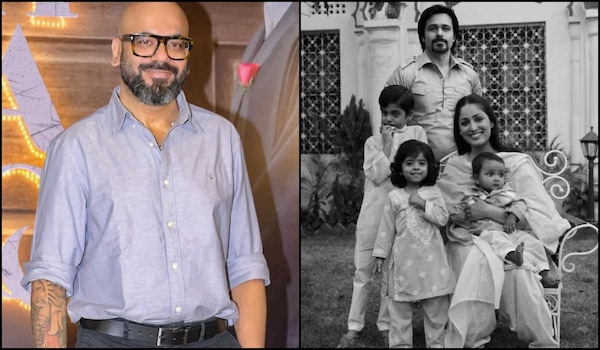
Fresh off the success of the acclaimed courtroom drama Sirf Ek Bandaa Kaafi Hai, filmmaker Suparn S Varma returns to the big screen with Haq, a powerful film starring Emraan Hashmi and Yami Gautam Dhar that takes inspiration from the landmark 1985 Shah Bano case. Having received widespread praise for its sensitive and balanced take on faith, gender justice, and a woman's right to dignity, Varma sits down for an exclusive chat with OTTplay. In this interview, he discusses the overwhelming audience response, the challenge of creating art without fear, filming the lead actors' emotionally charged courtroom monologues, and the core idea of equality he hopes audiences take away from his latest directorial venture.
Edited excerpts...
Congratulations on the release of Haq just a couple of days ago! How does it feel to finally share this intensely debated story with the audience, and what has the initial response been like for you personally?
Honestly, post-release, it's just been overwhelming. As a filmmaker, you dream of a day when you get the love of reviewers and audiences alike—where you get four-star reviews, standing ovations in theatres, and people crying and clapping. That's what's been happening across the country. My entire team and I are just bowing our heads in gratitude and pinching ourselves to see if it's a dream or if it's real, but the love is truly overwhelming.

Did you expect this kind of positive response from most people, considering that a story like this about a historical case will likely have polarised opinions?
When you do something with an absolutely honest heart and you have no agenda except to tell a story that is honest, true, and emotionally hard-hitting, it resonates with the audience because they see your intentions. Our intention has always been to tell a story from the most honest perspective possible—a story of a woman's right to dignity. That's a story that resonates with audiences across the country and, in fact, across the globe. We've had very good box office returns from overseas. The fact is that the movie is a story of Shazia and Abbas, but it could be Sunita and Amit, or it could be Sandra and Albert. It doesn't matter. It's a story of every woman across the world. Every woman lives in a man's world—it's not called a woman's world. She faces the same gender bias and issues regardless.
How carefully did you have to tread when directing Haq to ensure that the film, despite its honesty, didn't appear to take an ideological stance or contribute to the same polarisation?
See, my perspective is this: you cannot make films or create art from a space of fear. You have to be fearless. If you are true, then you have nothing to worry about. If you have something wrong in your heart, then you should definitely be worried, and those are the people who get scared. I don't live in fear. I don't create in fear. When we were making Bandaa (Sirf Ek Bandaa Kaafi Hai), we were very clear in our head and heart about what we were making. The audience rewarded that across the country—another subject matter. Similarly, in Haq, it was a very delicate subject matter, but our hearts were clear. We were being honest; we were being true. The minute our teaser and trailer came out, audiences were with the film. People are coming and telling me it's such a balanced approach. After the film, whoever even went in with worries—in fact, there have been some reviewers who wrote that they went in worried and came out happy and relieved that it's just a very honest film. Yes, because it is truly honest filmmaking. When you are honest, you can be fearless.
Yami Gautam Dhar and Emraan Hashmi are known for their intensity. Could you speak about the challenge and reward of filming the powerful, extended monologues that feature in the Supreme Court climax and the impact their performances had on those pivotal moments?
I think all through the shoot, the last two things we shot in the final two days were those speeches—we shot the whole film in 32 days. Day 31 was Yami's speech, and day 32 was Emraan's speech and the Supreme Court judge's speech. Both actors had been preparing for this day from day one. I told them that I would shoot this last so they would have time to imbibe it. That also gave me time with Reshu Nath, my writer, to keep polishing the draft and making it sharper and better, looking for lines here and there where some magic happens. We kept refining it until the last day, sitting with the actors and going over and over.
About a week from the shoot of those scenes, we stopped writing a single word, because the actors needed to totally embody every single word, line, and pause. If we changed that metre, everything would shake within the performance. So we stopped a week prior. On the day of the shoot, we considered shooting in sequence, but Emraan and Yami decided who wanted to go first. They both sat like students. Yami said, "I'll go first." She went first, and I had multiple cameras. She did the whole thing in a single take. It was brilliant. She asked, "Do you want one more take?" I said, "The performance is so good, and you're enjoying it so much, and we all wanted to clap within the shot. Let's do one more take." She did one more take, but we ended up using the first take itself. Emraan, similarly, was ready and prepped, and we had worked on every single nuance. He gave a single take, and we did one more just for safety. Once it was done, the whole set clapped, and that's exactly what's happening in theatres: audiences
How does it feel to come back to the big screen after directing several series in the OTT space for almost five years or so?
Streaming and OTT didn't exist when I began writing and directing as a filmmaker. I was one of the first filmmakers to get on board. I made a show called Yeh Ke Hua Bro and Kaushiki for Voot on Viacom. Then I wrote Hasmukh for Netflix and then directed and co-wrote The Family Man season two. Then Rana Naidu happened, then The Trial happened, and Sultan of Delhi happened—these other shows kept happening. As a journalist, I'm also one of the founding members of [viu.com], where I started off literally as a young rookie journalist and brought in social media to the country. So, I have never been shy of adapting new technology or new mediums.
As long as I get to tell a story, I don't care if the screen is big or small; the story needs to connect. The story needs to be big enough for your heart. For me as a filmmaker, my passion is in telling stories. As long as I get to do that, I have no complaints. So, honestly, I have been lucky and privileged to make some great shows on streaming platforms as well. Now back to Sirf Ek Bandaa Kaafi Hai, which, again, rewarded us with love. It's the highest-rated movie on ZEE5, and now with Haq, the love has been just beyond belief. I guess you stay on the path of the journey and don't bother about which car you're travelling in. At the end of the day, whether you travel in a Mercedes or a Santro, you're going to reach the same destination. It's literally that comfort change. But the audience doesn't know the comforts. I can make the same film travelling business class, first class, or economy; the audience doesn't care and doesn't know. What matters is what they see on screen—it's the story; it's the film. So for me, the size of the screen never changes. The audience is still the same.
Just before the release, Shah Bano Begum's daughter, Siddiqua Begum Khan, sought a stay on the film, claiming it misrepresented her mother's personal life. How did you and your team navigate the emotional and legal pressure of having the film's release challenged, and what was the core argument that led the High Court to dismiss the plea?
My producer, Junglee Pictures, was very supportive from day one. When Amrita Pandey heard the idea, she said, "Main rumaal rakh rahi hoon, I'm making this film," and they backed it completely, so there was no discrepancy there. We knew the material that we had written. We knew the script that we had, so there was nothing for us to worry about. Until things are seen by people, they worry about perception. It is their perception; it is their worry. When you know your truth, you're not worried. If I thought I had something which was problematic, then I should have been worried that when it comes out, I'm going to face a backlash. But if my things reverse, so that when they come out, everybody's worries will be over. And that's exactly what's happened.
"Haq" simply means "Right". For you, as the filmmaker, does the title primarily refer to Shazia Bano's legal right, her personal right to dignity, or something broader?
It's a dual thing—it's Shazia fighting for her right to dignity, her heart. It's a man fighting for his belief system that he thinks is right. He comes from a place and time where everything was normalised for him, so he didn't think it was wrong in the first place.


From The Family Man to The Trial, and now Haq, you've carved a niche in gritty, realistic storytelling. What is the one core conversation or idea about gender justice you hoped the audience would take away from Haq?
My biggest takeaway from Haq is that dignity, equality, and respect need to be given regardless of gender, and they're for all. Faith is very, very important, but one should not misinterpret it for their own use. Faith is meant for all—all religions are for everyone, every human being. It's a very mass commodity. It's meant for everyone, from the lowest common denominator to the highest, and it's equal. Religion and faith equalise everyone. There is no discrimination in the eyes of the Almighty. So, I don't think anyone should come in the middle of that and create a power dynamic. It's a very personal thing. I mean that all human beings are treated equal and should be treated equal; that's what I firmly believe in.
You've been instrumental in establishing the tone and success of major series like The Family Man (Season 2 co-director) and The Trial (Director/Showrunner). After investing so deeply in a specific season or world, how does it feel to step back or hand over the directorial reins for subsequent seasons? Is that a natural part of being a creator in the OTT space now?
Our profession, by nature, is very schizophrenic. You live very intensely with a whole bunch of the artistic community for a period of a year, and you create a world, and then that world is over, and you move on to something else and create something else there. Sometimes you come back to that circus scent with that community and create again. Sometimes you don't. But that is why, by nature, we are gypsies, right? Artists are gypsies by nature. We go from film to film, show to show, season to season. I think the more open you are to life, to kind of open yourself to experiences, instead of being tied down and grounded and anchored, I think life will reward you better. You have done what you needed to do. You have said what you needed to say. If life wants you to come back to that moment again to revisit it, it will give you the chance. If it wants you to experience something else, you need to be manageable enough to move along.
FAQs:
Q: What is Suparn S Varma's film Haq about?
A: The film Haq is a courtroom drama inspired by the landmark 1985 Shah Bano case. It tells the fictionalized story of Shazia Bano, a woman who fights for her legal right to dignity and maintenance after her lawyer husband, Abbas Khan, divorces her by triple talaq, challenging the intersection of religious law and secular law.
Q: Who are the lead actors in the film Haq?
A: The main cast of the film Haq includes Yami Gautam Dhar as Shazia Bano and Emraan Hashmi as her husband, advocate Abbas Khan. The film also features actors like Vartika Singh, Sheeba Chadha, and Danish Husain in key roles.
Q: What is the significance of the title Haq?
A: The title Haq simply means 'Right'. For the filmmaker, it refers to a dual thing: Shazia's legal right and her personal right to dignity, and also Abbas's fight for what he, coming from a place of ingrained privilege, believes is 'right'.
Subscribe to our newsletter for top content, delivered fast.
