


Baramulla review: Manav Kaul leads haunting tale of fear, anchored by calming performances where ghosts of past linger
Baramulla Review: Manav Kaul stars in a chilling supernatural thriller set in Kashmir. It blends folklore, fear, and political tensions, addressing past conflicts.

Last Updated: 01.33 PM, Nov 07, 2025
Baramulla story:
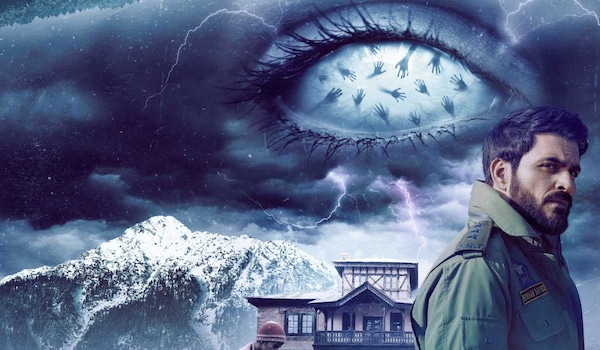
Baramulla is a chilling supernatural thriller set in the snow-covered valleys of Kashmir. It follows DSP Ridwaan Sayyed (Manav Kaul), a freshly transferred Kashmiri police officer, as he uncovers a terrifying string of abductions in the sleepy, folklore-filled town. After relocating his family to an ancient house, Ridwaan discovers that his work responsibilities clash with his terrifying personal fears as he and his family experience a series of unexplained occurrences, such as unaccounted-for footsteps and terrifying images. As the dedicated officer looks deeper into the case of the missing children, he finds it harder to distinguish between his job, his personal struggles, and the frightening supernatural events happening around him, forcing him to confront the dark secrets hidden in the valley's old stories. This riveting narrative, masterfully combining suspense, profound emotions, and psychological terror, jeopardises the tranquillity of his family and the fragile stability of the community.
Baramulla review:
Indian movies always hold a special place for Kashmir, setting all genres across the beautiful and breathtaking valleys. However, most films, despite showcasing the region's beauty, consistently reveal the underlying issues. Despite its idyllic status, Kashmir has consistently endured hardships, leading to heightened security measures. The people there wish to live peacefully, as in most parts of the country, but the tensions have been unending since Independence.

Now, we have Baramulla, which is also set against the backdrop of the valleys, where we see children getting kidnapped frequently, with only strands of their hair left as a trace. The film begins with a kidnapping, and a significant hint is a white tulip that keeps appearing in different and impossible places. Amid all this, DSP Ridwaan Sayyed (Manav Kaul) moves to Baramulla with his family, including his wife Gulnaar Sayyed (Bhasha Sumbli), daughter Noorie Sayyed (Arista Mehta), and son Ayaan Sayyed (Singh Rohan). Although the family takes time to settle in, Ridwaan quickly takes charge and begins working on cracking the case. However, while the investigations continue, the disappearances of children occur at an alarming rate.
ALSO READ: Baramulla trailer: Manav Kaul's film glimpse leaves your stomach in knots over unknown threats
The film, when it functions as a mystery thriller, takes a normal turn with cops being stranded without leads, and even the hints don't lead them anywhere. Meanwhile, Ridwaan, nearly stranded at work, remains unaware of the challenges his family faces at home. We see black shadowy figures constantly appearing from somewhere, leaving the family members curious. The youngest child follows the house's caretaker and enters a mysterious room without any fear. This is what I usually don't understand: why the usual tropes in every horror film are still the same. Why is it always the youngest kids who are asked to sleep separately, especially in new places where every feeling is eerie?
I am not a fan of this genre, and I found those moments definitely scary when the whole house tour is given in the dark while mysterious figures attempt to interact with the characters. However, the film swiftly establishes that the spirits residing in Ridwaan's new house are responsible for the mysterious kidnappings.
Aditya Dhar and Aditya Suhas Jambhale penned the screenplay while keeping several metaphorical aspects in mind. The film's beauty lies in its representation of evil spirits and the significance of tulips, which symbolise the pristine nature of Kashmir that is disrupted when younger minds are taught hatred, disturbing the expected peace.
However, the story's direction becomes clear when a significant hint emerges at the start of the second act. The film nowhere denies that it is entering a political mode. Moreover, the exodus of Kashmiri Hindus is an unforgettable chapter in Indian history, and we have been shown a propaganda film about it, The Kashmir Files. However, considering the film's scale, it thankfully avoids a propaganda mode and instead illustrates how people in the Valleys navigate through ongoing tensions. Baramulla addresses the lack of respect for police officers who are deeply involved in upholding law and order. On the other hand, there are several openly militant extremists who ignite tension and attempt to brainwash people into believing that they're still waiting for "freedom."
Baramulla doesn't have a lasting effect that makes you think what happened was absolutely wrong. There's no denying that. However, the film takes the liberty of showing that ghosts of the past always linger and will linger until justice has been served in the right way. There are several moments in the film where you will feel that the overshadowing horror is so deliberate and attention-seeking that the film probably would have worked without it as well. But once you get to see the actual supernatural elements, the film only stays a thriller, and people like me can watch it without covering their eyes.
Arnold Fernandes' cinematography does come into play here, as you feel the moments approaching before you can see them. The jump scares are predictable, but you still feel curious as to what the next visual will be in this haunted house where everyone, to be honest, should be in the same room.




Meanwhile, Jambhale, who previously directed Article 370, comes back to the valleys to tie the present situation to the past, and that too, in a haunting way. The story does work on a screenplay level and, to an extent, on screen, where you are not forced to hate a particular religion and cry out loud for another. However, "maqsad pura hona chahiye" is tiresome to hear after a point.
Seeing Kaul after a long time is a treat to watch, as the actor never delivers a negative performance. He not only shows his tough side as a cop but also brings vulnerability and humanises his job. Several moments stand out, particularly when he experiences an anxiety attack related to his past and when he attempts to support his daughter; these moments linger in memory. However, for me, the showstopper is Sumbli as Gulnaar, who comes without any baggage. Her character also indicates that by maintaining calm and sanity, one can solve issues and understand the whole situation. The actor does bring that calmness to the film, and her performance is one to watch out for.
On the other hand, Mehta as Noorie begins as an intriguing character by being a teenage girl who is not on the best terms with her father and is trying to fit into the new environment. However, her arc is quite short-lived and less explored, for obvious reasons. However, you can expect this because her character drives the story forward.
Despite its heavy subject and horror genre, I, to be honest, didn't feel that Baramulla is a tough watch. There are eerie moments, and once you witness the suspense reveal, there is only a wait for everything to come together.
Baramulla verdict:
Baramulla is a supernatural thriller that effectively digs into the tensions of Kashmir, using the genre to make a political statement. Though the horror elements occasionally overshadow the core mystery, Manav Kaul and Bhasha Sumbli anchor the film with compelling performances. It's a gripping watch that suggests the ghosts of the past won't be laid to rest until justice is unearthed.
Subscribe to our newsletter for top content, delivered fast.
