


Dhurandhar review: Transformational Ranveer Singh and show-stealing Akshaye Khanna drive Aditya Dhar's gripping, unflinching spy saga
A gripping, intense espionage drama. Despite the 3.5-hour runtime and high gore, Dhurandhar features Ranveer Singh's transformation and excellent performances

Last Updated: 03.19 PM, Dec 05, 2025
Dhurandhar story:
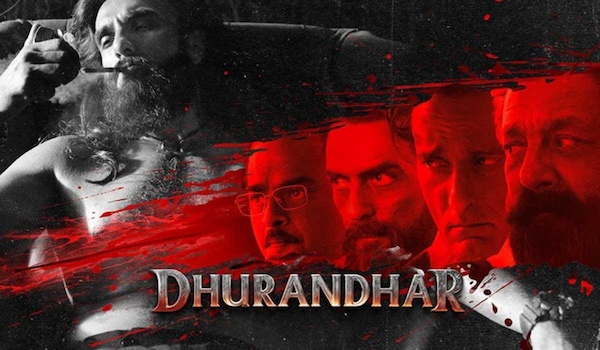
The film follows Ajay Sanyal (R. Madhavan), the chief of India's intelligence bureau, as he undertakes a daring mission to infiltrate and destroy a powerful terrorist network based in the Lyari area of Karachi, Pakistan. Significant national crises, particularly the 1999 IC-814 hijacking and the 2001 Parliament attack, drive this mission. Driven by failure and a need for a deep-cover asset, Sanyal recruits a 20-year-old Punjabi lad named Hamza Ali Mazhari (Ranveer Singh) as an unlikely key to this high-stakes covert operation. Initially imprisoned for a revenge-motivated crime, Mazhari quickly gains recognition for his rare combination of street smarts and resilience. He is transformed into an undercover agent who can traverse the vicious underworld and confront strong opponents such as the influential gangster Rehman Dakait (Akshaye Khanna) and the ISI's Major Iqbal (Arjun Rampal).
Dhurandhar review:
Sometimes, films come with an aura that gives you prejudicial thoughts, be it because of the runtime, the plot, or the overall vibe. But Dhurandhar is a rare experience that draws you into the world the filmmaker creates and leaves you surprised. Since its announcement, the film has been all over the internet, leaving people curious about how such a high-stakes, uncompromising espionage film will be executed. I can confidently state that Aditya Dhar's film is a pure espionage drama, not precisely aligning with the action genre. But the film does make you feel that it's three hours and 34 minutes long. So, is it worth your time? Let's find out...

Dhurandhar begins with the 1999 IC-814 Kandahar hijacking, where IB chief Ajay Sanyal (R Madhavan) experiences disappointment in how terrorists from Pakistan have been creating fear among people in India, and the solution appears to be bleak. Soon after, he witnesses the 2001 Indian Parliament attack, which prompts him to create a project named "Dhurandhar" focused on placing an agent among Pakistanis to intermittently intercept information. The project leads Sanyal to his key asset, and in no time, we are introduced to Hamza Ali Mazhari (Ranveer Singh), who enters Pakistan in 2004 via Afghanistan.
Hamza serves as our perspective while we explore the Lyari township, where the atmosphere is filled with violence and the world-building becomes increasingly gruesome as we delve deeper. What sets Dhurandhar apart is its unapologetic approach, which was quite expected. But even with the plotline, the film makes sure to take this business seriously and deliver a story about a world that we have been hearing about every now and then.
There's a dialogue by Madhavan's Sanyal who says that major terrorist attacks happening in the world have some connection with Pakistan in one way or another. We see the other side—where and how these plans are made to disrupt peace in the name of religion.
What makes Dhurandhar a novel viewing experience is its commitment to structure. The first instalment is broken into nearly eight chapters, each lasting about 20 minutes. This approach constantly brings the audience to the forefront of the world, showing how a single spy navigates this massive operation to secure India.
Yes, it's been a while since we saw Singh on the big screen – two years, to be precise. To be honest, I have missed seeing Singh on the big screen, especially considering that many actors now have multiple releases each year. However, the actor makes it worth the wait by fully taking on a part that is uncharted for him. The actor often doesn't dominate the screen, allowing other characters to enter and stay.
The film does get into the nationalistic approach and borderline propaganda with the jingoistic dialogues. While this element risks overpowering the narrative, director Aditya Dhar deftly manages to enhance the film with a powerhouse of talent and realistic locations.
The film heavily relies on the locations, and it's as realistic as one can expect. On one side, we see the world, which is low-lying and has people surviving amid fear. On the other hand, there are rich people who have no class because all they want is to rule, even if they have to butcher people.
The gore content of Dhurandhar is remarkably intense and unflinching, to the extent that viewers may feel compelled to cover their eyes during particularly disturbing scenes. But it also shows that it's not just a film but a brutal and massy experience that has got its assignment right.
The film heavily relies on dialogue-heavy scenes ("dialogue-baazi"), which is what was expected, and that's where Dhar fully decided to invest. Given that he has actors from Akshaye Khanna to Sanjay Dutt and Arjun Rampal playing characters who are brutal and fearsome, we know that hurling abuses will be like breathing, and that's how it is. Given the layout of the world in Pakistan, where mostly testosterone-driven characters dominate the screen, the film definitely features bloodshed and flying chunks. However, the film gives you ample time to prepare for these sequences and shield your eyes.
I have never felt pressured to watch films that heavily rely on violent moments to make their stories more entertaining and engaging. But, yes, Dhurandhar is one such film. Although it cranks it up a notch, you definitely know how brutality usually makes a point to justify it.
Like I mentioned earlier, the film definitely has Singh having an out-and-out show. The actor brings so much stability to his character as a silent spectator that we see him open up only after reaching a trust level. The actor imbibing the strong violence approach is new for sure, but it's more of a coming-of-age for his character, who is learning the tricks only to bite back at his adversaries.
The film's length takes us from 2004 to 2009 and shows how, in the matter of five long years, a spy's job doesn't end, but every mission's end is the beginning of another and might leave you stranded among enemies for a lifetime. Singh does show that transformation, and it's palpable to watch.
Meanwhile, Khanna as Rehman Dakait is definitely a show-stealer as a gangster, whose backstory also we touch upon. The actor brings that remorse and standout villainy act with a character that has been humanised, given the fact that the Balochistan fight is still on in Pakistan. Dhar, with his creative liberty, left no stone unturned in showing the dirty politics that's played across Pakistan and how bloodshed is the way to go to make it to the eventual throne.
The first part is mostly about Khanna's Rehman ruling Lyari, whereas Dutt and Rampal make it to the screen only to show the terror that they are going to continue in the sequel. Their entry scenes are all created to have "seeti-maar" moments, and they do, mostly. Moreover, their characters are also well-established, showing their motive in life and how it's going to overturn the film eventually.
On the other hand, R Madhavan as Sanyal is away from the mess in India; however, the connection is quite deeper. The actor, most of the time, makes the eyes do the talking, showing how he is living in a world where his aim is to have Indians sleep peacefully in the comfort of their homes. But the disruption is personal to him, giving him sleepless nights.
Sara Arjun does bring a few lighter moments and colour to this darker world. The character arc is definitely created for an effect to show how her character is a mere catalyst in Hamza's mission. The film also addresses the age gap and passes it on like no big deal!
However, even with the runtime of nearly four years in the story's timeline, I am wondering how the story is left incomplete, how much more is needed to reach a conclusion, and what it would be.
The background score and the placement of songs, especially the blending of retro tracks, are too good and enhance the film well. Shashwat Sachdev scored the music and BGM in such a way that they do feel like they are becoming an integral part, just like the characters in the film. The cinematography by Vikash Nowlakha complements the movie by depicting a dark world that reveals a ray of hope only when necessary.
On the other hand, Shivkumar V. Panicker did edit the film in such a way that the pace seems smooth and shows us why those details are important and cannot be ignored or skipped.
Dhar brings fire to the screen with Dhurandhar, and however the film is, I would definitely appreciate the fact that the filmmaker didn't bow down in flaunting his creative liberty with a dash of jingoism walking on the path of patriotism.

Dhurandhar verdict:
Dhurandhar is a gripping and unapologetic espionage drama that commits fully to its brutal world-building. Though its three-hour-plus runtime demands significant dedication from the audience, the film delivers a powerful and intense experience. Ranveer Singh shines in a demanding, transformational role, navigating a story that is as much about gritty survival as it is about national security.
Subscribe to our newsletter for top content, delivered fast.
