


Papicha review: A beautifully bitter story of the ‘rebel girl’ in war-torn Algeria
Director Mounia Meddour’s partly autobiographical film showcases the power of feminism amid religious fundamentalism, grief and rebounding.

Last Updated: 11.07 AM, Mar 14, 2022
STORY: Nedjma, a budding Algerian fashion designer, struggles to fulfil her dreams in the face of war and rising oppression of women.
REVIEW: “Cover yourself up; cover your sisters and daughters” - these commands serve as the recurrent theme of Mounia Meddour’s pulsating drama Papicha, where a fiercely rebellious fashion designing student recoils against misogyny during the Algerian Civil War in the 1990s.
In the opening scene, 18-year-old Nedjma (Lyna Khoudri) and her friend Wassila (Shirine Boutella) are sneaking out from their hostel to go to a nightclub, only for their cab to be stopped at a checkpoint which they dodge by quickly donning a headscarf. Passionate about dressmaking just as much as she loves her liberty and freedom of expression, Nedjma - nicknamed ‘Papicha’ that roughly translates to ‘cool girl’ - naturally gets furious when she sees posters being put up around the university campus instructing women to wear hijab. Deeply disturbed by the rise of oppression amid the raging war, the young girl becomes more determined to follow her dreams and not give up.
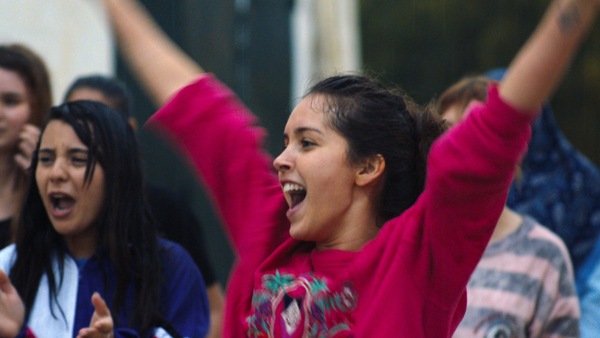
The narrative rides high on the energy of close friendship and compassion among a group of young girls. “One, two, three... Viva L’Algerie,” they sing in chorus when they make a trip to the beach, ramble on the road or play football at college premises. On the other hand, moments of family bonding between Nedjma, her sister Linda (Meriem Medjkane) and their mother are also exquisitely woven into this semi-autobiographical film. Swaying between tenderness and trauma, cheerfulness and desolation, the film makes a compelling watch. The vulnerabilities of a strong girl, especially when she faces a personal tragedy and when she gets molested, are powerfully portrayed in the 1-hour-48-minute drama. Amid fundamentalism, prejudice against women and endurance, an intrepid Nedjma is even more resolved to prove her mettle, so much so she chooses to use the haik as the fabric for her college fashion show.
A tribute to women empowerment, you will simply love the intricacies of the lead character. Her naivety and buoyancy are infectious, and the sequences depicting her grief are disturbingly moving. Although there is the risk of being completely shut out or even killed in the war, Nedjma chooses her nation over the opportunity to flee to France with her boyfriend Mehdi (Yasin Houicha).
The storyline is overlapping but not messy. Cinematographer Léo Lefèvre deserves a special mention for putting together some very evocative scenes - particularly the one in which Nedjma is desperately clawing the earth to dig out beetroots to dye her fabric. That the video library students frequented gets bombed and the shop that once showcased fancy, bold outfits for women now only sells burqas leave a lasting impression.
VERDICT: A vibrant and effortlessly profound piece of art, Papicha is a relevant film of our times. The scores are catchy and true to the 90s. Watch the movie for the exuberance that a bunch of young girls bring to an otherwise serious plot.
*Reema Gowalla is an arts and culture journalist, who mostly writes about theatre and independent cinema, and sometimes also delves into culinary heritage.
Subscribe to our newsletter for top content, delivered fast.
