


Stranger Things finale review: Closure without substance—a safe end that overstayed its welcome
The Stranger Things finale offers a lukewarm exit, trading depth for uninspired tropes. The pacing is drawn out and obvious, lacking a powerful punch. A functional but safe wrap to the saga.

Last Updated: 12.08 PM, Jan 01, 2026
Stranger Things finale story:
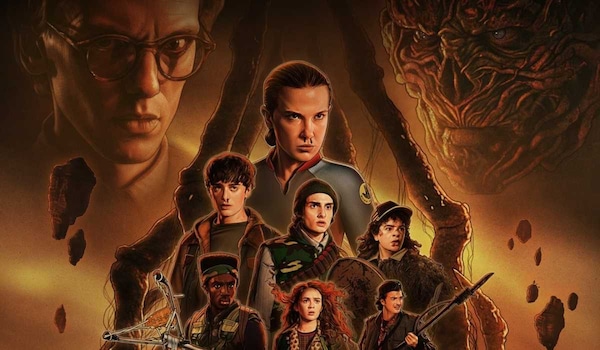
The Rightside Up is the series finale, set in the autumn of 1987, and it depicts Hawkins as a militarised quarantine zone as the devastating rifts between dimensions persist and seep into reality. The original group of friends is left to depend on Will Byers' residual psychic connection to follow Vecna's whereabouts and rescue a group of children, including Holly Wheeler, who have been taken to the terrifying Abyss, a deeper level of the Upside Down, where the villain is preparing his final endgame. Eleven is still on the run from the government, but she and the "Party" have planned a last-ditch, multi-front attack to free the hostages and try to seal the gates permanently. With a running time of more than two hours, the dramatic climax culminates the ten-part narrative, highlighting the core group's eventual survival and the heavy price they paid to save their home from complete destruction.
Stranger Things finale review:
What constitutes a satisfying conclusion to a show that fans have cherished for nearly a decade? We have rarely seen a near-perfect ending to a TV show that we binge-watch and often criticise for ruining the whole experience of investing our time and hearts in the series as well as the characters. It's been almost seven years since Game of Thrones ended, and people still talk about how they messed up the finale in an unimaginable way. Moreover, it's been nearly 12 years since we saw the end of How I Met Your Mother, and there are still discussions about how the finale just took away the whole charm that the series built for eight years. Well, does the Stranger Things finale meet the same fate with its two-hour-long conclusive episode? Let's find out...

Usually, the last episode of a show is emotionally heavy as we bid goodbye to the characters who have become a part of our lives over the years. Stranger Things, for example, takes its sweet time to give us an ending that, to be honest, was not expected, and you might not see it coming either. Before the last episode was released, I was wondering how the creators could possibly conclude so many loose ends in just two hours, especially since many questions remain unanswered even now. But it seems like the Duffer Brothers knew that to make it some sort of farewell, having the emotional quotient up a notch is a must, and it might not be just enough with the destruction of Vecna. Over time, even Vecna, aka Henry Creel (Jamie Campbell Bower), became a character that people loved to hate. However, with multiple theories, many sympathised with him, knowing that he was also a vessel, just like Will Byers (Noah Schnapp).
Well, the finale brings all the feels, and to be honest, I felt nothing. The high points are so derivative and put there deliberately to invoke emotions, but it feels so much on the surface level. Observing most of the scenes featuring the young adults, it seemed as though they had reached the conclusion of the show and were acting accordingly. Undoubtedly, the creators have defied most of the theories that emerged during Season 5. However, it now appears that the makers intentionally included these elements to spark a discussion that challenges the established narrative.
In the first hour of the Stranger Things finale, we reach a conclusion about how and what has been happening to bring it to an end. However, it appeared that the Duffer Brothers were so eager to conclude one chapter that the ticking clock sound, although audible in the background, was intended for them, as they seemed to be racing against time. We get a "Steve" (Joe Keery) moment to make us feel like, "Oh, my god!" However, this moment felt deliberately placed for effect, suggesting that the creators only aimed to tease us.
Stranger Things commenced as a supernatural suspense thriller, imbued with the beauty and perfection of the 1980s. However, as the season progressed, we saw that the genre was changing consecutively, and now it has gone into the deeper end of the sci-fi genre, where nothing else matters.
We became so comfortable and mesmerised by the concept of Stranger Things that it became clear nothing new could be offered, and the pressure to conclude the series was quite visible. Moreover, the conclusion of the characters' journeys felt overly mundane, resembling an hour-long epilogue that did not warrant such significant investment.
Well, I definitely understand that the show was not solely focused on Vecna; however, he served as a foundational element. However, the story primarily focusses on the coming-of-age experiences of these young kids who grew up in fear and chaos, which brought them together in many ways but also instilled a pervasive sense of loss.
I really wished there was an unpredictable tragedy that could have set in for the show, and instead of doing so, the finale felt more like a fan service with tears of not loss but happiness being shed by everyone.
Once Will's powers are revealed and he can control Vecna's mind, the ultimate moment leading up to "where there's a 'will' there's a way" becomes so predictably high-end that you just wait for it to happen eventually. I realised I was providing live commentary on what was going to happen before the moment occurred, and the episode consistently indicated that the outcome was predictable.
I seriously don't know what to make of the ending! It's a bittersweet moment, not being entirely satisfied with the somewhat satisfactory ending but also glad that the series looked like it had overstayed its welcome by now.
Stranger Things finale verdict:
The grand conclusion to this supernatural saga ultimately chooses safety over substance. Rather than delivering a daring or transformative climax, the creators rely on unoriginal tropes and formulaic beats that seasoned viewers can anticipate miles away. While it provides necessary closure, the execution feels hollow, trading genuine narrative stakes for crowd-pleasing moments.
WHERE
TO WATCH
Subscribe to our newsletter for top content, delivered fast.
