


Thamma Review: Ayushmann & Rashmika Serve the MHCU’s First Snooze Chapter
Thamma Review: The problem with this Maddock Diwali offering is the pressure it carries to include everything without changing the formula—and that ends up messing everything up.

Thamma Review
Last Updated: 03.12 PM, Oct 21, 2025
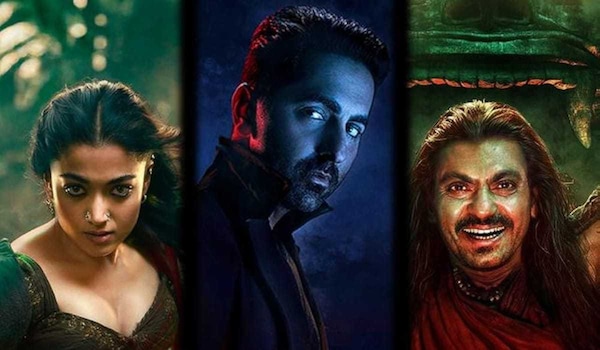
Thamma Review: Story: When a young man named Alok (Ayushmann Khurrana) lands in a forest on a trip and is attacked by a bear, Tadaka (Rashmika Mandanna) saves him. But little does he know, his life is about to take a 180-degree turn. Thus begins the story of the Betals, who have imprisoned their Thamma (ruler) Yakshasan (Nawazuddin) for the last 75 years because he aims to end humans and turn them into bloodthirsty Betals. Alok must now save himself and his love for Tadaka, but life isn’t that simple, and circumstances turn him into a Betal. How will he save the day now?
Thamma Review:
That India finally has a cinematic universe telling stories rooted in the folklore of the country—and centred around heroes, demigods, and villains drawn from the very tales we grew up listening to—is brilliant. What started with Stree and its fresh take on the horror genre in Hindi cinema bloomed into something much bigger. The Maddock Horror Cinematic Universe has seeped deep into Indian culture, finding the right balance between gags and jump scares, delivering not one but three strong stories that brought folklore to life on screen. Thamma enters right after the universe got its official status, and perhaps that very pressure is what the film tries to overcompensate for. Are the Betals strong enough to stand tall against the rest? Let’s find out.
Thamma, starring Ayushmann Khurrana and Rashmika Mandanna, enters the MHCU right after Stree 2 and has the crucial task of introducing a brand-new set of characters while pushing the story from the first four films forward. By now, the universe has seen over five main supernatural beings, including the villains, and most of their arcs remain hanging (except for Kriti, who dies(?) at the end of Bhediya). So Thamma must become the thread tying everything together. Unfortunately, this pressure weighs it down, preventing it from becoming the crackling entertainer it should have been. Instead, Thamma plays it safe, following the same formula that made the earlier movies massive hits. But is repetition really the point of this universe? We don’t think so.

Written by Niren Bhatt, Arun Fulara, and Suresh Matthew, and directed by Aditya Sarpotdar (Munjya), Thamma takes flight to Arunachal Pradesh, where an entire community of Betals (not vampires) lives deep in a forest, disconnected from the human world. There’s immense scope to craft a story that’s not just visually stunning but emotionally moving, because this is, after all, about two characters who share the same supernatural power and are in love. Yet the team chooses to rehash a formula that brought success to previous films.
Most of you must have seen the viral tweet poking fun at the blueprint all MHCU films follow. Thamma suffers from exactly that, and makes the dig feel even more justified with its structure. The movie takes you into a flashback, flashes the title slate, jumps to the present, introduces a villain comically, and dives into the conflict. Of course, multiple dance numbers are used as plot devices to hit massive jump cuts—goes without saying. This Ayushmann starrer is exactly why the makers need to lock this blueprint away for at least the next ten films. The fatigue this structure causes viewers is real—almost like how you know Anoop Soni will walk out of a police station every time he talks about an investigation on Crime Patrol. You get the point.
The problem with Thamma also lies in how it treats its biggest highlights far too casually, which drains the urgency and impact of key moments. A human transforming into a Betal just happens, with no proper build-up. Speaking of build-ups, the act transitions are so convenient that you’re reminded of how we collectively wrote plays in school. You can see how pretentiously a phone is dropped, how an accident happens, or even how the film makes way for a major cameo. That cameo is actually the best part of the film—but the lead-up is haphazard. Also, whoever gave Tadaka nail paint in a forest with no human contact should honestly be jailed with Yakshasan.
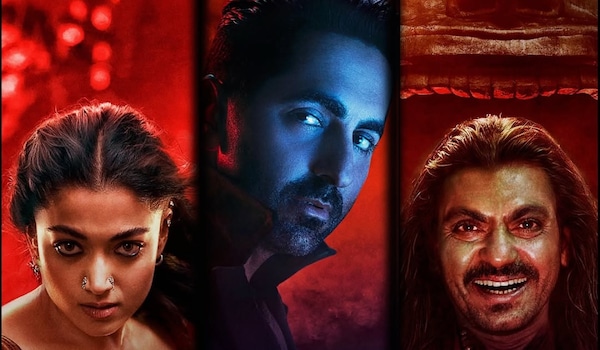
Thamma succeeds when it reimagines supernatural beings away from familiar vampire tropes. These aren’t your usual sunlight-allergic, coffin-sleeping, blood-sucking adversaries. They exist for a purpose, rooted in Indian mythology, giving Thamma (both the film and the title within the story) a revered space. Now you understand why I said the story had immense potential? Sadly, it’s overlooked because we need three dance numbers—one featuring Nora Fatehi, who has officially become the most overused nod in this universe. But hey, she gets three dialogues this time.



Performance-wise, Ayushmann Khurrana knows this is a big-ticket film and gives it his all. He’s entertaining and emotionally grounded as Alok, funny when needed, and sincere when required. But the script only allows him so much until he finds his footing. Rashmika Mandanna, meanwhile, plays the strongest character on paper but ends up being the dullest part of this fair—partly because of her performance and partly because of how poorly her character is handled. The VFX continues to impress, and that department in the MHCU deserves a double Diwali bonus and a well-earned raise.
Thamma Review: Final Verdict
The problem with this Maddock Diwali offering is the pressure it carries to include everything without changing the formula—and that’s exactly what messes everything up. Thamma has all the potential, but its attention is fixed elsewhere entirely.
Subscribe to our newsletter for top content, delivered fast.
