


The Kerala Story 2 - Goes Beyond Review: An unrestrained sequel that forgets the basics of craft
Vipul Amrutlal Shah's The Kerala Story 2: Goes Beyond is a political drama set in different states, which aims to expose manipulation and extremism but struggles with nuance and layered storytelling.

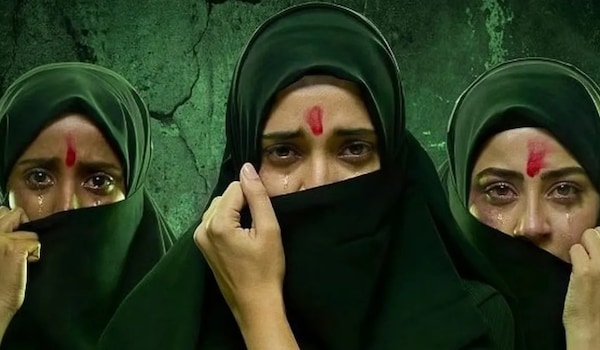
The Kerala Story 2
Last Updated: 11.32 PM, Feb 28, 2026
The Kerala Story 2: Goes Beyond Story: The Kerala Story 2: Goes Beyond, directed by Kamakhya Narayan Singh and produced by Vipul Amrutlal Shah, follows three young Hindu women, an aspiring scholar, athlete, and dancer, trapped in deceptive marriages and coerced conversions across India. Starring Ulka Gupta, Aditi Bhatia, and Aishwarya Ojha, the film explores themes of "love jihad" surveillance, and personal freedom.
The Kerala Story 2: Goes Beyond Review
Directed by Kamakhya Narayan Singh, The Kerala Story 2: Goes Beyond shifts its focus from a single narrative to three parallel stories set across Kerala, Madhya Pradesh, and Rajasthan. The narrative revolves around forced religious conversion through emotional manipulation and marriage, and the structure attempts to portray how vulnerable young women are gradually drawn into relationships that later turn coercive and abusive.
The Kerala Story 2 arrives with heavy baggage. Given the political storm surrounding its predecessor, this sequel is inevitably going to be judged not just as a film, but as a statement. The controversy before release only heightened curiosity, but once the noise dies down, what remains is the cinematic experience. Compared to the first film (The Kerala Story), the second instalment feels visually more elegant. The production values have improved noticeably, with tighter framing and more toned cinematography. Especially in the outer parts of Kerala, the environment feels more alive and authentic than in the previous entry. However, the film forgets the basics of craft.




Salim (Sumit Gahlawat), the film’s supposedly suave 'liberal journalist,' who does not believe in religion, doubles as a master manipulator, tricking Surekha Nair (Ulka Gupta), a Malayali woman, into a live-in relationship. To co-conspirators, his revelation is like a hot dream and that is India's 85 million unmarried Hindu girls will have to be ensnared for a nationwide demographic transformation by 2047. The scale of his plan is as ridiculous as it is alarming, yet it is presented with great seriousness in the film.
Meanwhile, Faizan (Arjan Singh Aujla) and Rasheed (Yuktam Khosla) operate as the hapless sidekicks of fate drifters who survive on handouts from maulvis and community leaders, yet somehow find time to manipulate Neha (Aishwarya Ojha) and Divya (Aditi Bhatia) into misfortune. Their characters exist less as people than as narrative piles in an over-extended moral panic. While Divya's situation, being a 16-year-old girl, is understandable, Surekha, who is a freethinker and bold, has many opportunities to flee from the situation. She has a mobile and could have narrated the whole situation to her parents, but she chose her so-called partner, who already started abusing her.

The film is dominated by scenes of torture, including a disturbing moment where Surekha is forced to eat beef. The story lacks nuance, depicting a nightmare world where every Muslim, male or female, is shown as guilty, which drives the film forward with relentless energy.
The women themselves span across three different cities, yet the film flattens their personalities into a single melodramatic template. Surekha, a modern and freethinker from Kochi, is reduced to a symbol of betrayal; Divya, a social-media-savvy dancer from conservative Jodhpur, becomes a cautionary tale; and Neha, a javelin hopeful from Gwalior, never actually appears on the field she supposedly dreams of dominating. Geography, ambition, personality, none of it matters. They are merely supporting elements of a manufactured imagery of fear, used to fit the film's terror blueprint.
What makes films memorable is their ability to balance sanity with darkness. In the Telugu film Girlfriend, characters like the teacher and the protagonist’s friend act as moral compasses, reminding the boy that he is abusing her. Haq shows abuse, yet a father figure remains a pillar of support through the legal struggle. In the age of films like these, The Kerala Story 2 flattens its world: every Muslim character is reduced to a villain, leaving no space for ethical complexity or moral reflection.

Another problem is its tonal approach. The film runs on extremes - the love is intense, the betrayal is absolute, and the antagonists are largely one-dimensional. This lack of nuance weakens the storytelling style. Complex social issues require layered characterisation, but here the moral lines are drawn too sharply. The title’s insistence on “The” Kerala Story implies universality, a definitive account. Yet what unfolds is a collection of disparate narratives across Kerala, Madhya Pradesh and Rajasthan - stories presented as symbolic, without demonstrating why they should be shown.
The film uses accusations as weapons and presents speculation as fixed truth. If it goes beyond anything, it goes beyond the scope of responsible filmmaking. Loud, violent, and relentlessly complaining, The Kerala Story 2: Goes Beyond stands as a cautionary tale, not of the dangers it speaks of, but of how quickly cinema can devolve into noisy nonsense when debate replaces perspective.
The Kerala Story 2: Goes Beyond Verdict
The Kerala Story 2: Goes Beyond is a visually improved sequel to its predecessor, but it falls short in terms of storytelling, nuance, and character depth. While it attempts to tackle serious subject matter like forced conversion, the film turns complex social issues into one-dimensional narratives, flattens its female protagonists, and portrays all antagonists in extremes. Ultimately, it generates controversy but struggles to engage as an interesting film.
Subscribe to our newsletter for top content, delivered fast.
