


The Rise of Ashoka movie review: Sathish Ninasam’s fight against oppression lacks depth
The Rise of Ashoka movie review: Sathish Ninasam is paired with Sapthami Gowda in this long in the making film that is now in theatres. Is it worth a watch?


Last Updated: 02.42 PM, Feb 27, 2026
The Rise of Ashoka movie story: The big business in the small village of Avarathi is human hair, an empire that’s been run by the evil Kutty Babji (Sampath Maithreya) for decades. He’s been getting the tender of the local tonsuring unit without fail, where he employs local barbers for a pittance. Voices of dissent are silenced, while dishonesty is dealt with an iron hand. Ashoka (Sathish Ninasam), the son of barber Gangaraju (B Suresha), has been consciously kept away by his father from getting drawn into the same line of work. Ashoka, his family and his community at large will benefit from him becoming a revenue officer, reckons Gangaraju. But then a series of events unfold that lead Ashoka to rise and stand up against Kutty Babji.
The Rise of Ashoka movie review: In a pre-release conversation with leading man Sathish Ninasam about The Rise of Ashoka being yet another tale of oppression and the fight against it, a genre that Kannada audiences don’t seem to appreciate much, he had maintained that it was best described as a commercial entertainer with a hint of a social message. Well, now that the film has been watched, I beg to differ. The Rise of Ashoka IS a fight against generational oppression of a class of people based on their social, economic and religious standing, and nothing else.
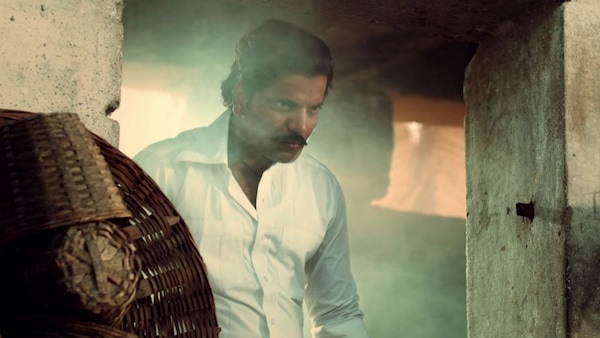
There is literally nothing new in this film as far as story-telling goes – there’s an evil, rich upper- class man, who is literally trampling over those ‘beneath’ him. Pretty much the exact character sketch that Raj B Shetty had in Landlord. The difference, though, is that while Raj pulled off a compelling villain arc, Sampath Maithreya comes cropper in that department. As Kutty Babji, he is a Tamil speaking man, whose idea of looking menacing is sporting eyes wide open like saucers and a handlebar moustache that looks like a bunch of hair from his business establishment was stuck on his face. His weird accent and voice modulation also works against the character and the final product is comical at best.

The trouble with The Rise of Ashoka, though, is not just the weak antagonist, and his equally pale villain material son, played by Yash Shetty. There’s the matter of uninspired performances from the entire cast, including leading man Sathish. We are told that Ashoka has been off in the city for his higher education and is now homebound in time for the revenue officer exam that he’s sure to ace. The Ashoka who emerges from the Tempo Matador is so cut off from the realities of his home that he is bewildered at the reaction that his father and the rest of the village has when Kutty Babji passes through in his hand-pulled carriage.

That’s not all, Ashoka is routinely aghast at the caste division on display, whether it is while dancing at a religious fair, or the simple act of the delivery of a postal item. Makes one wonder just how long Ashoka was away to have become so oblivious to the plight of people belonging to his community. There’s no way that he could have been shielded from it all the time. Even though it’s not entirely clear when the story of The Rise of Ashoka is set, the assumption is that it is the 70s, or even earlier, a time when 4 quarters (4 annas/25 paisa), was an acceptable denomination of pay. This is also a time when people grew up acutely aware of their social standing.
B Suresha and Sapthami Gowda, both of who have major roles, do not fair well in the larger scheme of things. The film’s biggest failing, though is that nothing feels authentic about the film – whether it is the setting or the performances. A lot of time is spent on Ashoka's romance with Sapthami's Ambika that the core subject becomes an afterthought. So much so that even when Ashoka faces a tragic loss, it is the threat of violence to Ambika that spurs him into action in the climax. It is so melodramatic that when Ashoka finally rises, you don’t really feel for his cause. I have a renewed respect for Landlord after seeing The Rise of Ashoka, even though I wasn’t particularly excited about Duniya Vijay’s film. This one’s several notches below.




The Rise of Ashoka movie verdict: Despite its relatively short run-time, The Rise of Ashoka is a tedious watch with its uninspired story-telling and performances. This tale of oppression and the fight against it is painfully shallow.
Subscribe to our newsletter for top content, delivered fast.
